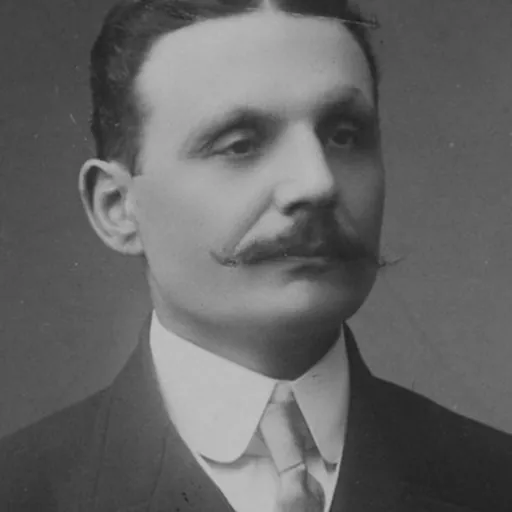
About John Wickström
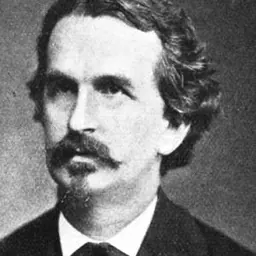
Lived 1870 – 1959 (aged 88). John Wickström was a Finnish businessperson, industrialist and entrepreneur.
Return to Finland Wickström had difficulties finding financing for engine development; he had to focus the production on existing, although still profitable, models. By using the property he had collected during his stay in the United States, Wickström believed he would be able to continue development of fishing boat engines in Finland, which was still an untapped market.
Upon returning to Finland in 1906, Wickström had to create a market for his engines. Ostrobothnian fishermen, used to propelling themselves by rowing or sailing over many generations, were wary of combustion engines. In order to convince the potential clientele about the benefits of engine power, Wickström arranged an American-style show event in which he tugged two boats loaded with people by a motor boat up along the Kyrönjoki River. Despite the excessive load, the travelling took less than one third the time compared to rowing. Consequently, Wickström's engines gained a lot of attention and the demand grew high enough that Wickström could start serial production.
Wickström engine production Wickström founded a boat engine factory in Palosaari, Vaasa together with his brother Jakob who also returned from America; the third emigrated brother Mickel stayed permanently in the United States. The factory was opened in autumn 1906, and, in addition to boat engines, the company produced stationary engines for Finnish farmers to power threshers and other machinery. Production of Wickström-engines grew over time and, in 1910, the brothers opened a new facility in Vaskiluoto, close to Vaasa harbour. The company name became Bröderna Wickströms Motorfabrik Ab in Swedish and Wickström-Veljesten Moottoritehdas Oy in Finnish ("Wickström Brothers' Engine Works Ltd."). At the beginning, the brothers produced Caloric engines based on drawings which they had brought with them from America. As the engines turned out to be too complex and unreliable, the company developed modern four-stroke paraffin engines, which replaced the older portfolio.
Wickström engines changed the fishermen's way of living drastically. Due to their higher speed, the fishermen could travel home every evening, instead of bunking in fishing lodges. In 1912, 150 Ostrobothnian fishing boats featured engines. Among Finnish fishermen, Wickström's products reached a reputation of ultimately reliable power units.
After the modest start, demand grew especially after World War I, and the facilities were enlarged several times. In the 1930s, the annual production was about 1,000 units, and the portfolio consisted of a number of marine and stationary engine models. The company bought production licences for British Lister diesel engines. At the turn of the 1950s, the headcount reached almost 200, and the company produced thousands of engines per year. By that time, few other engine producers had started production in Vaasa, and the city became the centre of the Finnish small engine production. Wickström was the leading producer of small engines, and any other boat engine brands were an exception in the area. As demand of stationary engines decreased after World War II, the company focused exclusively on boat engines. Wickström engines were exported to Sweden, Norway, Iceland, Japan and Canada.
The Wickström Brothers' Engine Works had a good reputation as an employer, and workers typically made long careers in the factory. Wickström led the company until the end of his life, and he was an appreciated manager. He believed that the robust middle engines, which the company produced, would stay competitive on the market; he considered outboard engines to be rubbish and did not believe in their future. However, as light glass fibre boats pushed aside the heavy wooden boats, American and Swedish produced outboard engines replaced the middle engines over time. After Wickström's death in 1959, the company kept existing for a couple of decades. By then, the Wickström company had lost the spirit of innovation, although the main reason for its decline was the spread of outboard engines and subsequent disappearing of its market.
Personal life Wickström married Ida Maria née Östman (1873–1952) in 1892. Their children were Sigrid Ingeborg (born 1893), Werner Theodor (born 1897), Roy John Elias (born 1901) and Alma Ellida (born 1902). The couple was divorced in 1919; as divorcing was rare and generally not socially accepted at the time, a possible reason could have been rumours about Wickström's illegitimate son in the United States. In the same year, Wickström married Julia Wilhelmina née Bergsten, with whom he had Ingrid Brita Maria (born 1920) and Johannes Carl-Gustav (born 1922).
At an early age, Wickström committed to total abstinence from alcohol, and he took part in temperance society activities. In Chicago, he was a member of the local Swedish–Finnish temperance society (Svensk-Finska Nykterhetsföreningen Topelius), and he was chairman of the Swedish–Finnish Temperance Federation (Svensk-Finska Nykterhetsförbundet). In Finland, Wickström supported prohibition.
Wickström was a founding member of the Finnish Odd Fellows fraternity in 1925. He was member of the Vaasa city council.
Wickström financed his birth municipality Kvevlax, his former school in Vassor village and craft school Kvevlax Slöjdskola. Many craft school students were inspired by Wickström's example, becoming entrepreneurs themselves.
Legacy The Vaasa City Theatre presented a play about Wickström's life. The performance, written by Antti Tuuri and directed by Erik Kiviniemi, had its premiere in autumn 2015. Jorma Tommila starred in the main role.
Patents Wickström's patents registered in the United States are listed below:
US Pat. NoDate Title and link 650,576 29 May 1898 Hot-air engine 646,406 3 April 1900 Hot-air fan-motor 669,611 12 March 1901 Automatic water-feed regulator for steam-boilers 685,241 29 October 1901 Mechanical movement 685,367 29 October 1901 Combination air and gas engine 714,352 25 November 1902 Combined hot-air and gas-engine 714,353 25 November 1902 Combination hot-air and gas-engine 842,607 29 January 1907 Incandescent igniter for gas-engines
Don’t just read it —
keep it.
Full-length biographies made to live with: read them, listen on the way to work, watch them tonight.
- E-book
- Audio
- Video
Instant download · yours to keep · every purchase keeps this site free
Important facts
Family & relationships
People in John Wickström's life
Named in this biography and alive at the same time


Related people
Same field, nearest in time


Contemporaries
People whose lives overlapped John Wickström's


Frequently asked questions
Who was John Wickström?
Finnish businessman
When was John Wickström born?
John Wickström was born on 13 December 1870 in Kvevlax.
When did John Wickström die?
John Wickström died on 7 June 1959 in Vaasa.
What was John Wickström's occupation?
John Wickström was a businessperson, industrialist and entrepreneur.
What nationality was John Wickström?
John Wickström was Finnish.
Sources & further reading
Cite this page
APA: Biography.guide. (2026). John Wickström. https://biography.guide/john-wickstrom/
MLA: "John Wickström." Biography.guide, https://biography.guide/john-wickstrom/.
Chicago: "John Wickström." Biography.guide. https://biography.guide/john-wickstrom/.
Data last updated: 2026-09-24 · Spot an error? Report a correction.
Portrait: Wikimedia Commons · author & licence
Page generated 2026-09-27 05:09 UTC