
John Watts
English educational and social reformer
About John Watts
Lived 1818 – 1887 (aged 68–69). John Watts was a businessperson, social reformer and politician.
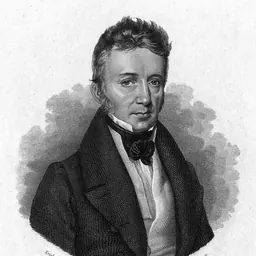
John Watts (1818–1887) was an English educational and social reformer. Originally an Owenite, whose economic writings affected the views of Friedrich Engels, he moved to a position more in favour of capital. In later life he had a multiplicity of interests and undertook many social projects.
Early life The son of James Watts, a ribbon weaver, he was born at Coventry, Warwickshire, on 24 March 1818. At five years of age he suffered partial paralysis of his left side, and could not take a manual job. After leaving elementary school, he became a member of the local Mechanics' Institution, where from age of 13 to 20 he acted as assistant secretary and librarian. He then went into trade, but adopted communist principles, and became a lecturer on Robert Owen's views. He visited many towns, and in Scotland attended lectures at the Andersonian University.
In July 1841 Watts moved to Manchester. For three years he ran a boys' school in the Manchester Hall of Science, an Owenite foundation designed to hold 3000 people. He held public discussions in the district on Owen's system of society. It was at this period that Engels had contact with Watts as a lecturer.
After Owen In 1844 Watts had come to the conclusion that Owen's ideal community was impracticable, and many of its adherents self-seeking; and he went into business again. On 18 July 1844 he obtained from the University of Giessen the degree of PhD
In 1853 Watts was a promoter of the People's Provident Assurance Society, and went to London, returning in 1857 to be local manager in Manchester. This company was later known as the "European". By merging with unsound companies, it came to a disastrous end. Subsequently Watts wrote the first draft of a bill which was introduced into Parliament and became the Life Assurance Companies Act 1870 (33 & 34 Vict. c. 61), which among other precautionary measures forbade the transfer or amalgamation of insurance companies without judicial authority. The work was mentioned positively in The German Ideology. The Facts of the Cotton Famine (1866); The Catechism of Wages and Capital (1867).
Also a large number of pamphlets, mainly on subjects such as trade-unions, strikes, co-operation, and education. He was a contributor to periodicals, and a newspaper correspondent, especially on educational and economic subjects.
Family Watts married Catherine Shaw in October 1844, and left four children, three having died in his lifetime. His eldest son was W. H. S. Watts, district registrar in Manchester of the high court of justice. His daughter, Caroline Emma, married Thomas Edward Thorpe, chief government analyst.
Don’t just read it —
keep it.
Full-length biographies made to live with: read them, listen on the way to work, watch them tonight.
- E-book
- Audio
- Video
Instant download · yours to keep · every purchase keeps this site free
Important facts
People in John Watts's life
Named in this biography and alive at the same time


Related people
Same field, nearest in time


Contemporaries
People whose lives overlapped John Watts's


Frequently asked questions
Who was John Watts?
English educational and social reformer (1818–1887)
When was John Watts born?
John Watts was born in 1818.
When did John Watts die?
John Watts died in 1887.
What was John Watts's occupation?
John Watts was a businessperson, social reformer and politician.
Sources & further reading
· DBpedia: John Watts (reformer)
Cite this page
APA: Biography.guide. (2026). John Watts. https://biography.guide/john-watts-businessperson/
MLA: "John Watts." Biography.guide, https://biography.guide/john-watts-businessperson/.
Chicago: "John Watts." Biography.guide. https://biography.guide/john-watts-businessperson/.
Data last updated: 2026-09-20 · Spot an error? Report a correction.
Page generated 2026-09-27 05:26 UTC