
About John W. Shenk
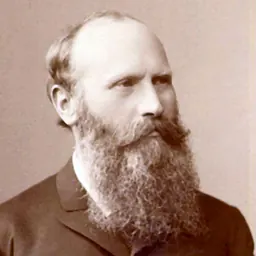
Lived 1875 – 1959 (aged 84). John W. Shenk was an American judge.
John Wesley Shenk (February 7, 1875 – August 3, 1959) was a city attorney in Los Angeles, California, a Superior Court judge and a member of the California Supreme Court.
Early life and education Shenk was born on February 7, 1875, in Shelburne, Vermont, the son of John Wesley Shenk of Cobleskill, New York, who was a Methodist minister (died July 1922), and Susannah C. Brooks (died April 1929). He had three brothers, William W., Edmund S. and Adolphus B., and two sisters, Carrie M. (Wilson) and Susannah C. (McRae). He was educated in Shelbourne and in Omaha, Nebraska, public schools and received a Bachelor of Arts degree from Ohio Wesleyan University and a law degree from the University of Michigan School of Law in 1903, after which he passed an oral examination for the bar before the California Supreme Court. He later received honorary doctor of laws degrees from both universities and from the University of Southern California.
Career Non-legal
In Shenk's youth, he was a printer, farmer, painter and newspaper reporter. He was a soldier during the 1898 Spanish–American War when he was with the 4th Ohio Infantry, which saw service in Puerto Rico. After the war, he joined his brother Adolphus in the Imperial Valley as a farm hand and mule skinner, then, at the age of 26, as a school teacher.
Legal Los Angeles In 1906 Shenk was appointed a deputy city attorney in Los Angeles, California, and in 1909 he became city attorney when Leslie R. Hewitt resigned from that position. Shenk's decision "that businesses had the right to charge whatever they desired and could change their prices at will," resulted in unprecedented discrimination against African Americans throughout the city. The effects of the Shenk Decision were chronicled in Los Angeles's African American newspapers, which included the California Eagle and the weekly newsmagazine, the Liberator
The 1913 Mayoral Race
In 1913, Shenk ran for Mayor of Los Angeles as the candidate of the "good government" Municipal Conference. Based on Shenk's discriminatory decision the year before, African American newspapers urged their readers to vote against Shenk. Shenk lost to the independent candidate, city Police Judge Henry H. Rose by just over nine thousand votes
In August 1913, Governor Hiram Johnson appointed Shenk to succeed Nathaniel P. Conrey as a judge in the Los Angeles Superior Court. In November 1914, Shenk was elected to a full term on the court.
Supreme Court In 1924, Governor Friend W. Richardson named Shenk as an associate justice of the California Supreme Court, where he sat for 35 years and wrote 1,355 opinions.
Another notable opinion was his 1948 dissent in the case of Perez v. Sharp, in which the court held by a vote of 4 to 3 that interracial bans on marriage violated the Fourteenth Amendment to the United States Constitution and therefore were illegal in California. The opinion was the first of any state to strike down an anti-miscegenation law in the United States. In his dissent, joined by B. Rey Schauer and Homer R. Spence, Shenk wrote:
The power of a state to regulate and control the basic social relationship of marriage of its domiciliaries is here challenged and set at nought by a majority order of this court arrived at not by a concurrence of reasons but by the result of four votes supported by divergent concepts not supported by authority and in fact contrary to the decisions in this state and elsewhere.
... such laws have been in effect in this country since before our national independence and in this state since our first legislative session. They have never been declared unconstitutional by any court in the land although frequently they have been under attack. It is difficult to see why such laws, valid when enacted and constitutionally enforceable in this state for nearly 100 years and elsewhere for a much longer period of time, are now unconstitutional under the same Constitution and with no change in the factual situation. It will also be shown that they have a valid legislative purpose even though they may not conform to the sociogenetic views of some people. When that legislative purpose appears it is entirely beyond judicial power, properly exercised, to nullify them. They had two sons, Samuel Custer and John Wesley Jr. During the last 35 years of his life, he lived in Los Altos, California, where he was active in establishing a union church.
Don’t just read it —
keep it.
Full-length biographies made to live with: read them, listen on the way to work, watch them tonight.
- E-book
- Audio
- Video
Instant download · yours to keep · every purchase keeps this site free
Important facts
People in John W. Shenk's life
Named in this biography and alive at the same time


Related people
Same field, nearest in time

Contemporaries
People whose lives overlapped John W. Shenk's


Frequently asked questions
Who was John W. Shenk?
American judge (1875–1959)
When was John W. Shenk born?
John W. Shenk was born on 7 February 1875 in Shelburne.
When did John W. Shenk die?
John W. Shenk died on 3 August 1959 in Los Altos.
What was John W. Shenk's occupation?
John W. Shenk was a judge.
What nationality was John W. Shenk?
John W. Shenk was American.
Sources & further reading
Cite this page
APA: Biography.guide. (2026). John W. Shenk. https://biography.guide/john-w-shenk/
MLA: "John W. Shenk." Biography.guide, https://biography.guide/john-w-shenk/.
Chicago: "John W. Shenk." Biography.guide. https://biography.guide/john-w-shenk/.
Data last updated: 2026-09-20 · Spot an error? Report a correction.
Page generated 2026-09-27 05:26 UTC