
About John W. Reynolds, Sr.
Lived 1876 – 1958 (aged 81). John W. Reynolds, Sr. was an American lawyer.
John Whitcome Reynolds Sr. (October 1, 1876 – February 4, 1958) was an American lawyer and progressive Republican politician from northeast Wisconsin. He was the 26th attorney general of Wisconsin, serving from 1927 to 1933; while serving as attorney general, he was an unsuccessful candidate for Wisconsin Supreme Court in the 1930 and 1931. Earlier in his career, he served as district attorney of Brown County, Wisconsin, and was chairman of the Brown County Republican Party.
Reynolds had several notable relatives. His father and uncle, Thomas and Charles Reynolds, served in the Wisconsin State Assembly; his son John W. Reynolds Jr. became the 34th attorney general of Wisconsin, 36th governor of Wisconsin, and a federal district court judge.
Early life John W. Reynolds was born on his family's farm in Jacksonport, in Door County, Wisconsin, the son of Jennie (Foley) and Thomas Reynolds. After completing his primary education, he taught school for several years in Door County, then worked as a traveling book salesman throughout northeast Wisconsin while saving money for college. He continued to work as a traveling book salesman in the summers while attending the University of Michigan. He later claimed that his sales trips took him to nearly every farm in Kewaunee, Manitowoc, Columbia, northern Outagamie, and southern Shawano counties. Nevertheless, Reynolds lost his bid for re-nomination in 1910.
Reynolds increased his political activity after leaving office, and, in 1912, he was elected chairman of the Brown County Republican Party.
In 1914, he entered the race for U.S. House of Representatives in Wisconsin's 9th congressional district, which then comprised roughly the northeast quadrant of the state. As the lone progressive in the Republican primary, Reynolds defeated his two conservative opponents. Despite a strong national environment for the Republican Party, however, Reynolds fell short of Democratic incumbent Thomas F. Konop in the general election, receiving just 44% of the vote.
There was an effort by Wisconsin Republicans to persuade Reynolds to run again in 1916, but he declined. In the fall, Reynolds received an in-person visit from Senator La Follette during a Reynolds family vacation in Door County, as La Follette was contemplating a break with the Republican Party over the nomination of Charles Evans Hughes for president.
Over the next several years, Reynolds focused on his legal practice; during those years, he served as defense counsel in several high profile criminal trials, including appearances before the Wisconsin Supreme Court. But Reynolds remained involved in civic and political affairs, serving as chairman of the county Red Cross during the American involvement in , and holding public speeches and debates arguing against the United States joining the League of Nations.
In the 1920s, Reynolds began resuming more active political engagement, and was elected to another term as chairman of the Brown County Republicans. In 1924, he was elected a delegate to the 1924 Republican National Convention, supporting the presidential ambitions of Wisconsin's U.S. senator Robert La Follette. When the Republicans instead re-nominated Calvin Coolidge, Reynolds joined La Follette's 3rd party presidential campaign on the Progressive ticket. Reynolds was named to La Follette's slate of presidential electors in Wisconsin, and since La Follette won the state of Wisconsin in the general election, Reynolds was able to cast his vote for La Follette in the 1924 electoral college. When Senator La Follette died the following year, Reynolds was selected as an honorary pallbearer at the funeral.
Attorney general terms (1926–1931) In April 1926, Reynolds announced that he would seek the Republican Party nomination for attorney general of Wisconsin, running as a progressive and touting his years of friendship with La Follette. Reynolds faced two opponents in the Republican primary, Albert Twesme and George M. Sheldon, but prevailed by a wide margin, receiving a true majority of all the votes cast. Reynolds' would-be Democratic opponent, David Gardner Jr., was disqualified from the receiving the official Democratic Party nomination because he failed to secure enough votes in the primary election—he faced no opponent in the primary and fell about 50 votes short of the 15,725 vote threshold. Gardner did then run as an independent Democrat, but was unable to mount a serious campaign. Reynolds cruised to election with more than 85% of the vote.
Reynolds was also drawn into an early feud between Zimmerman and the state adjutant general, Ralph Immell—another progressive political operative who had been appointed by the previous progressive governor. Zimmerman attempted to find a rationale to remove Immell from office, and sought a legal opinion from Reynolds on whether Immell held the legal qualifications for the office of adjutant general. Reynolds' opinion endorsed Immell's qualifications, and all but ended the attempts to remove him from office.
In the midst of Prohibition in the United States, Reynolds also used his office to offer the legal opinion that alcohol was fully legal in the privacy of the home, as long as the home was not being used as a business. His office further opined that wine and beer were exempt from prohibitions on possessing "intoxicating liquor" in public. These opinions were well received in Wisconsin, where prohibition was already extremely unpopular.
Reynolds faced competitive Republican primaries in both of his re-election campaigns, but prevailed by a comfortable margin in both elections. General elections were less competitive, and Reynolds secured more than two thirds of the general election vote in both of his re-election campaigns. Reynolds' candidacy was not initially well-received by progressive leaders in the state, who had been preparing for Herman Ekern to run in this election against Fowler. Ekern ultimately bowed out and the progressive organization grudgingly coalesced around Reynolds.
Reynolds path to the Supreme Court was further complicated by the entrance of populist lawyer Raymond J. Cannon, a former professional baseball player who had made a name as a lawyer representing players in the Black Sox Scandal and had then been part of an effort to organize a baseball players union; just months before declaring his candidacy, Cannon had been disbarred in Wisconsin for unethical client solicitation tactics. Cannon ultimately drew 20% of the vote in the April 1930 election, and Reynolds fell 14,000 votes short of unseating Fowler.
Personal life and family John Reynolds Sr. was one of at 10 children born to Irish American immigrant Thomas Reynolds (1839–1919) and his first-generation Irish American wife, Jane ( Foley; 1852–1922). Thomas Reynolds and his brother, Charles Reynolds, both served in the Wisconsin State Assembly in the early 20th century.
John Reynolds Sr. married twice. His first wife was Madge Flatley, another child of Irish immigrants; they married in Wisconsin in 1906 and had four children before Madge's death in 1937. Two years later, Reynolds married the widow Florence Frances Stehn ( Clarke), and became stepfather to her children.
John Reynolds' youngest biological child was John W. Reynolds Jr., who followed his father into the legal and political professions, serving as the 34th attorney general of Wisconsin, the 36th governor of Wisconsin, then serving the last 38 years of his life as a United States district judge.
Electoral history
Wisconsin attorney general (1926, 1928, 1930)
YearElectionDateElectedDefeatedTotalPlurality 1926 PrimaryRepublican 201,342 53.57%Rep. 96,697 25.73% 375,853 104,645Rep. 77,814 20.70% GeneralRepublican 389,519 85.53%Soc. 35,066 7.70% 455,404 354,453Ind.D. 18,888 4.15%Proh. 11,931 2.62% 1928 PrimaryRepublican 221,540 52.05%Rep. 118,746 27.90% 425,634 102,794Rep. 85,254 20.03% GeneralRepublican 598,730 68.29%Dem. 234,779 26.78% 876,792 363,951Soc. 36,028 4.11%Proh. 7,244 0.83% 1930 PrimaryRepublican 258,469 45.55%Rep. 175,147 30.86% 567,469 83,322Rep. 133,739 23.57% GeneralRepublican 375,616 68.09%Dem. 125,315 22.72% 551,608 250,301Soc. 35,169 6.38%Proh. 12,636 2.29%Com. 2,827 0.51%
Wisconsin Supreme Court (1930, 1931)
Don’t just read it —
keep it.
Full-length biographies made to live with: read them, listen on the way to work, watch them tonight.
- E-book
- Audio
- Video
Instant download · yours to keep · every purchase keeps this site free
Important facts
Family & relationships
People in John W. Reynolds, Sr.'s life
Named in this biography and alive at the same time




Related people
Same field, nearest in time
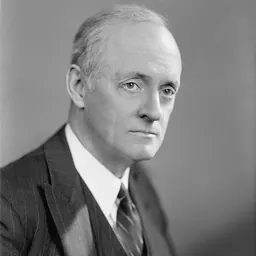

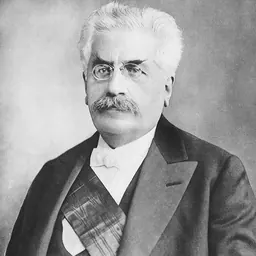
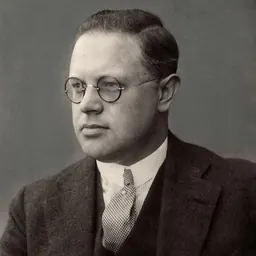
Contemporaries
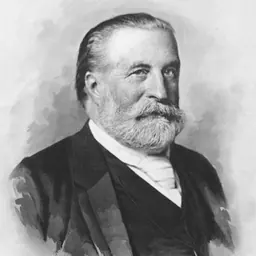
People whose lives overlapped John W. Reynolds, Sr.'s
Frequently asked questions
Who was John W. Reynolds, Sr.?
American lawyer
When was John W. Reynolds, Sr. born?
John W. Reynolds, Sr. was born on 4 October 1876 in Jacksonport.
When did John W. Reynolds, Sr. die?
John W. Reynolds, Sr. died on 4 February 1958.
What was John W. Reynolds, Sr.'s occupation?
John W. Reynolds, Sr. was a lawyer.
What nationality was John W. Reynolds, Sr.?
John W. Reynolds, Sr. was American.
Sources & further reading
· Wikipedia: John W. Reynolds, Sr.
· DBpedia: John W. Reynolds Sr.
Cite this page
APA: Biography.guide. (2026). John W. Reynolds, Sr.. https://biography.guide/john-w-reynolds-sr/
MLA: "John W. Reynolds, Sr.." Biography.guide, https://biography.guide/john-w-reynolds-sr/.
Chicago: "John W. Reynolds, Sr.." Biography.guide. https://biography.guide/john-w-reynolds-sr/.
Data last updated: 2026-09-20 · Spot an error? Report a correction.
Page generated 2026-09-27 05:27 UTC