
John Traske
Traske, John (<em>c.</em>1585–1636), Church of England clergyman and separatist minister
About John Traske
Lived 1585 – 1636 (aged 50–51).
John Traske (c. 1585-1636) was an English Puritan clergyman and prominent sabbatarian preacher. He led a short-lived separatist congregation, often referred to as Traskeites, distinctive for their Judaizing practices, including seventh-day Sabbatarianism and the observation of Jewish dietary laws.
Early Life Traske was likely born in Somerset around 1585 (he stated that he was about 32 years old in 1617). Nothing certain is known about his parents except for Traske’s later statement that they were “godly.” He was soon suspended for preaching without a license, and he moved to Axminster, where may have served as chaplain to Sir John Drake. By 1614, he had become an itinerant preacher and was accused by diocesan courts of preaching without a license around the Isle of Ely and Somerset.
Judaizing Controversy By late 1615, Traske arrived in London, where, according to one observer, he “marched like Jehu most furiously, making divisions in the Church around London” and began to attract a significant following teaching a radical variation on Puritan preparationist ideas. Traske taught that all people could be categorized as either in a state of nature, repentance, or grace. Those in a state of repentance, he was reported to have taught, must practice self-mortification, including fasting, sexual abstinence, hard labor, and similar practices. This would eventually lead to a state of grace, in which the elect would obtain an assurance of their election, be able to recognize the other elect, and become incapable of sin. It has further been suggested that obedience to Jewish law was a way for Traske’s followers to separate themselves from reprobate English society. Traske appointed four followers, including a tailor named Hamlet Jackson, Returne Hebdon (the son of a Sussex gentleman), and two others, as apostles to teach others.
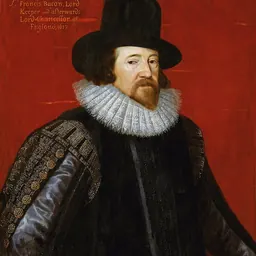
Traske and his followers also emphasized the interpretation of dreams, such that in around 1617, Hamlet Jackson reportedly had a vision directing that the Sabbath should be kept on Saturday, and Traske soon accepted the idea and began to teach it himself. Around this time, in February 1617, Traske also married his second wife Dorothy Coombe, one of his followers and an unlicensed schoolteacher. Traske and his followers were treated harshly in prison and were given only bread, water, and pig’s meat (which Traske refused to eat). In response, Traske wrote several letters to James I complaining about his treatment and defending his beliefs, referring to the king using the familiar “thou” and “thy.” In 1618, Traske was brought before the court of the Star Chamber for “an imediate detraccion and scandall upon the Kinges most Excellent Majesty in the highest degree” for having “insolently and presumptuously” written him, as well as for making “foule and false accusacions” of cruelty against the Bishops and court of High Commission and for “a sedicious practice and purpose to divert his Majesties subjectes from theire obedience to followe him and his Jewish opinions.” In his speech to the judges, Sir Francis Bacon emphasized the danger of “new opinions,” noting that apprentices were learning Hebrew as evidence for the danger of Traske’s ideas.
Later life In 1620, about eighteen months after his public whipping and branding was carried out, Traske published a recantation of his belief in Mosaic dietary laws and seventh-day Sabbatarianism, and he was released from Fleet Prison. Once again free, Traske traveled around London, Dorset, and Gloucestershire preaching antinomianism, but without the Judaizing elements that had led to his previous arrest. Hebdon likewise died in prison in 1625. Jackson, meanwhile, was released from prison, whereupon he and another follower left for Amsterdam to convert to Judaism.
Traske himself joined an Independent congregation in Southwark originally led by Henry Jacob in the 1630s. In 1636, he illegally published The True Gospel Vindicated, which David Como has called "the only book of overtly antinomian theology to reach print prior to 1641." When he was once again arrested that year, he insisted on a hearing by the Lord Mayor, who sent him to jail. Soon after his release, he died and was buried in Lambeth churchyard.
Works
A pearle for a prince, or a princely pearle. As it was delivered in two sermons (1615) Heavens ioy, or, Heaven begun upon earth (1616) Christs kingdome discovered: or, That the true church of God is in England, cleerly made manifest against all sectaries whatsoever (1616) A treatise of libertie from Judaisme, or An acknowledgement of true Christian libertie (1620) The power of preaching. Or, the powerfull effects of the word truely preached, and rightly applyed as it was delivered in one or more sermons (1623) The True Gospel Vindicated, from the Reproach of a New Gospel (1636)
Don’t just read it —
keep it.
Full-length biographies made to live with: read them, listen on the way to work, watch them tonight.
- E-book
- Audio
- Video
Instant download · yours to keep · every purchase keeps this site free
Important facts
People in John Traske's life
Named in this biography and alive at the same time


Contemporaries
People whose lives overlapped John Traske's




Frequently asked questions
Who was John Traske?
Traske, John (<em>c.</em>1585–1636), Church of England clergyman and separatist minister
When was John Traske born?
John Traske was born in 1585.
When did John Traske die?
John Traske died in 1636.
Sources & further reading
Cite this page
APA: Biography.guide. (2026). John Traske. https://biography.guide/john-traske/
MLA: "John Traske." Biography.guide, https://biography.guide/john-traske/.
Chicago: "John Traske." Biography.guide. https://biography.guide/john-traske/.
Data last updated: 2026-09-20 · Spot an error? Report a correction.
Page generated 2026-09-27 05:31 UTC