
About John Sulyard
Lived 1518 – 1575 (aged 56–57). John Sulyard was a lawyer and politician.
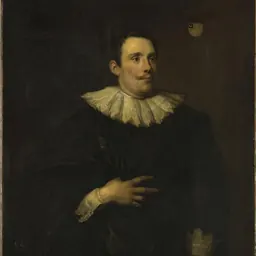
Sir John Sulyard (by 1518 – 1575), of Wetherden and Haughley, Suffolk, was a prominent East Anglian magistrate, landowner, High Sheriff, knight and standard-bearer, strongly Roman Catholic in religious affiliation, who sat in parliament during the reign of Queen Mary I.
Sulyard of Wetherden Sir John Sulyard, a Justice of the Court of King's Bench, (the present subject's grandfather) is thought to have acquired the manor of Wetherden Hall (which had formerly belonged to Roger de Scales) in 1463 by fine, from Walter Bradley and his wife Joan: in 1468 he had a grant of free warren in it. His Hall, of which two truncated 15th century timber ranges survive in a much-remodelled farmhouse, stood at the moated site near to what is now Wetherden Hall Farm. It is observed that he was tutor to Prince Edward from 1473 until the boy's disappearance in 1483, and received the favour of Richard III, and that Wetherden was near to Gipping, seat of Sir James Tyrrell, who was apparently implicated in the prince's death.
The judge first married Agnes (daughter of Richard Hungate ), by whom he had sons Edward (of High Laver, Essex, died c. 1495) and William, and daughter Elizabeth. Secondly he married Anne, daughter and coheir of John and Elizabeth Andrews of Baylham, Suffolk, and by her he had sons Andrew and John, and daughters Elizabeth, Anne and Alice, the uterine cousins of Sir Andrew Wyndsore of Stanwell, Middlesex (whose father Thomas Wyndsore married their mother's sister Elizabeth Andrews).
At Sir John's death in March 1487/88, he founded the Sulyard chantry in the "spectacular" south aisle which he had commenced building at St Mary's Church, Wetherden. and she survived until 1520. Dame Anne completed the south aisle with the porch, adding heraldry from her second marriage to Bourchier. At his death in 1539 the father John asked to be buried at Wetherden near to the graves of his father and mother, and arranged for prayers for his late wife Margaret. He made his son John Sulyard his principal legatee and his executor together with Sir William Drury of Hawstead.
Life John Sulyard was educated as a lawyer at Clifford’s Inn. He married three times. His first wife was Elizabeth Bedingfield, daughter of the younger Sir Edmund Bedingfield (1479-1553) of Oxborough, Norfolk, by whom he had one daughter. He succeeded his father in 1540, and by the following year he had married his second wife, Elizabeth Jerningham, daughter of Sir John Jerningham of Somerleyton, Suffolk and his wife Bridget, daughter of Sir Robert Drury of Hawstead; they had two sons and two daughters. (Elizabeth's sister Anne Jerningham was the wife of Sir Thomas Cornwallis, whose mother was the daughter of Edward Sulyard of High Laver.) His third wife was Alice Carvell, daughter of Humphrey Carvell (Kervill) of Wiggenhall St. Mary, Norfolk. a son of the elder Sir Edmund Bedingfield K.B. (died 1496/97), the builder of Oxburgh Hall.
Sulyard was with the Marquess of Northampton and others, including Sir Henry Bedingfield, Sir William Waldegrave, Sir John Cutts and Sir Thomas Cornwallis, to attack and suppress the rebels at Norwich during Kett's Rebellion in 1549. He maintained his allegiance to the Roman Catholic faith and to the succession of Queen Mary, and this was the foundation of his public career, which was mostly encompassed within Mary's reign. He was with the Earl of Bath, Sir Henry Bedingfield, Henry Jerningham, Clement Higham and others who rallied to Mary's support in Kenninghall, Norfolk on 12 July 1553, during the succession crisis surrounding Lady Jane Grey, in preparation for Mary's journey to London: their swift loyalty to her was decisive in bringing her to the throne. A family tradition alleged that Mary had rested one night at Wetherden Hall on her way from Kenninghall to Framlingham.
Sulyard was elected a Member of Parliament for Ipswich in October 1553, in the parliament for which Henry Bedingfield and Henry Jerningham were Knights of the Shire, and Thomas Cornwallis the sheriff of Ipswich. He was appointed gentleman pensioner and standard bearer late in 1553, in which he remained until the end of Mary's reign. In the parliament of Spring 1554, following Wyatt's rebellion, Sir Clement Higham replaced him at Ipswich, and Sulyard sat for Bodmin, and for Preston in November 1554. From that year he served as a Justice of the Peace in Suffolk until 1561. This manor was anciently associated with Haughley Castle and the lordship of Hugh de Montfort. the great mansion which stands at Haughley Park today was built around 1620, and was remodelled during the 19th century. )
He sat again for parliament representing Ipswich in 1555, and was appointed High Sheriff of Norfolk and Suffolk for 1555–56.
Knighted in March 1557/January 1558, Sulyard's final term in parliament was for Chippenham in 1558. He made his will as from Quidenham in 1569, requesting burial among his ancestors at Wetherden church, and granting his estates to his sons Edward and Thomas. For executors he appointed his widow Alice and her son Humphrey Bedingfield, his son Edward Sulyard and his son-in-law Thomas Tirrell, requiring them to enter into bonds.
Death and monument Sir John Sulyard's will was proved by his son Edward Sulyard on 1 November 1575. He was survived by his widow Alice, who left Haughley Hall to live with her son Humphrey Bedingfield at Quidenham, where she died in 1577.
Heraldry The principal escutcheon on Sulyard's tomb corresponds to the arms Quarterly of 8 as described in the 1561 Visitation,
The four smaller escutcheons below show quarterings for: (a) (sinister) Sulyard quarterly of 8 as above (b) 1 & 4: (Bedingfield) Ermine an eagle displayed Gules; 2 & 3: (Sydenham) Paly bendy Argent and Gules. (d) (dexter) 1 & 4: (Carvell) Gules, a chevron Or between three lions' faces Argent
Family By his first wife, Elizabeth daughter of Sir Edmund Bedingfield junr, Sir John Sulyard had a daughter
Frances Sulyard, married (1) Thomas Garneys of Kenton, Suffolk ), and (2), in 1567, John Lentall. and made a declaration of loyalty, as follows:"I, Edward Sulyarde, of Suff., Esquier, doe acknowledge our most gratious Sov'eigne, Ladie Queene Elizabeth, to be our undoubted lawfull and onlie Queene of Englande and Irlande, and no other forreyne Prince, notwithstandinge any Excommunication, under whose Power are all Persons, both Ecclesiasticall and Temporall, within any her Majestie's Dominions. And also by this doe manifest myselfe bounden and readie, as becometh a true and duetifull Subject, with Body, Lands and Goodds, to defend her Highness against the force of any Prince, Pope, Potentate, Prelate, or whatothersoever her Maiestie's Enemies, which God graunt she may overcome, and longe contynue her prosperous Raigne over us. Written in the xxiiijth of October, 1588. By me Edwarde Sulyarde." Thomas Sulyard (died 1612), married Bridget, daughter of Francis Mannock of Stoke-by-Nayland. Buried at Grundisburgh. Anne Sulyard (died 1558), in 1556 married Sir John Tirrell of Gipping (who died 1601). Buried at Wetherden.
By his third wife, Alice Carvell, he had no issue.
Don’t just read it —
keep it.
Full-length biographies made to live with: read them, listen on the way to work, watch them tonight.
- E-book
- Audio
- Video
Instant download · yours to keep · every purchase keeps this site free
Important facts
People in John Sulyard's life
Named in this biography and alive at the same time




Related people
Same field, nearest in time

Contemporaries
People whose lives overlapped John Sulyard's





Frequently asked questions
Who was John Sulyard?
English politician
When was John Sulyard born?
John Sulyard was born in 1518.
When did John Sulyard die?
John Sulyard died in 1575.
What was John Sulyard's occupation?
John Sulyard was a lawyer and politician.
Sources & further reading
Cite this page
APA: Biography.guide. (2026). John Sulyard. https://biography.guide/john-sulyard/
MLA: "John Sulyard." Biography.guide, https://biography.guide/john-sulyard/.
Chicago: "John Sulyard." Biography.guide. https://biography.guide/john-sulyard/.
Data last updated: 2026-09-20 · Spot an error? Report a correction.
Page generated 2026-09-27 05:19 UTC