
About John Scott
Lived 1774 – 1827 (aged 53). John Scott was a British engraver and copper engraver.
John Scott (1774–1827) was an English engraver, known for his work on topics showing animals.
Life He was born on 12 March 1774 at Newcastle-on-Tyne, where his father, John Scott, worked in a brewery. At the age of twelve he was apprenticed to a tallow-chandler; but at the end of his articles went to London, where his fellow-townsman Robert Pollard gave him two years' instruction, at the same time paying him.
On leaving Pollard, Scott obtained employment from John Wheble, the proprietor of the Sporting Magazine, and for many years executed the portraits of racehorses published there. He became known among English animal engravers.
Scott worked until 1821, when a stroke of paralysis practically terminated his career; during the last years of his life he was assisted by the Artists' Benevolent Fund, of which he had been one of the originators. Scott died at his residence in Chelsea, London, on 24 December 1827. He left a widow, and several daughters; one son, John R. Scott, also became an engraver, and executed some plates for the Sporting Magazine.
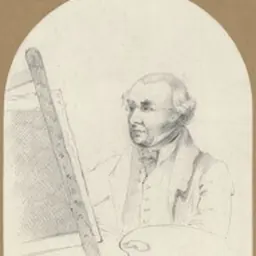
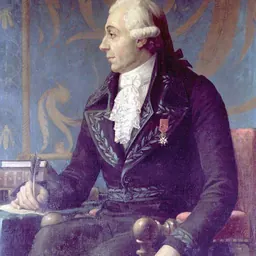
A portrait of Scott, drawn by John Jackson R.A. in 1823, was engraved by William Thomas Fry and published in 1826. A crayon portrait by his son went to the print-room of the British Museum.
Works Scott's works included:
William Barker Daniel's British Rural Sports, 1801, many of the plates in which were both designed and engraved by him; Sportsman's Cabinet, a correct delineation of the Canine Race, 1804; History and Delineation of the Horse, 1809; and Sportsman's Repository, comprising a series of engravings representing the horse and the dog in all their varieties, from paintings by Marshall, Reinagle, Gilpin, Stubbs, and Cooper, 1820, which made Scott famous. Col. Thornton, Breaking Cover by Philip Reinagle, engraving by John Scott. A pair of large plates, Breaking Cover, after Philip Reinagle, and Death of the Fox, after Sawrey Gilpin, issued in 1811, are regarded as his masterpieces. Scott also did much work for publications of a different kind, such as Henry Tresham and William Young Ottley's British Gallery, Ottley's Stafford Gallery, John Britton's Fine Arts of the English School, James Hakewill's Tour of Italy, and Peter Coxe's Social Day.
Don’t just read it —
keep it.
Full-length biographies made to live with: read them, listen on the way to work, watch them tonight.
- E-book
- Audio
- Video
Instant download · yours to keep · every purchase keeps this site free
Important facts
People in John Scott's life
Named in this biography and alive at the same time



Related people
Same field, nearest in time



Contemporaries
People whose lives overlapped John Scott's



Frequently asked questions
Who was John Scott?
English engraver (1774–1827)
When was John Scott born?
John Scott was born on 12 March 1774 in Newcastle upon Tyne.
When did John Scott die?
John Scott died on 24 December 1827 in Chelsea.
What was John Scott's occupation?
John Scott was an engraver and copper engraver.
What nationality was John Scott?
John Scott was British.
Sources & further reading
· DBpedia: John Scott (engraver)
Cite this page
APA: Biography.guide. (2026). John Scott. https://biography.guide/john-scott-engraver/
MLA: "John Scott." Biography.guide, https://biography.guide/john-scott-engraver/.
Chicago: "John Scott." Biography.guide. https://biography.guide/john-scott-engraver/.
Data last updated: 2026-09-20 · Spot an error? Report a correction.
Page generated 2026-09-27 05:15 UTC