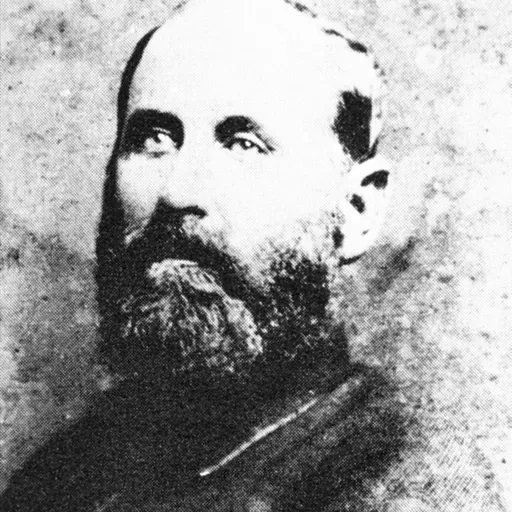
About John Robert Dunn
Lived 1834 – 1895 (aged 60–61). John Robert Dunn was a South African military personnel.
John Robert Dunn (1834 – 5 August 1895) was a South African hunter and diplomat of British descent. Born in Port Alfred in 1834, he spent his childhood in Port Natal/Durban. He was orphaned as a teenager, and lived in native dress on the land near the Tugela River. His conversance with Zulu customs and language allowed his increasing influence among Zulu princes.
In the run-up to the Zulu War, he was served with an ultimatum by the British at the same time as Cetshwayo. He had to forgo any position of neutrality and sided with the British. In the aftermath, he was allocated land in a buffer zone between the colony and Zululand. Besides his first wife Catherine, he took many Zulu women as wives and left a large Christian progeny when he died at age 60 or 61.
Early life Dunn was born in Port Alfred in 1834. He was the son of Robert Newton Dunn. Resident of Port Elizabeth, Robert Dunn was one of the early settlers at Port Natal. On his mother's side, he was the grandson of Alexander Biggar. Robert Dunn worked as a trader, owned land at Sea View
Dunn lost his parents early. When he was 14, his father was trampled to death by an elephant. His mother Anne died three years later. Dunn accompanied the Zulu Indunas to Fort Pearson to receive Bulwer's ultimatum for Cetshwayo. Fearing for his life, he did not deliver the ultimatum to Cetshwayo and retired to Emangete, wanting to remain neutral in the conflict between the British and the Zulu.
So began the Anglo-Zulu War. He was persuaded to take part on the British side by Lord Chelmsford and was in charge of the Intelligence Department. He and his scouts provided excellent service to the British forces and took part in the Battle of Gingindlovu and in the relief of Eshowe. After the Zulu's early success at the Battle of Isandlwana where they soundly defeated the British, they were themselves defeated at the Battle of Ulundi, which resulted in the eventual capture of Cetshwayo.
On 1 September 1879, Zululand was annexed and incorporated in Natal. In the Ulundi Settlement of 1879, Dunn was given the largest piece of land of all thirteen rulers in the subdivision of Zululand, which was also closest to Durban, placing him in charge of a buffer zone between the British and the less-trusted rulers. These subdivisions would last until Cetshwayo returned from exile in January 1883. Then the thirteen chiefs were disposed, Dunn lost his power and income and was included in a large native reserve under the control of the British Commander Sir Garnet Wolseley.
Marriage
Though he was already married to Catherine Pierce - daughter of a white settler father and mother of Cape Malay ancestry - he accepted a total of 48 Zulu wives during his lifetime, much to Catherine's disapproval. Apart from two wives presented to him by Cetshwayo after a gift of two firearms, he followed Zulu custom and paid lobola of nine to fifteen cattle for each of the other forty-six wives. The Zulu wives came from twenty-three different clans mostly from the southern and central coastal regions. All were married in the native custom, though some were baptised, converting as Roman Catholics or Anglicans, with all his children brought up as Christians and given some schooling.
Dunn's residences were constructed in the form of traditional Zulu kraals. His western style house stood at its centre, with separate beehive huts for his wives, soldiers, servants and Zulu visitors, cattle kraals, stables and food storage pits, all surrounded by a hedge of thorns. He maintained kraals at Mangete, Emoyeni and Ngoya with wives at each place. He banished several wives for breaching his household rules. His wives and children were not allowed to interact socially with his white guests and his coloured children were discouraged from any serious interaction with their white siblings.
Later years and heritage John Dunn died on 5 August 1895 of dropsy and heart disease and was buried at Emoyeni in the Colony of Natal, having married 48 wives and fathered 117 children. He was survived by 23 wives including Catherine, besides 33 sons and 46 daughters. Catherine died on 27 January 1905, at age 72. All of Dunn's dependents were settled on a 40 km2 reserve near the Tugela River. Their ownership of the land was confirmed by the John Dunn Land Distribution Acts of 1902 and 1935.
It was however only by 1974, during the Apartheid years and 84 years since the death of John Dunn, that the Dunn family was able to obtain title deeds for Dunnsland, i.e. Mangete and Emoyeni. This process, complicated by racial legislation, was driven by Daniel Dunn, great-grandson of John and the then chairman of the Dunn's Descendants Association.
Starting 1971 however, a neighbouring Zulu chief laid claim to the 68 farms. The situation escalated from 1996 onwards when chief Nkosi Mathaba began settling his Macambini clan members on the Dunn farms, and some 2,000 squatters built their shacks on the cane plantations. In 2004, after an eight-year court battle, the land was restored to the Dunn family, of whom almost 1,000 were still resident on the farms.
Don’t just read it —
keep it.
Full-length biographies made to live with: read them, listen on the way to work, watch them tonight.
- E-book
- Audio
- Video
Instant download · yours to keep · every purchase keeps this site free
Important facts
People in John Robert Dunn's life
Named in this biography and alive at the same time



Related people
Same field, nearest in time


Contemporaries
People whose lives overlapped John Robert Dunn's




Frequently asked questions
Who was John Robert Dunn?
South African hunter, settler and diplomat
When was John Robert Dunn born?
John Robert Dunn was born in 1834 in Durban.
When did John Robert Dunn die?
John Robert Dunn died on 5 August 1895 in Colony of Natal.
What was John Robert Dunn's occupation?
John Robert Dunn was a military personnel.
What nationality was John Robert Dunn?
John Robert Dunn was South African.
Sources & further reading
Cite this page
APA: Biography.guide. (2026). John Robert Dunn. https://biography.guide/john-robert-dunn/
MLA: "John Robert Dunn." Biography.guide, https://biography.guide/john-robert-dunn/.
Chicago: "John Robert Dunn." Biography.guide. https://biography.guide/john-robert-dunn/.
Data last updated: 2026-09-23 · Spot an error? Report a correction.
Portrait: Wikimedia Commons · author & licence
Page generated 2026-09-27 05:08 UTC