
About John Parkinson
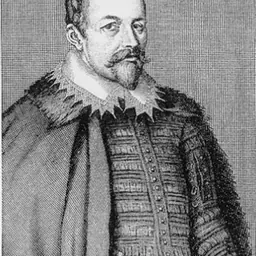
Lived 1567 – 1650 (aged 82–83). John Parkinson was an English botanist and biologist.
John Parkinson (1567–1650; buried 6 August 1650) was the last of the great English herbalists and one of the first of the great English botanists. He was apothecary to James I and a founding member of the Worshipful Society of Apothecaries in December 1617, and was later Royal Botanist to Charles I. He is known for two monumental works, Paradisi in Sole Paradisus Terrestris (Park-in-Sun's Terrestrial Paradise, 1629), which generally describes the proper cultivation of plants; and Theatrum Botanicum (The Botanical Theatre or Theatre of Plants, 1640), the most complete and beautifully presented English treatise on plants of its time. One of the most eminent gardeners of his day, he kept a botanical garden at Long Acre in Covent Garden, today close to Trafalgar Square, and maintained close relations with other important English and Continental botanists, herbalists and plantsmen.
Life Parkinson, born in 1567, spent his early life in Yorkshire. He moved to London at the age of 14 years to become an apprentice apothecary. Rising through the ranks, he eventually achieved the position of apothecary to James I, and a founding member of the Worshipful Society of Apothecaries in December 1617; until 1622 he also served on the Court of Assistants, the Society's governing body. In addition, he assisted the Society in obtaining a grant of arms and in preparing a list of all medicines that should be stocked by an apothecary. He was on the committee that published their Pharmacopœia Londinensis (London Pharmacopœia) in 1618.
Then, on the cusp of a new science, he became botanist to Charles I. Anna Parkinson, a "distant descendant" When he summed up his experience in writing Paradisi in Sole Paradisus Terrestris (Park-in-Sun's Terrestrial Paradise, 1629 – "Park-in-Sun" is a pun on "Parkinson"), with the explanatory subtitle , it was natural that he dedicated this work, which he called his "Speaking Garden", Blanche Henrey called the work the "earliest important treatise on horticulture published in England", while the Hunt catalogue described it as "a very complete picture of the English garden at the beginning of the seventeenth century, and in such delightful, homely, literary style that gardeners cherish it even to the present day."
Narcissi, Paradisus Terrestris 1629. 8. Great Double Yellow Spanish Daffodil Parkinson actively sought new varieties of plants through his contacts abroad and by financing William Boel's plant-hunting expedition to Iberia and North Africa in 1607–1608. He introduced seven new plants into England and was the first gardener in England to grow the great double yellow Spanish daffodil (Pseudonarcissus aureus Hispanicus flore pleno or Parkinson's Daffodil, see illustration). at the foot of the title page warned the gardener against hubris and in having excessive regard for his efforts, for whoever tries to compare Art with Nature and gardens with Eden "measures the stride of the elephant by the stride of the mite and the flight of the eagle by that of the gnat". that it was at least in size and probably surrounded by a wall. Four hundred and eighty-four types of plant are recorded as having been grown in the garden. He is commemorated in the Central American genus of leguminous trees Parkinsonia. Paradisi in Sole also inspired the children's writer Juliana Horatia Ewing (1841–1885) to write the story Mary's Meadow, which was first published from November 1883 to March 1884 in Aunt Judy's Magazine (1866–1885), produced by her mother Margaret Gatty. In the story, some children read Paradisi in Sole and are inspired to create their own garden. The magazine received much favourable correspondence about the story, and in July 1884 it was suggested that a Parkinson Society should be formed. The objects of the society were to "search out and cultivate old garden flowers which have become scarce; to exchange seeds and plants; to plant waste places with hardy flowers; to circulate books on gardening amongst the Members... [and] to try to prevent the extermination of rare wild flowers, as well as of garden treasures." of Crispijn van de Passe the Elder. Theatrum Botanicum, with 1,688 pages of text, describes over 3,800 plants and was the most complete and beautifully presented English treatise on plants of its day. It was the first work to describe 33 native plants, 13 of which grew near Parkinson's Middlesex home. Some of these plants, such as the Welsh poppy, were very common, while others grew in limited areas, such as the Strawberry Tree and the Lady's Slipper. However all had gone unnoticed or at least unrecorded. He intended the book to be a reliable guide for apothecaries, and it remained so for more than a hundred years after his death. Parkinson presented the work to Charles I, who conferred on him the title "Botanicus Regis Primarius" ("Royal Botanist of the First Rank") though this came without a salary.
Published works Frontispiece of Paradisi in Sole Paradisus Terrestris (1629) by Swiss artist Christopher Switzer. Of interest is a depiction of a Vegetable Lamb of Tartary near the river behind the figure of Adam. Folio. In some copies the title page is woodcut; in others it is printed (dated 1635). Later editions and reprints
Folio.
Facsimile of the 1629 edition without the letterpress title page, made from copies in the Bodleian Library. Facsimile of the 1629 edition.
Folio. Reprints:
Don’t just read it —
keep it.
Full-length biographies made to live with: read them, listen on the way to work, watch them tonight.
- E-book
- Audio
- Video
Instant download · yours to keep · every purchase keeps this site free
Important facts
Related people
Same field, nearest in time


Contemporaries
People whose lives overlapped John Parkinson's




Frequently asked questions
Who was John Parkinson?
English herbalist and botanist (1567-1650)
When was John Parkinson born?
John Parkinson was born in 1567 in Nottinghamshire.
When did John Parkinson die?
John Parkinson died on 6 August 1650 in London.
What was John Parkinson's occupation?
John Parkinson was a botanist and biologist.
What nationality was John Parkinson?
John Parkinson was English.
Sources & further reading
· DBpedia: John Parkinson (botanist)
Cite this page
APA: Biography.guide. (2026). John Parkinson. https://biography.guide/john-parkinson/
MLA: "John Parkinson." Biography.guide, https://biography.guide/john-parkinson/.
Chicago: "John Parkinson." Biography.guide. https://biography.guide/john-parkinson/.
Data last updated: 2026-09-20 · Spot an error? Report a correction.
Page generated 2026-09-27 05:28 UTC