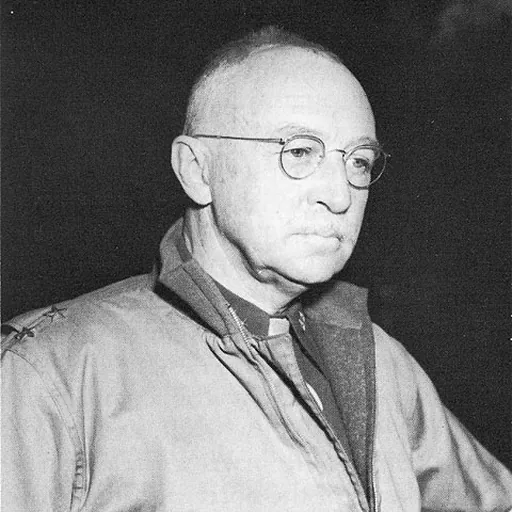
About John P. Lucas
Lived 1890 – 1949 (aged 59). John P. Lucas was an American military officer.
Major General John Porter Lucas (January 14, 1890 – December 24, 1949) was a senior officer of the United States Army who saw service in World War I and World War II. He is most remembered for being the commander of VI Corps during the Battle of Anzio (codenamed Operation Shingle) in early 1944 during the Italian campaign of World War II.
Early life and education
John Porter Lucas was born on January 14, 1890, to the former Frances Thomas Craighill and her husband, Dr. Charles C. Lewis, in Kearneysville, Jefferson County, West Virginia. Generations of his ancestors had been prominent in Jefferson County. After education in the local schools, he attended the United States Military Academy (USMA) at West Point, New York, from where he graduated 55th in a class of 82 cadets with the class of 1911. His fellow graduates included numerous men who would later rise to the rank of brigadier general or higher in their military careers, such as Philip B. Fleming, Joseph C. Mehaffey, Raymond A. Wheeler, Harry R. Kutz, Thompson Lawrence, Gustave H. Franke, Bethel W. Simpson, Harold F. Nichols, Charles P. Hall, Alexander D. Surles, Karl S. Bradford, Herbert Dargue, Frederick Gilbreath, James B. Crawford, Jesse A. Ladd, Paul W. Baade, James R. N. Weaver, William H. H. Morris Jr., Ira T. Wyche and John L. Homer.
Early military career Commissioned as a cavalry officer on June 13, 1911, Lucas transferred to the Field Artillery in 1920. Lucas spent the first few years of his service in the Philippines, returning to the US in August 1914. Lucas was assigned to Troop A of the 13th Cavalry Regiment at Columbus, New Mexico in October 1914, but that unit was temporarily based at Douglas, Arizona, and in January 1915 he became commander of the regiment's Machine Gun Troop. On March 9, 1916, Lucas distinguished himself in action against Pancho Villa's raiders during the Battle of Columbus, fighting his way alone and bare-footed through attacking Villistas from his quarters to the camp's guard tent. There he organized resistance with a single machine gun until the remainder of his unit and a supporting troop arrived, then maneuvered his men to repel the attackers. He served during the Mexican Punitive Expedition, as an Aide de Camp to Major General George Bell Jr. at Fort Bliss, Texas.
World War I Lucas joined the 33rd Infantry Division in August 1917 at Camp Logan, Texas, where he continued to serve Bell, commander of the 33rd, as Aide de Camp. Lucas then led the division's Infantry School of Arms while the division trained for war. Promoted to Major on January 15, 1918, he was given command of the 108th Field Signal Battalion (the Signal Battalion for the 33rd Infantry Division) and sailed to France with this unit. He simultaneously served as the Division Signal Officer. While serving as commander of the 108th, he was seriously wounded in action near Amiens, France, on June 23, 1918. Lucas was the battalion's first casualty, being struck by a fragment from a German high-explosive shell. Evacuated to a hospital in England, he was later sent back to the United States on convalescent leave, where he recovered from his wounds in the Washington, D.C., area. His wounds were severe enough to prevent him from rejoining the 33rd Infantry Division. He was promoted to Lieutenant Colonel on October 31, 1918. Following the war, he would revert to his permanent rank of Captain.
Inter-war period From 1919 to 1920, and after returning to the United States, Lucas was assigned as a military science instructor for the University of Michigan R.O.T.C. program in Ann Arbor, Michigan. In 1920, he rejoined the Field Artillery. He was promoted to Major in 1920, and in that year also entered the Field Artillery School at Fort Sill, Oklahoma (1920–1921). He graduated from the Field Artillery Advanced Course in 1921 and became an instructor at the Field Artillery School (1921–1923). He then entered the one-year program at the United States Army Command and General Staff College, Fort Leavenworth, Kansas, graduating in 1924 and finishing 78th out of 247 in his class. He next became the Professor of Military Science and Tactics for the R.O.T.C. program at Colorado Agricultural College (now Colorado State University), Fort Collins, Colorado. He served in this position for approximately 5 years (1924–1929), earning a Master of Science degree in 1927.
He was selected for command of 1st Battalion, 82d Field Artillery Regiment at Fort Bliss, Texas, from 1929 to 1930/31. He then enrolled in the Army War College, Carlisle, Pennsylvania, in June 1931, and graduated in June 1932. From 1932 to 1936, Lucas worked in the Personnel Division, G1, of the War Department General Staff. While he was there he was promoted to Lieutenant Colonel. He was promoted again, now to Colonel on May 2, 1940, Lucas spent three weeks as Clark's deputy at Fifth Army Headquarters before returning to the United States.
Although relieved of his command and bitter towards Clark and the British, who he believed had used him as a scapegoat, Lucas's achievements during the fighting in Italy were still recognized with the award of the Army Distinguished Service Medal, the Navy Distinguished Service Medal, and the Silver Star. The Navy DSM's citation reads:
In March 1944, Lucas was assigned as deputy commander and later as commander of the U.S. Fourth Army, headquartered at Fort Sam Houston, Texas.
Post-war service and final years After the war, he was made Chief of the US Military Advisory Group to the Nationalist Chinese government, led by Generalissimo Chiang Kai-shek (1946–1948). In 1948, he was assigned as Deputy Commander of the reactivated Fifth Army in Chicago, Illinois. While still on active duty in that post, he died suddenly at Naval Station Great Lakes Naval Hospital, near Chicago on December 24, 1949. He is buried in Arlington National Cemetery with his wife Sydney Virginia Lucas (1892–1959). An obituary written by long-time associate and friend Major General Laurence B. Keiser appeared in the October 1950 issue of The Assembly, the magazine of the Association of West Point graduates.
Memorialization A camp in Sault Ste. Marie, Michigan, was named after MG Lucas in honor of his service. The polo field at Fort Sill, Oklahoma, was renamed Lucas Field in his honor. Lucas was widely known as a polo player in his youth. Lucas Street at Fort Sill is also named in his honor. On June 28, 1962, Lucas Place at Fort Eustis was named in his honor.
Awards and decorations Decorations
Dates of rank 2nd Lieutenant (Regular Army) (RA) – June 13, 1911 1st Lieutenant (RA) – July 1, 1916 Captain (RA) – May 15, 1917 Major (Temporary) – January 15, 1918 Lieutenant Colonel (Temporary) – October 30, 1918 Captain (RA) – January 20, 1920 Major (RA) – July 1, 1920 Lieutenant Colonel (RA) – August 1, 1935 Colonel (RA) – May 2, 1940 Brigadier General (Army of the United States) (AUS) – October 1, 1940 Major General (AUS) – August 5, 1941 Major General (RA) – January 24, 1948
Miscellany John Porter Lucas was a Freemason, having been entered (February 20, 1919), passed (March 6, 1919), and raised (March 10, 1919) in the Elk Branch Lodge No. 93, Shenandoah Junction, WV. He is also believed to have been a member of the York Rite, attaining the degree of Knight Templar. According to his obituary in the October 1950 issue of the Assembly, he had served as a Past Master of a Lodge of Freemasons in Fort Collins, Colorado.
Media depiction In the movie Anzio the character of the over-cautious "General Lesley" (played by Arthur Kennedy) is presumably based on John P. Lucas.
Don’t just read it —
keep it.
Full-length biographies made to live with: read them, listen on the way to work, watch them tonight.
- E-book
- Audio
- Video
Instant download · yours to keep · every purchase keeps this site free
Important facts
People in John P. Lucas's life
Named in this biography and alive at the same time

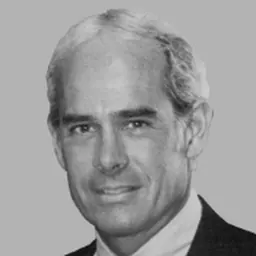
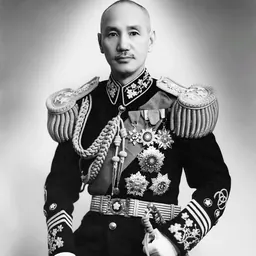
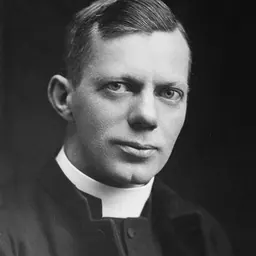
Related people
Same field, nearest in time



Contemporaries
People whose lives overlapped John P. Lucas's


Frequently asked questions
Who was John P. Lucas?
United States Army general (1890–1949)
When was John P. Lucas born?
John P. Lucas was born on 14 January 1890 in Kearneysville.
When did John P. Lucas die?
John P. Lucas died on 24 December 1949 in Naval Station Great Lakes.
What was John P. Lucas's occupation?
John P. Lucas was a military officer.
What nationality was John P. Lucas?
John P. Lucas was American.
Sources & further reading
Cite this page
APA: Biography.guide. (2026). John P. Lucas. https://biography.guide/john-p-lucas/
MLA: "John P. Lucas." Biography.guide, https://biography.guide/john-p-lucas/.
Chicago: "John P. Lucas." Biography.guide. https://biography.guide/john-p-lucas/.
Data last updated: 2026-09-20 · Spot an error? Report a correction.
Page generated 2026-09-27 05:10 UTC