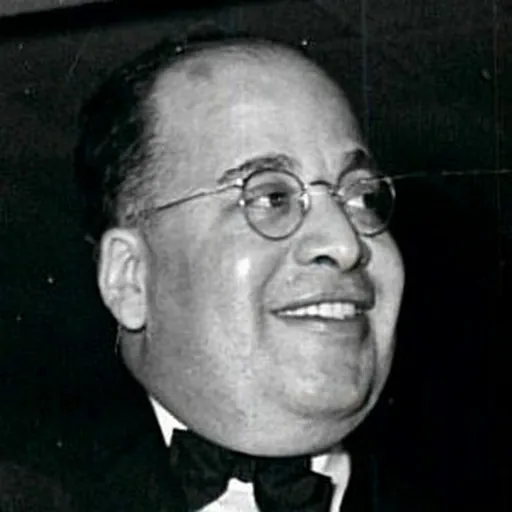
About John P. Davis
Lived 1905 – 1973 (aged 68). John P. Davis was an American journalist, lawyer and writer, known for National Negro Congress.
John Preston Davis (January 19, 1905 – September 11, 1973) was an American journalist, lawyer and activist intellectual, who became prominent for his work with the Joint Committee on National Recovery (JCNR). In 1935, he co-founded the National Negro Congress, an organization dedicated to the advancement of African Americans during the Great Depression.
In 1946, he founded Our World magazine, a full-size, nationally distributed publication for African-American readers. He also published the American Negro Reference Book, covering virtually every aspect of African-American life, present and past.
Biography John P. Davis was born in Washington, D.C., the son of Dr. William Henry Davis and Julia Davis. His father was a graduate of Howard University and served as principal of Armstrong High School. During World War I, Dr. Davis was appointed as Secretary to Dr. Emmett Jay Scott, Special Assistant to the United States Secretary of War. In the 1920s, Dr. Davis served as Secretary to the Presidential Commission investigating the economic conditions in the Virgin Islands.
The early years Davis attended segregated schools in Washington, D.C., graduating from the elite Dunbar High School, which stressed an academic curriculum. In 1922, he enrolled in Bates College in Lewiston, Maine. He graduated in 1926, earning an A.B. and double honors in English and Psychology. At Bates, he was president of Delta Sigma Rho, an honorary debating fraternity, and editor of the student publication The Bobcat. He enlisted the aid of Bates trustee Louis B. Costello, when Delta Sigma Rho's national council denied him membership because of his race.
Davis toured Europe with the Bates College debating team. He was among the first African-American men to be sent overseas under the auspices of the American University Union to engage in international debate; his team from Bates met and defeated Cambridge University. While an undergraduate at Bates College, Davis was nominated for a Rhodes scholarship. He contributed short stories to The Crisis, official magazine of the NAACP, and Opportunity: A Journal of Negro Life, published by the National Urban League. His short story "The Overcoat" was a prize-winner in Opportunitys 1926–27 literary contest.
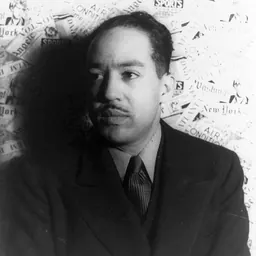
With his literary interests, Davis was drawn into the Harlem Renaissance. After college, he moved to New York City, where for a time, he replaced the celebrated scholar W. E. B. Du Bois as literary editor of The Crisis. During this period, Davis joined with other young black writers – Zora Neale Hurston, Langston Hughes, Gwendolyn Bennett, Wallace Thurman, Aaron Douglas, Richard Bruce – to produce Fire!!, a magazine devoted to young African-American artists.
Harvard University Davis had a fellowship to Harvard University from 1926 to 1927, and earned his master's degree in journalism. He left Harvard to join the staff of Fisk University, a historically black college in Nashville, where he served as Director of Publicity from (1927 to 1928). He returned to Harvard University and earned an LLB degree from Harvard Law School in 1933.
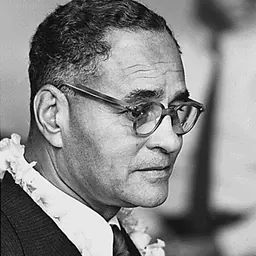
At Harvard, Davis cemented lifelong friendships with a small core of black students, including fellow Dunbar High School alumni Robert C. Weaver, later appointed as the first black member of a Presidential cabinet; William Hastie, later appointed as the first black federal judge; and Ralph Bunche, later a statesman and diplomat who was awarded a Nobel Peace Prize.
These friends remained important to Davis throughout his career. During their student years, the men discussed race and politics, especially the inadequacy of the black Republican leadership. When the Great Depression intensified the social and economic problems confronting black America, Davis and his colleagues looked to the example of Reconstruction, when federal power was used to redress the plight of former slaves. They called on the federal government to ensure black civil and political rights. The New Deal of Franklin D. Roosevelt seemed to offer the possibility of federal intervention for economic justice.
Marriage and family Davis married Marguerite DeMond, the daughter of Reverend Abraham Lincoln DeMond and Lula Watkins (Patterson) DeMond. Marguerite had attended Avery Normal Institute in Charleston, South Carolina, operated by the American Missionary Association and the Congregationalist Church. Even before the Civil War, Avery Normal Institute's racially integrated faculty was providing quality educations for African Americans. She attended Syracuse University in 1931 and came to Washington, D.C., with her mother in 1932, after the death of her father.
Marguerite DeMond went to work as a researcher for African-American historian Carter G. Woodson's Association for the Study of African American Life and History. After a one-year courtship, she and Davis were married. They had four children, including Michael DeMond Davis, who became a journalist and author of Black American Women in Olympic Track and Field and the Thurgood Marshall biography.
Joint Committee on National Recovery In 1933, John P. Davis, formed the Negro Industrial League (NIL), a loosely structured social movement organization, and the Joint Committee on National Recovery (JCNR), a movement organization network, to monitor National Recovery Administration hearings and challenge the occupational exclusions, geographic wages differentials, and other discriminatory devices embedded in early New Deal labor and employment laws, which functioned to exclude Black workers from coverage or assign them subminimum wages.
The American Negro Reference Book In 1964, Davis served as editor of special publications for the Phelps-Stokes Fund. He compiled in a single volume a reliable summary on the main aspects of Negro life in America, presenting it with historical depth to provide the reader with a true perspective. The American Negro Reference Book covered virtually every aspect of African-American life, present and past.
Papers and collections The largest collection of Davis' papers is in the Schomburg Center for Research in Black Culture, New York Public Library. Insight into Davis' political and social views can be found in his own writings. The Papers of the National Negro Congress reproduces all of the organization's records that are housed at the Schomburg Center for Research in Black Culture, including the voluminous working files of Davis and successive executive secretaries of the National Negro Congress. Beginning with papers from 1933 that predate the formation of the National Negro Congress, the wide-ranging collection documents Davis’ involvement in the Negro Industrial League. It includes the "Report Files" of Davis’ interest in the "Negro problem."
Artifacts and papers of Davis are being acquired by the Smithsonian Institution's National Museum of African-American History and Culture.
Don’t just read it —
keep it.
Full-length biographies made to live with: read them, listen on the way to work, watch them tonight.
- E-book
- Audio
- Video
Instant download · yours to keep · every purchase keeps this site free
Important facts
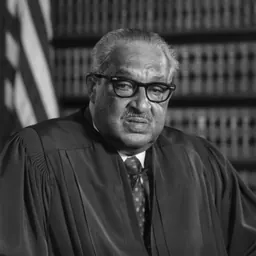
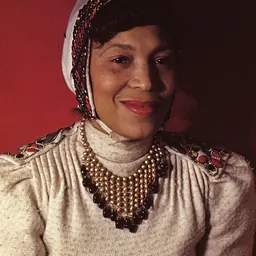
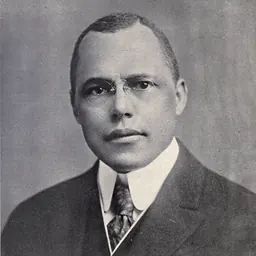
People in John P. Davis's life
Named in this biography and alive at the same time


Related people
Same field, nearest in time



Contemporaries
People whose lives overlapped John P. Davis's





Frequently asked questions
Who was John P. Davis?
American journalist (1905–1973)
When was John P. Davis born?
John P. Davis was born on 19 January 1905 in Washington, D.C..
When did John P. Davis die?
John P. Davis died on 11 September 1973.
What was John P. Davis's occupation?
John P. Davis was a journalist, lawyer and writer.
What was John P. Davis known for?
John P. Davis was known for National Negro Congress.
What nationality was John P. Davis?
John P. Davis was American.
Sources & further reading
Cite this page
APA: Biography.guide. (2026). John P. Davis. https://biography.guide/john-p-davis/
MLA: "John P. Davis." Biography.guide, https://biography.guide/john-p-davis/.
Chicago: "John P. Davis." Biography.guide. https://biography.guide/john-p-davis/.
Data last updated: 2026-09-23 · Spot an error? Report a correction.
Portrait: Wikimedia Commons · author & licence
Page generated 2026-09-27 05:05 UTC