
About John Ogle
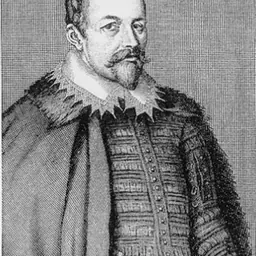
Lived 1569 – 1640 (aged 70–71). John Ogle was an English military officer.
Sir John Ogle (1569–1640) was an English military commander.
Life
Origins John Ogle was the fifth son of Thomas Ogle of Pinchbeck, Lincolnshire (died 3 May 1574) by Jane (died 2 September 1574), daughter of Adlard Welby of Gedney, Lincolnshire. The eldest son, Sir Richard Ogle, knighted on 23 April 1603, was sheriff of Lincolnshire in 1608, and died insolvent in the Fleet in 1627. His portrait is at Ayscoughfee Hall. Born at Pinchbeck, John was baptised there on 28 February 1568–9.
The Low Countries Devoting himself to the profession of arms, he became in 1591 sergeant-major-general under Sir Francis Vere in the Low Countries, and remained on active service there for nearly thirty years. On 2 July 1600 he took part, as lieutenant-colonel under Sir Francis Vere, in the great Battle of Nieuport. In the retreat of the English at the opening of the engagement, he helped to rescue Vere, who had been wounded. Afterwards he rallied the English force, and, renewing the fight, finally drove the enemy back. Ogle was also with Vere while the latter was besieged in Ostend. In December 1601, when Vere desired negotiations with the Spanish besiegers, Ogle was sent to the camp of the Archduke as hostage for the safety of the Spanish envoys who were sent to Vere's quarters. William Dillingham included in his Commentaries of Sir Francis Vere (1657) Ogle's accounts of the last charge at the battle of Nieuport, and of the parley at Ostend.
During a brief stay in England in 1603, Ogle was knighted at Woodstock (10 December), but he soon returned to the Low Countries, and actively helped to recover Sluis from the Spaniards in April 1604. With the other English colonels, Sir Horace Vere and Sir Edward Cecil, Ogle had frequent differences of opinion; but his energy and politic temper were fully recognised by the States-General and the stadtholder, Prince Maurice, who in 1610 nominated him to the responsible office of governor of Utrecht. That city was at the time showing those first signs of discontent with the policy of Prince Maurice and the States-General which led, a few years later, to serious internal commotion throughout the Dutch provinces. And one of Ogle s earliest duties was to suppress a conspiracy which had for its object the seizure of himself and the overpowering of his garrison. When Barneveldt, the leader of the party opposed to Prince Maurice, gained a position of influence in Utrecht, Ogle hesitated to take any strong measures against him, because he had been a friend and admirer of Ogle's former chief, Sir Francis Vere. But in 1618, when urged by Barneveldt's supporters to place his soldiers at their disposal, he deliberately refused. His attitude had not, however, been sufficiently decisive, in the earlier stages of the movement, to warrant his continuance in his office, and before the year closed he was succeeded as governor by Sir Horace Vere. Shortly afterwards he finally left the Low Countries.
Don’t just read it —
keep it.
Full-length biographies made to live with: read them, listen on the way to work, watch them tonight.
- E-book
- Audio
- Video
Instant download · yours to keep · every purchase keeps this site free
Important facts
People in John Ogle's life
Named in this biography and alive at the same time


Related people
Same field, nearest in time


Contemporaries
People whose lives overlapped John Ogle's




Frequently asked questions
Who was John Ogle?
English army officer
When was John Ogle born?
John Ogle was born in 1569.
When did John Ogle die?
John Ogle died in 1640 in London.
What was John Ogle's occupation?
John Ogle was a military officer.
What nationality was John Ogle?
John Ogle was English.
Sources & further reading
Cite this page
APA: Biography.guide. (2026). John Ogle. https://biography.guide/john-ogle/
MLA: "John Ogle." Biography.guide, https://biography.guide/john-ogle/.
Chicago: "John Ogle." Biography.guide. https://biography.guide/john-ogle/.
Data last updated: 2026-09-20 · Spot an error? Report a correction.
Page generated 2026-09-27 05:33 UTC