
About John of Tours
Lived 1050 – 1122 (aged 71–72). John of Tours was a catholic priest and catholic bishop.
John of Tours or John de Villula (died 1122) was a medieval Bishop of Wells in England who moved the diocese seat to Bath. He was a native of Tours and was King William I of England's doctor before becoming a bishop. After his consecration as bishop, he was either given or purchased Bath Abbey, a rich monastery, and then moved the headquarters of the diocese from Wells, to the abbey. He rebuilt the church at Bath, building a large cathedral that no longer survives. He gave a large library to his cathedral and received the right to hold a fair in Bath. Not noted for his scholarship, he died suddenly in 1122.
Early life A native of Tours, John was an Angevin-French physician to King William I of England, being present at the king's deathbed in 1087. William of Malmesbury, the medieval chronicler, called him "a very skilled doctor, not in theoretical knowledge, but in practice." He had been a priest of Tours before becoming doctor to King William. He seems to have learned his medical skills not in a school, but was considered a skilled doctor. at Canterbury by Archbishop Lanfranc, the Archbishop of Canterbury. as well as the city of Bath itself. Whether John paid Rufus for the town or whether he was given the town as a gift by the king is unclear. By acquiring the town of Bath, John also acquired the mint that was in the town. In 1090 he transferred the seat, or administration, of the bishopric to Bath Abbey, probably as an attempt to increase the revenues of his see. Bath was a rich abbey, and Wells had always been a poor diocese. By taking over the abbey, John increased his episcopal revenues. William of Malmesbury portrays the moving of the episcopal seat as motivated by a desire for the lands of the abbey, but it was part of a pattern at the time of moving cathedral seats from small villages to larger towns.
John rebuilt the monastic church at Bath, which had been damaged during one of Robert de Mowbray's rebellions. As rebuilt, it was only surpassed in size by the cathedrals at Ely, Norwich and Winchester. The present Bath Cathedral is not the building that John built, and occupies only a fraction of the space that John's building encompassed. He also reformed the administration of his diocese, setting up archdeacons and organising a court for hearing ecclesiastical cases. His efforts to reform his diocese led to his cathedral chapter's complaining of their treatment, which John seems to have ignored. At Wells, he was accused of destroying the community of canons there, which had been created by his predecessor. After the accession of King Henry I of England, John received a confirmation of the grant of the city of Bath, paying 500 pounds of silver for the verification. In 1102, John secured from King Henry the right to hold fairs at Bath on the feast day of the cathedral's patron saint, Saint Peter. one of early councils called during the Investiture Controversy in England. During the reign of King Henry I, who succeeded his brother King William in 1100, John along with Robert Bloet, the Bishop of Lincoln, consecrated abbots who had been invested in office by the king. John attended Anselm's reforming Council of London in 1102, which debated and passed decrees to reform the clergy. He suffered a heart attack after dinner and died suddenly. Traditionally the date of his death is given as 29 December. At first he treated the monks at Bath with contempt and confiscated much of the lands of the abbey for his own use, but in 1106 he restored their lands to them. John gave much of the revenues of Wells to Hildebert.
Don’t just read it —
keep it.
Full-length biographies made to live with: read them, listen on the way to work, watch them tonight.
- E-book
- Audio
- Video
Instant download · yours to keep · every purchase keeps this site free
Important facts
People in John of Tours's life
Named in this biography and alive at the same time
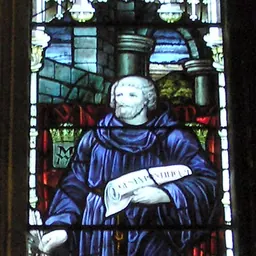

Related people
Same field, nearest in time

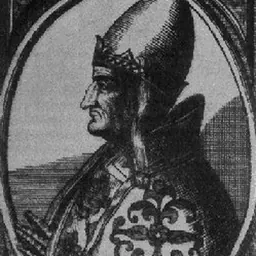
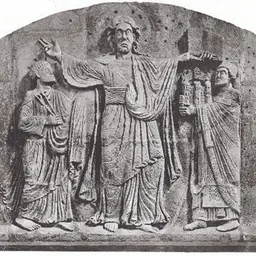
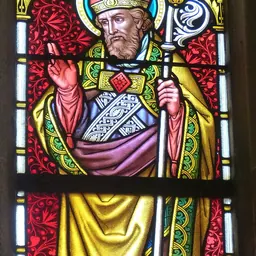
Contemporaries
People whose lives overlapped John of Tours's



Frequently asked questions
Who was John of Tours?
Bishop of Bath; Bishop of Wells
When was John of Tours born?
John of Tours was born in 1050 in Tours.
When did John of Tours die?
John of Tours died in 1122.
What was John of Tours's occupation?
John of Tours was a catholic priest and catholic bishop.
Sources & further reading
Cite this page
APA: Biography.guide. (2026). John of Tours. https://biography.guide/john-of-tours/
MLA: "John of Tours." Biography.guide, https://biography.guide/john-of-tours/.
Chicago: "John of Tours." Biography.guide. https://biography.guide/john-of-tours/.
Data last updated: 2026-09-20 · Spot an error? Report a correction.
Page generated 2026-09-27 05:25 UTC