
John of Sahagún
Spanish Augustinian friar, priest and saint
About John of Sahagún
Lived 1419 – 1479 (aged 59). John of Sahagún was a Spanish catholic priest, preacher and friar.
John of Sahagún, OESA , (c. 1430 – 11 June 1479) was a Spanish Augustinian friar and priest. He was a leading preacher of his day, and was known as a peacemaker and reconciler of enemies among the nobles and factions of Salamanca. He was declared a saint by the Catholic Church in 1690 by Pope Alexander VIII.
Life John was born in the year 1419, at Sahagún (or San Facondo) in the Province of Leon. He was the oldest of the seven children of Juan González del Castrillo and Sancha Martínez, a wealthy family of the city.
González received his early education from the monks of the Royal Monastery of St. Benedict in his native city, a leading religious and educational center in the region known as the Cluny of Spain. He received the tonsure while still a youth, according to the custom of the times, after which his father procured for him the benefice of the neighboring parish of Tornillo. He was later introduced to Alfonso de Cartagena, the Bishop of Burgos (1435–1456), who was impressed by the bright, high-spirited boy. Cartagena had him educated at his own residence, gave him several prebends, ordained him a priest in the year 1445, and made him a canon at the Cathedral of Burgos.
Preacher When his bishop died in 1456, John resigned as chaplain to pursue further studies at the University of Salamanca, where for four years he applied himself to the study of theology and canon law, earning degrees in both. During this time he exercised the ministry at the chapel of the College of St. Bartholomew (in the Parish of St Sebastian), and held that position for nine years. As preacher, he drew large crowds; the Duke of Alba complained when John denounced not only the sins of common people, but also those of the nobility. In the Roman Martyrology, the official list of saints of the Catholic Church, his feast day is 11 June.
John's life written by John of Seville at the end of the 15th century, with additions in 1605 and 1619, is the one used by the Bollandists in "Acta SS.", June, III, 112. Later biographies were written in the early 17th century by Agustín Antolínez, and Alfonso Osorio.
In art, John is represented holding a chalice and host surrounded by rays of light.
Don’t just read it —
keep it.
Full-length biographies made to live with: read them, listen on the way to work, watch them tonight.
- E-book
- Audio
- Video
Instant download · yours to keep · every purchase keeps this site free
Important facts
People in John of Sahagún's life
Named in this biography and alive at the same time
Related people
Same field, nearest in time

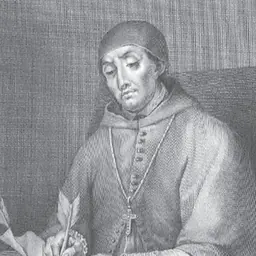
Contemporaries
People whose lives overlapped John of Sahagún's
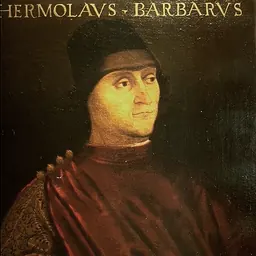
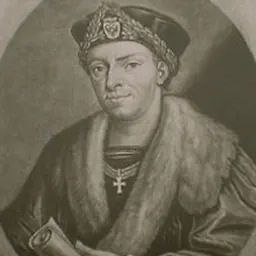



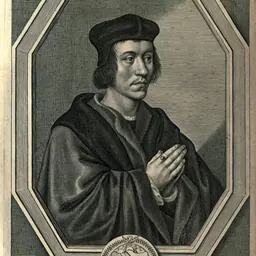
Frequently asked questions
Who was John of Sahagún?
Spanish Augustinian friar, priest and saint
When was John of Sahagún born?
John of Sahagún was born on 24 June 1419 in Sahagún.
When did John of Sahagún die?
John of Sahagún died on 11 June 1479 in Salamanca.
What was John of Sahagún's occupation?
John of Sahagún was a catholic priest, preacher and friar.
What nationality was John of Sahagún?
John of Sahagún was Spanish.
Sources & further reading
Cite this page
APA: Biography.guide. (2026). John of Sahagún. https://biography.guide/john-of-sahagun/
MLA: "John of Sahagún." Biography.guide, https://biography.guide/john-of-sahagun/.
Chicago: "John of Sahagún." Biography.guide. https://biography.guide/john-of-sahagun/.
Data last updated: 2026-09-25 · Spot an error? Report a correction.
Page generated 2026-09-27 05:10 UTC