
About John Mushmouth Johnson
Lived 1856 – 1907 (aged 50–51). John Mushmouth Johnson was an American gambler, businessperson, politician and nightclub owner.
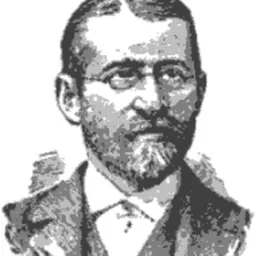
John V. "Mushmouth" Johnson (1856 – September 13, 1907) was an American gambler and entrepreneur known for running illegal gambling businesses in Chicago. One of the main players in the Policy game, he died in 1907, about 17 years after establishing his business. His gambling businesses were open to all visitors. An African American, he was the first gambling king of Chicago. He also started a musical hub and coffee house named Dreamland Cafe.
Johnson, along with Policy Sam, were the organizers of the Policy game originating in Chicago, and popularizing it, continuing from the 1880s and ending sometime in the 1970s, a timeline often termed as Policy era. His gambling houses attracted massive numbers of people, and even appearing on the main contemporary presses such as The Chicago Defender and Chicago Tribune; Tribune considered in June 1897, The Emporium to be the most popular gambling house in Chicago. His business was often visited by the enterprise-owner Robert T. Motts, who was the owner of Pekin Theater, the first black theater in the world.
Policy game in Chicago Samuel "Policy Sam" Young started an illegal gambling movement in Chicago known as the "Policy game", in 1885. In the game, players tried to guess three numbers ranging from 1 to 78. Dozens of wheels (roulettes) spun at a time. In the game, players would bet very little money, often a penny or nickel on many number combinations. Winners were declared twice a day. If three numbers were pulled and they matched to the ones betted on, a nickel on each one won 100. One of the main gamblers and players in the policy game (known as Policy Kings) was John "Mushmouth" Johnson.
Biography John "Mushmouth" Johnson was born in Saint Louis, Missouri, United States. He was given the nickname "Mushmouth" during his childhood. He permanently moved to Chicago in 1875 and got the job of a waiter in the Palmer House Hotel.
Before completing much of his formal education, Johnson worked as a railway porter. Soon, Johnson got the job as a porter at a gambling house in Chicago, called Andy Scott's gambling house, in 1882, at about the age of 26. Having no experience as a gambler, Johnson steadily learned the gambling business while working. He started taking part in the policy game. Collaborating with George Whiting and Al Bryant, he opened his own nickel-gambling house at 311 South Clark Street.
In 1890, Johnson quit his job, sold his previous gambling house and, with his collected money from the job, bought a saloon on 464 South State Street, on a street called the "Whiskey Row", and named it The Emporium. He operated in The Emporium, marking the start of his major real estate business and his illegal gambling business. Johnson never changed locations and continued his activities there until his death. In the 1894 elections, they tasked Johnson with bringing 100 votes in their name or closing his building. Johnson having strong links with Chicago politics, collected up to 150 weekly from gambling hubs in exchange for protecting them from police. He paid some more than the collected money, which he used to bribe the aldermen. Hawkins was visited by a man the next day who warned him not to go to Johnson for a few days, telling him of chances of death. Hawkins the same day returned to The Emporium. Johnson's associate, a person named Moses Love shot Hawkins once in the shoulder and once in the leg becoming enraged, which he survived and later accused Love of following Johnson's orders. Johnson immediately after recovering, became an informer of the police. His Emporium was raided by police several times. Hawkins starting working with the police, soon filed an illegal gambling investigation in The Emporium. In an interview with Chicago Tribune, he denied the charges. Two days later the state canceled The Emporium's license by Johnson. His second business established, Johnson's businesses were approached by all types of people, rich or poor or people of less honor and wealth. He introduced a new method of gambling in which the players would bet against each other for winning the highest money. Johnson dressed in formal clothes, and always the same; and spoke carefully. He was not extravagant in spending his money. Some of his customers accused his gambling houses for cheating.
In July, 1907, his sister Cecilia Johnson was beginning studying history in University of Chicago in a sorority, where being black in color, she was never met with trouble for at least five years. Earlier, she was acknowledged as being a good learner and intelligent for much time. While on the train, he was diagnosed with pneumonia and deteriorating health. His family planned to return to Chicago by train after recovering. He was taken by the train to New York City to recover his health. Johnson died while still on the moving train in Brooklyn, New York City. His burial was attended by a huge number of people. His net wealth at the time was claimed to be between , in a residential area nearby to the University of Chicago. He contributed to black charities through his mother and the Bethesda Baptist Church where she worked. described in the front page headline of a Chicago Defender article as "Binga-Johnson Wedding the Most Brilliant Ever Held in Chicago".
Binga became wealthy by marrying Eudora, which he used with his previous entrepreneurship ideas, to set up a private bank on 3637 South State Street. His bank remained all-time popular among the black Chicagoan community towards the end-1910s and 1920s. In the year 1929, marking the start of Great Depression, the economic downfall led to his bank being shut down. He was tried in court respectively in 1932 and July 1933 for embezzlement charges, released both times without imprisonment. His wife Eudora died in 1933. In 1935, he was given a 10-year sentence for embezzlement. He was released from getting pardoned by protests from Chicago in 1938. Binga died on June 13, 1950.
Don’t just read it —
keep it.
Full-length biographies made to live with: read them, listen on the way to work, watch them tonight.
- E-book
- Audio
- Video
Instant download · yours to keep · every purchase keeps this site free
Important facts
People in John Mushmouth Johnson's life
Named in this biography and alive at the same time

Related people
Same field, nearest in time





Contemporaries
People whose lives overlapped John Mushmouth Johnson's





Frequently asked questions
Who was John Mushmouth Johnson?
American gambler (1856–1907)
When was John Mushmouth Johnson born?
John Mushmouth Johnson was born in 1856 in St. Louis.
When did John Mushmouth Johnson die?
John Mushmouth Johnson died on 13 September 1907 in Brooklyn.
What was John Mushmouth Johnson's occupation?
John Mushmouth Johnson was a gambler, businessperson, politician and nightclub owner.
What nationality was John Mushmouth Johnson?
John Mushmouth Johnson was American.
Sources & further reading
· Wikipedia: John Mushmouth Johnson
· DBpedia: John Mushmouth Johnson
Cite this page
APA: Biography.guide. (2026). John Mushmouth Johnson. https://biography.guide/john-mushmouth-johnson/
MLA: "John Mushmouth Johnson." Biography.guide, https://biography.guide/john-mushmouth-johnson/.
Chicago: "John Mushmouth Johnson." Biography.guide. https://biography.guide/john-mushmouth-johnson/.
Data last updated: 2026-09-20 · Spot an error? Report a correction.
Page generated 2026-09-27 05:27 UTC