
John Morgan, 6th Baron Tredegar
British peer
About John Morgan, 6th Baron Tredegar
Lived 1908 – 1962 (aged 53–54). John Morgan, 6th Baron Tredegar was a British.
Frederic Charles John Morgan, 6th Baron Tredegar, OStJ, (26 October 190817 November 1962), styled the Honourable John Morgan between 1949 and 1954, was a Welsh peer and landowner. His forebears' lavish spending and disagreement regarding estate planning meant that on his father's succession to the Morgan titles and estates in 1949 their future was uncertain, and £1,000,000 was to be paid in death duties. Although efforts were made to protect the longevity of the estates, the burden of death-duties was too great, forcing Morgan to liquidate the entirety of the family’s estates. John Morgan's death in 1962 saw failure of the male Morgan bloodline, and the extinction of the titles attached to it, bringing an end to a social and political dynasty that had dominated South East Wales for 500 years. image2 = Mr John Morgan (later 6th Baron Tredegar).png caption2 = Morgan featured in an Australian newspaper, during his visit in 1932. Through his maternal line, Morgan was a descendent of the ancient Basset family; some of the earliest Norman settlers. Although named after his father, Morgan was known as John. He was educated at Eton College following family tradition, but did not attend university.
The Morgans claimed descent from Welsh princes, and were among the most powerful families in South Wales, their fortunes having been established by William Morgan, who was a politician, and acquired substantial landholdings throughout Monmouthshire, Glamorganshire and Breconshire. His descendants continued the family's political and social ascent; Charles Morgan becoming a baronet in 1792, and another Charles becoming 1st Baron Tredegar in 1859. His second son, Godfrey Morgan fought in the Charge of the Light Brigade in the Crimean War and was made Viscount Tredegar in 1905. Never marrying, Godfrey was in turn succeeded by his nephew Courtenay Morgan, for whom the Tredegar viscountcy was revived in 1926. Evan Morgan succeeded his father in 1934. Having no children of his own, his heir was his uncle, Frederic Morgan, father of John.
Morgan's parents divorced in 1921, following an affair between his mother and Ralph Kirby, who she would marry the day following the finalisation of the divorce; Morgan's father took custody of him and his sister, Avis. Morgan's father never remarried, and his mother died in 1929. Morgan joined the Territorial Army, becoming a second lieutenant in the 24th Battalion, London Regiment, on 19 December 1927, resigning from the post on 19 February 1930. It is considered that aside from his army service, Morgan never appeared to have an occupation. The following year he continued writing, spending a number of months in Ceylon with his sister, Avis. In the late 1930s, Morgan studied painting under Leonard Fuller at the newly established St Ives School of Painting. Morgan served in Scotland and the Middle East, joining the Reconnaissance Corps on 14 January 1941. Morgan transferred back to the KOSB on 29 September 1943 as a lieutenant. With the war over, Morgan resigned his commission on 19 November 1945, being granted the honorary rank of captain.
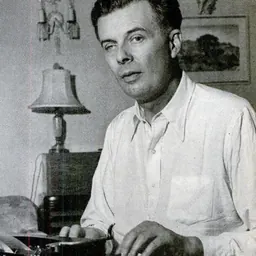
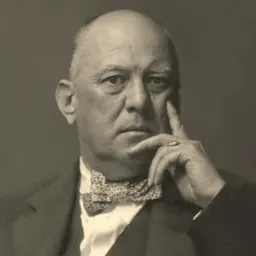
Inheritance Between 1934 and 1949, John Morgan's first cousin, Evan Morgan, 2nd Viscount Tredegar, was head of the Morgan family and occupier of Tredegar House. Evan spent copiously during his life with a menagerie of bears, birds, and kangaroos installed at the family home, while his weekend house parties played host to the likes of H.G Wells and Aldous Huxley. Although a Roman Catholic, Evan had a fascination with the occult and enjoyed a long friendship with Aleister Crowley. As a Catholic convert, Morgan made a pilgrimage to Lourdes for guidance as for what to do with his fortune and family estates. At the time, he told the Western Mail that he was prepared to "live at Tredegar Park on a very modest scale in view of the prevailing conditions" adding "although my father is crippled with osteo-arthritis, it is my earnest wish that he may be enabled to share with me the family home where he spent so many happy years of his early youth." In October 1949, a portrait of Morgan was completed by Leonard Fuller to be hung at Tredegar House. Ultimately, fragile health prevented Morgan’s father from joining him at Tredegar House, and while Morgan himself did not make it his permanent residence, he did occasionally stay there for days at a time. As the sole occupier of Tredegar House, and representative of the Morgan family, John Morgan became a regent-like figure, assuming the various social roles that his father would have otherwise held as Lord Tredegar. Among many other organisations, in 1949 Morgan became President of the Bedwellty Agricultural Society, becoming heavily involved in the society’s meetings and shows. In 1950, Morgan was appointed an Officer of the Order of St. John, having already liaised for many months with the Priory for Wales as Assistant Almoner. Reporting on an event which Morgan had chaired in the same year, the South Wales Argus commented "the more we see of [Morgan], the more we like him."
Disposal of Morgan estates
Tredegar House
The New Hall at Tredegar House, featured in a 1908 issue of Country Life. While Morgan occasionally stayed at Tredegar for days at a time, rising costs coupled with outstanding death-duties meant he never made it his permanent residence. asserting that the sale was "good for his bank balance, and his soul". Permission was also given for the National Library of Wales to select around 200 volumes from the library at Tredegar House for their collection; this was the library's "second selection of printed books, manuscripts and prints", which suggests that further volumes were selected at an earlier date. Morgan also deposited the majority of the Morgan family manuscripts and papers of the to the National Library of Wales, so that they would be preserved in the event of him dying without an heir, despite allegedly having already promised them to the Newport Borough Library. Councillor A. F. Dolman described changing the destination of the documents as a "breech of faith". Later, Morgan directed Stephenson & Alexander, a firm of auctioneers, to dispose of the remaining contents of the house in sales on 11–12 July 1951. On the sale of the house, Morgan asked the nuns to hang portraits of his family and ancestors in one room to ensure that a Morgan presence remained in the house after his departure.
Intentions Honeywood House featured in a 1954 issue of Country Life, where it was advertised prior to Morgan's disposal of the house and surrounding estate. When Morgan announced that he would sell Tredegar House in 1950, he told the press that he "intended to live at Honeywood House, West Sussex" (another of the Morgan properties) and had "no intention of breaking his connection with South Wales". Honeywood was reported to be Morgan's main residence until 1952, when it was announced that he was to move to Gattonside House, Roxburghshire. Morgan directed much of the furniture at Honeywood to be auctioned, while various positions were advertised for Gattonside. In 1953, Morgan suddenly resigned from all of his Welsh social roles, seemingly severing his links with South Wales. At the time it was suggested that this could be due to the fact that he had failed to receive an invitation to meet Queen Elizabeth II and the Duke of Edinburgh during a royal visit to Newport earlier in the year, despite being one of the largest landowners in the area. Commenting on the matter, Lord Raglan noted, "the number of persons to be presented was limited to the holders of definite offices in Monmouthshire: bishops, chairmen, and the like." It was speculated that Morgan's failure to receive an invitation was due to him not holding such an office, and having not lived in Wales for some years by this time having moved once again, from Gattonside, to 16 Randolph Crescent, an Edinburgh townhouse. Now without his social positions and still facing crippling death-duties, Morgan became a tax-exile in Monaco, directing two firms of auctioneers to dispose of Honeywood House and its surrounding 172 acres (70 ha) at auction in 1954.
Ruperra Castle
As of October 1956, Cliffe stated that his union had "frightened" the Tredegar estate agents into offering the lease holdings to all tenants. Had he not petitioned the cause, Cliffe believed that the agents would have "offered the leases only to a few tenants". By November 1957, the Eagle Star Insurance Company had bought the majority of the agricultural estate and Monmouthshire town properties, raising around £3,000,000.
Later life Following the death of his father on 21 August 1954, Morgan succeeded to the family titles becoming the sixth Baron Tredegar and eighth Morgan Baronet. Morgan remained a bachelor until the age of 46; on 19 December 1954, he married Joanna Russell (1910–2000), at Caxton Hall, London. The new Lady Tredegar, who went by "Joan", had been married twice previously and Morgan became step-father to three daughters, one from Joanna's first marriage, one from her second marriage to Commander Archibald Russell, and one of her own step-daughters from Russell’s previous marriage. In 1955, Lord and Lady Tredegar featured in Tatler, alongside Lady Tredegar's daughter, Bridget, at St. Moritz. The following year, after the announcement of the sale of the Tredegar Estate, Lord and Lady Tredegar visited the Tredegar Estates Office where they thanked former Tredegar House employees, as well as workers from the office. Later, they visited Tredegar House, Lady Tredegar's first time apart from a brief visit during the Second World War.
Exile and Death Morgan with wife and stepdaughter, Bridget, walking their dogs at St Moritz. Featured in Tatler, 1955 Despite liquidating property and parts of his estate in lieu of death-duties, Morgan claimed that further taxation forced his decision to emigrate to Monte-Carlo, Monaco, as a tax exile in 1954. He also enjoyed golf and yachting, and was a member of the Royal Yacht Squadron.
In 1959, Morgan embarked on a journey on his motor-yacht, the Henry Morgan, which he named after his distant ancestor, Sir Henry Morgan. While just off Bermuda, the Henry Morgan became at risk of sinking, faced with waves. Lord Tredegar allegedly went below-deck asserting, "there is nothing I can do about it; wake me when the fuss is over". A year prior, while aboard the Henry Morgan, Lady Tredegar's step-daughter, Judith Russell, met her future husband, Jeannot Garziglia, while he was working as a deck-hand for Lord Tredegar. They were married in 1961.
In 1962, Morgan became ill with bronchopneumonia, and returned to London as he did not trust the local doctors. An operation to treat the pneumonia was carried out on 10 October. Morgan subsequently received a Whipple Procedure to treat chronic pancreatitis which had emerged following the initial operation. Although he appeared to be recovering, Morgan suffered a secondary haemorrhage from his intestine and contracted septicaemia. Failing to recover, Morgan died without issue on 17 November, at St. George’s Hospital, aged 54. Morgan also specified for his funeral to be carried out in the "simplest manner", wishing for any money that would have been spent on flowers to be donated to the Catholic Church or charity. On 22 November, a requiem Mass was celebrated at the Church of the Immaculate Conception, for Morgan, after which he was interred at the St. Pancras Roman Catholic Cemetery. Morgan's widow went on to sell and donate sixty to seventy paintings to Newport County Council for display at Tredegar House, including portraits of the Morgan family as well as some of Morgan's own paintings.
Don’t just read it —
keep it.
Full-length biographies made to live with: read them, listen on the way to work, watch them tonight.
- E-book
- Audio
- Video
Instant download · yours to keep · every purchase keeps this site free
Important facts
People in John Morgan, 6th Baron Tredegar's life
Named in this biography and alive at the same time



Contemporaries
People whose lives overlapped John Morgan, 6th Baron Tredegar's


Frequently asked questions
Who was John Morgan, 6th Baron Tredegar?
British peer
When was John Morgan, 6th Baron Tredegar born?
John Morgan, 6th Baron Tredegar was born in 1908.
When did John Morgan, 6th Baron Tredegar die?
John Morgan, 6th Baron Tredegar died in 1962.
What nationality was John Morgan, 6th Baron Tredegar?
John Morgan, 6th Baron Tredegar was British.
Sources & further reading
· Wikipedia: John Morgan, 6th Baron Tredegar
· DBpedia: John Morgan, 6th Baron Tredegar
Cite this page
APA: Biography.guide. (2026). John Morgan, 6th Baron Tredegar. https://biography.guide/john-morgan-6th-baron-tredegar/
MLA: "John Morgan, 6th Baron Tredegar." Biography.guide, https://biography.guide/john-morgan-6th-baron-tredegar/.
Chicago: "John Morgan, 6th Baron Tredegar." Biography.guide. https://biography.guide/john-morgan-6th-baron-tredegar/.
Data last updated: 2026-09-20 · Spot an error? Report a correction.
Page generated 2026-09-27 05:13 UTC