
About John Luther Adams
Born 1953. John Luther Adams is an American composer.
John Luther Adams (born January 23, 1953) is an American composer. His history of environmental activism informs his music. His orchestral work Become Ocean was awarded the 2014 Pulitzer Prize for Music.
Early life Born in Meridian, Mississippi, Adams began playing music as a teenager as a drummer in rock bands. He attended the California Institute of the Arts as an undergraduate in the early 1970s, studying with James Tenney and Leonard Stein, and graduated in 1973. After graduating, Adams began work in environmental protection, and through this work Adams first travelled to Alaska in 1975. Adams moved to Alaska in 1978 and lived there until 2014. He subsequently divided his time between New York and the Sonoran desert in Mexico, though his time in Alaska continues to be a prominent influence in his music. From 1982 to 1989, he performed as timpanist and principal percussionist with the Fairbanks Symphony Orchestra and the Arctic Chamber Orchestra. Since January 2024, Adams and his wife now reside in Australia.
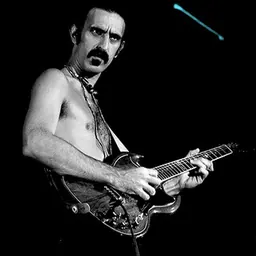
Career Adams's composition work spans many genres and media. He has composed for television, film, children's theater, voice, acoustic instruments, orchestra, and electronics. Early in his career, Adams was influenced by the music and writings of Frank Zappa, whose enthusiasm for Edgard Varèse intrigued Adams. Through his careful listening to Varèse, Adams developed an interest in and was influenced by the music of John Cage and Karlheinz Stockhausen, among others. From 1998 to 2002, Adams served as associate professor of composition at Oberlin Conservatory of Music.
Influence of nature Adams has described his music as, "... profoundly influenced by the natural world and a strong sense of place. Through sustained listening to the subtle resonances of the northern soundscape, I hope to explore the territory of sonic geography—that region between place and culture...between environment and imagination".
His love of nature, concern for the environment and interest in the resonance of specific places led him to pursue the concept of sonic geography. Early examples of this idea include two works written during Adams's sojourn in rural Georgia: Songbirdsongs (1974–80), a collection of indeterminate miniature pieces for piccolos and percussion based on free translations of bird songs, and Night Peace (1977), a vocal work capturing the nocturnal soundscape of the Okefenokee Swamp through slow-changing and sparse sonic textures.
His work, Sila: The Breath of the World, represents the "air element", following the representation of water in Become Ocean and the "earth element" in Inuksuit, an outdoor percussion piece. His music, he says, is "our awareness of the world in which we live and the world's awareness of us".
His more recent works include, Across the Distance, for a large number of horns, was premiered on the 5th of July, 2015 at the Cambo estate in Fife, Scotland as part of the East Neuk Festival. His recording of Ilimaq ("spirit journeys"), a solo work for percussion, played by art-music percussionist, composer, and Wilco drummer Glenn Kotche, was released in October 2015. A combination of contemporary classical music, Alaskan field recordings, and found sounds from the natural world, it evokes the travels of a shaman riding the sound of a drum to and from the spirit world.
Awards and honors In 2014 Adams won the Pulitzer Prize for Music for his orchestral piece Become Ocean, which Alex Ross of The New Yorker called "the loveliest apocalypse in musical history". It was premiered in 2013 by Ludovic Morlot and the Seattle Symphony and performed by the same conductor and orchestra at the 2014 Spring For Music music festival at Carnegie Hall. Adams had never been to Carnegie Hall before hearing his work played there to a sold-out house. The surround-sound recording of Become Ocean on Cantaloupe Music debuted at No. 1 on the Billboard Traditional Classical Chart, stayed there for two straight weeks, and went on to win the Grammy Award for Best Contemporary Classical Composition. All his works are published by Taiga Press (BMI) and available from .
In October 2015, Adams received the William Schuman Award from Columbia University. The events surrounding the award included a series of concerts of his music at the Miller Theater, including Clouds of Forgetting, Clouds of Unknowing, For Lou Harrison, and In the White Silence.
On February 8, 2015, Adams was awarded a GRAMMY in the category Best Contemporary Classical Composition for his Become Ocean. In November 2014, Adams was named the Musical America 2015 Composer of the Year. Adams was the recipient of the 2010 Nemmers Prize in Music Composition. He was cited by the selection committee for melding the physical and musical worlds into a unique artistic vision that transcends stylistic boundaries. The Callithumpian Consort's recording of Adams' Four Thousand Holes was noted as one of The New Yorker'''s Best Classical Recordings of 2011. In 2012, he received the 17th Annual Heinz Award with a special focus on the environment. In 2006, Adams was named one of the first United States Artists Fellows. He has received awards and fellowships from the National Endowment for the Arts, the Rockefeller Foundation, the Rasmuson Foundation, and the Foundation for Contemporary Arts. Adams received a 1993 Foundation for Contemporary Arts Grants to Artists Award.
List of worksGreen Corn Dance (1974) for percussion ensembleNight Peace (1976) for antiphonal choirs, solo soprano, harp, and percussionsongbirdsongs (1974–80) for 2 piccolos and 3 percussionStrange Birds Passing (1983) for flute choirup into the silence (1978/84) (poem by E. E. Cummings) for voice and pianoHow the Sun Came to the Forest (1984) (poem by John Haines) for chorus and alto flute, English horn, percussion, harp, and stringsThe Far Country of Sleep (1988) for orchestraGiving Birth to Thunder, Sleeping With His Daughter, Coyote Builds North America (1986–90) for theatermagic song for one who wishes to live and the dead who climb up to the sky (1990) for voice and pianoDream in White-on-White (1992) for orchestraEarth and the Great Weather (1990–93) for theater, libretto published in the book "Inukshuk" edited by ARBOS – Company for Music & Theater, Vienna 1999, Five Yup'ik Dances (1991–94) for solo harpCrow and Weasel (1993–94) (story by Barry Lopez) for theaterSauyatugvik: the Time of Drumming (1995) for orchestraClouds of Forgetting, Clouds of Unknowing (1991–95) for orchestraSauyatugvik: The Time of Drumming (1996) version for 2 pianos, timpani, and 4 percussionFive Athabascan Dances (1992/96) for harp and percussionStrange and Sacred Noise (1991–97) for percussion quartetMake Prayers to the Raven (1996/98) flute, violin, harp, cello, and percussionIn the White Silence (1998) for orchestraQilyaun (1998) for four bass drumsTime Undisturbed (1999) for 3 shakuhachis, 3 kotos, and shōIn a Treeless Place, Only Snow (1999) for celesta, harp, 2 vibraphones, and string quartetThe Light That Fills the World (1999–2000) for orchestraAmong Red Mountains (2001) for solo pianoThe Immeasurable Space of Tones (1998–2001) for violin, vibraphone, piano, sustaining keyboard, contrabass instrumentThe Farthest Place (2001) for violin, vibraphone, marimba, piano, double bassAfter the Light (2001) for alto flute, vibraphone, harpDark Wind (2001) for bass clarinet, vibraphone, marimba, pianoRed Arc/Blue Veil (2002) for piano, mallet percussion, and processed soundsThe Mathematics of Resonant Bodies (2002) for solo percussion and processed soundsPoem of the Forgotten (2004) (poem by John Haines) for voice and pianofor Lou Harrison (2004, premiere 2005) for string quartet, string orchestra, and 2 pianos...and bells remembered... (2005) for bowed crotales, orchestra bells, chimes, vibraphone and bowed vibraphonefor Jim (rising) (2006) for three trumpets and three trombonesAlways Very Soft (2007) for percussion trioDark Waves (2007) for orchestra and electronic soundsLittle Cosmic Dust Poem (2007) for voice (medium) and pianoNunataks (Solitary Peaks) (2007) for solo pianoThree High Places (2007) for solo violinThe Light Within (2007) for alto flute, bass clarinet, vibraphone/crotales, piano, violin, cello and electronic soundsSky with Four Suns and Sky with Four Moons (2008) for four choirsthe place we began (2008) four electro-acoustic soundscapesInuksuit (2009) for nine to ninety-nine percussionFour Thousand Holes (2010) for piano, percussion, and electronic soundsThe Wind in High Places (2011) for string quartetI L I M A Q (2012), a drum-kit opera, premiered at the University of Texas at Austin, performed by Glenn KotcheBecome Ocean (2013) for orchestra, premiered at the Seattle Symphony, June 20, 2013, conducted by Ludovic MorlotBecome River (2013) for chamber orchestra, premiered by the Saint Paul Chamber Orchestra, April 3, 2014, conducted by Steven SchickTen Thousand Birds (2014) for chamber orchestra, premiered by Alarm Will Sound, October 19, 2014Sila: The Breath of the World (2014) for choir, percussion, strings, brass, and woodwinds premiered at the Mostly Mozart Festival at Lincoln Center, July 25, 2014, led by Doug PerkinsAcross the Distance (2015) for horns in multiples of 8, premiered at the East Neuk Festival at the Cambo estate, July 5, 2015, led by Alec Frank-Gemmilluntouched (2015) for string quartet, commissioned by the University of North Carolina for Brooklyn RiderCanticles of the Holy Wind (2013) for four choirs (SATB) and solo voices, with percussion, commissioned by The Crossing and others, premiered at the Metropolitan Museum of Art, October 29, 2016 Everything That Rises (2017) for string quartet, commissioned by SF JazzThe Wind Garden (2017), a permanent public artwork commissioned by the Stuart Collection at the University of California, San DiegoBecome Desert (2017), a work for five ensembles, premiered at the Seattle Symphony's Benaroya Hall, 29 March 2018, conducted by Ludovic MorlotLines Made by Walking (2019), string quartet, commissioned by the Tippet Rise Art CenterArctic Dreams (2020) for 2 sopranos, 1 alto, and 1 bass voice, violin, viola, cello, and double bass, commissioned by Synergy VocalsAn Atlas of Deep Time (2022) for orchestra, premiered by the South Dakota Symphony Orchestra for their Centennial Finale, April 30, 2022, conducted by Delta David GierCrossing Open Ground (2023)Prophecies of Fire (2024) for percussion quartet, premiered by Sandbox Percussion, July 10, 2024 at Kaul Auditorium, Reed College.Horizon (2025) for orchestra, commissioned and premiered by the Australian Chamber Orchestra in their Rachmaninoff's Rhapsody program, February 5, 2026
An Atlas of Deep Time (2024); South Dakota Symphony Orchestra; Delta David Gier, conductor (Cantaloupe Music CA21199)
WritingsSilences So Deep: Music, Solitude, Alaska (Farrar, Straus and Giroux 2020)The Place Where You Go To Listen – In Search of an Ecology of Music (Wesleyan University Press, 2009) "The Immeasurable Space of Tones", Musicworks 91 (Spring, 2005) "Sonic Geography Alaska", Musicworks 93 (Fall, 2005) "Winter Music: Composing the North", (Wesleyan University Press, 2004) "Global Warming and Art", Orion (September–October, 2003) "Global Warming and Art", Musicworks 86 (Summer, 2003) "Winter Music. A Composer's Journal", In The Best Spiritual Writing 2002, edited by Philip Zaleski (Harper Collins, 2002), pp. 1–21. "Winter Music. A Composer's Journal", Musicworks 82 (February, 2002) "The Place Where You Go to Listen", In The Book of Music and Nature, edited by David Rothenberg and Marta Ulvaeus (Wesleyan University Press, 2000), pp. 181–182. "Winter Music. A Composer's Journal", In Reflections on American Music, edited by James R. Heintze and Michael Saffle (Hillsdale, NY: Pendragon Press, 2000), pp. 31–48. "Strange and Sacred Noise", Yearbook of Soundscape Studies (Vol. 1: "Northern Soundscapes", ed. R. Murray Schafer and Helmi Järviluoma, 1998), pp. 143–146. "The Place Where You Go to Listen", Terra Nova, 2/3, 1997, pp. 15–16. "From the Ground Up", The Utne Reader, March/April, 1995, p. 86. "Resonance of Place, Confessions of an Out-of-Town Composer", The North American Review, January/February, 1994, pp. 8–18.
Don’t just read it —
keep it.
Full-length biographies made to live with: read them, listen on the way to work, watch them tonight.
- E-book
- Audio
- Video
Instant download · yours to keep · every purchase keeps this site free
Important facts
People in John Luther Adams's life
Named in this biography and alive at the same time



Related people
Same field, nearest in time



Contemporaries
People whose lives overlapped John Luther Adams's

Frequently asked questions
Who is John Luther Adams?
American composer (born 1953)
When was John Luther Adams born?
John Luther Adams was born on 23 January 1953 in Meridian.
What is John Luther Adams's occupation?
John Luther Adams is a composer.
What nationality is John Luther Adams?
John Luther Adams is American.
Sources & further reading
· Wikipedia: John Luther Adams
Cite this page
APA: Biography.guide. (2026). John Luther Adams. https://biography.guide/john-luther-adams/
MLA: "John Luther Adams." Biography.guide, https://biography.guide/john-luther-adams/.
Chicago: "John Luther Adams." Biography.guide. https://biography.guide/john-luther-adams/.
Data last updated: 2026-09-20 · Spot an error? Report a correction.
Page generated 2026-09-27 05:18 UTC