
John London
Warden of New College, Oxford, and a figure in the dissolution of the monasteries by Henry VIII of England
About John London
Lived 1486 – 1543 (aged 56–57).
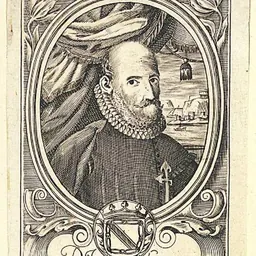
John London, DCL ( 1486 – 1543) was Warden of New College, Oxford, and a prominent figure in the Dissolution of the Monasteries during the reign of Henry VIII of England.
Early life and career London was born in Hambleden, Buckinghamshire, son of an Oxfordshire tenant farmer. London was educated as a scholar at Winchester College from 1497, and at New College, Oxford from 1503. In 1505 he became a fellow of New College, and became a Doctor of Civil Law (DCL) in 1519.
London also held a range of administrative roles within the church during this period: he became prebendary of York in 1519, and Treasurer of Lincoln Cathedral in 1522.
He returned to Oxford as Warden of New College in 1526, and held the post until 1542. His time as Warden was marked by religious turbulence and lack of discipline, and frequent complaints by and clashes with fellows of the college. London's near-contemporary Archbishop Matthew Parker was less flattering in describing him as "a stout and filthy prebendary".
London began to play a role as a persecutor of Oxford evangelicals and Lutherans in the late 1520s.
States that on reading the treatise of articles devised by the King he had been convinced that the supremacy of the bishop of Rome was without foundation, and had written a little declamation. For this he was suspected, his papers searched and delivered to Dr. London, who sent for him at 5 a.m. and kept him in his garden till 10. "Edward," he said, "you be my nephew.... I have now sent for you only to give you counsel, that if God has endued you with any grace you may return to grace again." He then charged the deponent with writing many detestable heresies against the bishop of Rome, which made him so pensive, that he knew not what to say for the deponent's shame or for his poor mother. And further, at his last being with the bishop of Winchester at his visitation, the Bishop did rejoice "that this our university was so clear from all these new fashions and heresies." But now he would hear that it was infected by one of his own college. He urged that their ancestors could not have erred so many hundred years, and that this world could not continue long; for though the King has now conceived a little malice against the bishop of Rome because he would not agree unto this marriage, "I trust," he said, "that the blessed King will wear harness on his own back to fight against such heretics as thou art."
After Thomas Cromwell's execution in 1540, London became closely associated with the religious conservative Stephen Gardiner, Bishop of Winchester. Through his association with Gardiner, London became involved in seeking out evidence against Protestant heretics in Windsor and was Gardiner's chief agent in the town.
While London's religious views adhered to Rome rather an evangelical or Protestant viewpoint, and he was a reformer rather than a suppressor, The conservatism and anti-Protestant nature of his religious views may have contributed to his need to make repeated protestations of his loyalty and dedication to Cromwell. London's own account to Cromwell of his visitation of Reading Abbey sets out the process of destroying parts of the abbey, leaving others that might be of use untouched, expelling the friars and seizing the relics and other property to be put to the King's financial benefit. Some more recent commentators have suggested that he was one of the more moderate agents of the dissolution process, given his views with regard to the monks and nuns displaced by the process. and improper behaviour towards the nuns of Godstow in 1538, although London strongly defended his behaviour at Godstow in correspondence with Cromwell. London noted in 1539 that the dissolution of the monasteries was popular with many of the younger nuns; many were committed to nunneries at a very young age and lived in "imperfect chastity". Parliament decreed that those who had been professed under the age of 21 were allowed to marry.
During this period, London continued to acquire senior roles within the church, mostly located near Oxford. He was the first dean of the Diocese of Oxford when the diocese was founded in 1542 at Osney Abbey (the seat of the diocese was re-located to Christ Church Cathedral, Oxford, in 1545, after London's death). He was also a Canon of Windsor from 1540 to 1543.
Disgrace and death
London's behaviour, particularly towards women, caused him difficulty at different points in his career. While in Oxford, he was punished with public penance for adultery with a mother and daughter:
This Dr. London, for his incontinency, afterwards did open penance in Oxford, having two smocks on his shoulders for Mrs. Thykked and Mrs. Jennyngs, the mother and the daughter: with one of whom he was taken by Henry Plankney in his gallery, being his sister's son. This was known to a number in Oxford and elsewhere, many years after living, as well as to Loud, the relater of it in a letter to Mr. Fox. London acted alongside Bishop Gardiner to agitate against Cranmer in Windsor. "of shame and vexation".
Don’t just read it —
keep it.
Full-length biographies made to live with: read them, listen on the way to work, watch them tonight.
- E-book
- Audio
- Video
Instant download · yours to keep · every purchase keeps this site free
Important facts
People in John London's life
Named in this biography and alive at the same time



Contemporaries
People whose lives overlapped John London's

Frequently asked questions
Who was John London?
Warden of New College, Oxford, and a figure in the dissolution of the monasteries by Henry VIII of England
When was John London born?
John London was born in 1486.
When did John London die?
John London died in 1543.
Sources & further reading
· DBpedia: John London (priest)
Cite this page
APA: Biography.guide. (2026). John London. https://biography.guide/john-london-1486/
MLA: "John London." Biography.guide, https://biography.guide/john-london-1486/.
Chicago: "John London." Biography.guide. https://biography.guide/john-london-1486/.
Data last updated: 2026-09-20 · Spot an error? Report a correction.
Page generated 2026-09-27 04:57 UTC