
About John Letts
Lived 1897 – 1917 (aged 20). John Letts was a British aircraft pilot and fighter pilot.
Captain John Herbert Towne Letts (10 June 1897 – 11 October 1918) was a British First World War flying ace credited with thirteen confirmed victories.
Early life Letts was the only child of Walter John Letts, a railway superintendent, and Charlotte Helen (née Robertson) of Steep Hill House, Lincoln. He was educated at Aldeburgh Lodge, Suffolk, Roydon Hall, Norfolk, and at Lancing College, Sussex, where he excelled in sport, representing the school in swimming, football and cricket, and was a sergeant in the Officers' Training Corps.
Military service In mid-1915 he left school to attend the Royal Military College, Sandhurst, He was immediately seconded to the Royal Flying Corps, and posted to No. 1 Reserve Squadron at RAF Gosport to begin his flying training. On 19 March he made his first solo flight, in a Maurice Farman Longhorn, after only four hours of dual instruction. His second solo flight, later the same day, ended when he crashed into the side of a shed. Letts' first attempt to gain his Royal Aero Club Aviator's Certificate was abandoned after his engine failed, but he passed on his second attempt the next day, 24 March, flying a Maurice Farman biplane at the Military School in Farnborough.
Following advanced flying training at the Central Flying School at Upavon, on 15 June Letts was posted to No. 27 Squadron RFC in France, to fly the Martinsyde G.100 fighter-bomber. He was invalided back to England on 11 August with an injured knee, and on 19 October was posted to No. 47 Reserve Squadron at RAF Waddington, Lincolnshire, to serve as an instructor. He was reassigned to No. 48 Squadron RFC, flying the new two-seater Bristol F2b fighter, on 12 February 1917, and in March the squadron was sent to France. replacing William Leefe-Robinson, who had been shot down and captured.
Letts, with observer Lieutenant C. A. Malcomson, shared with Smithers and Jameson in the destruction of another Albatros D.III over Douai on 27 May. On 5 June Letts and Jameson drove down another two-seater over Riencourt–Cagnicourt. On 17 August he and Jameson were attacked by eight Albatros D.IIIs east of Nieuport. The combined fire of Jameson and 2nd Lieutenant L. H. Tanner, the observer of 2nd Lieutenant Alan Craddock Simpson, sent one enemy aircraft down in a spin until it broke apart in mid-air. On 22 August, flying with observer Lieutenant Henry Richard Power, Letts and two other Bristol Fighters intercepted ten Gotha bombers off Zeebrugge, returning from a raid on the English coast.
He is buried in grave VI. A.30 in Bac-du-Sud British Cemetery, Bailleulval, Pas-de-Calais, France.
Don’t just read it —
keep it.
Full-length biographies made to live with: read them, listen on the way to work, watch them tonight.
- E-book
- Audio
- Video
Instant download · yours to keep · every purchase keeps this site free
Important facts
People in John Letts's life
Named in this biography and alive at the same time

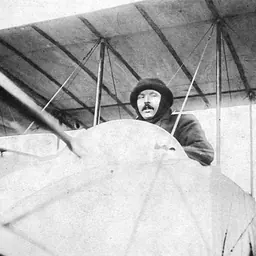



Related people
Same field, nearest in time

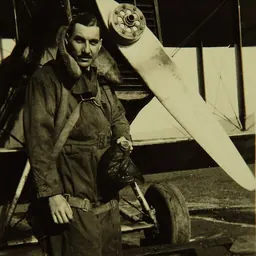
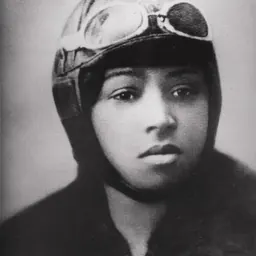
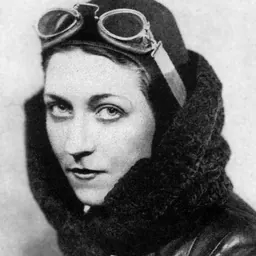
Contemporaries
People whose lives overlapped John Letts's



Frequently asked questions
Who was John Letts?
English World War I ace
When was John Letts born?
John Letts was born on 10 June 1897 in Lincoln.
When did John Letts die?
John Letts died on 11 October 1917.
What was John Letts's occupation?
John Letts was an aircraft pilot and fighter pilot.
What nationality was John Letts?
John Letts was British.
Sources & further reading
· DBpedia: John Letts (RAF officer)
Cite this page
APA: Biography.guide. (2026). John Letts. https://biography.guide/john-letts-aircraft-pilot/
MLA: "John Letts." Biography.guide, https://biography.guide/john-letts-aircraft-pilot/.
Chicago: "John Letts." Biography.guide. https://biography.guide/john-letts-aircraft-pilot/.
Data last updated: 2026-09-20 · Spot an error? Report a correction.
Page generated 2026-09-27 05:28 UTC