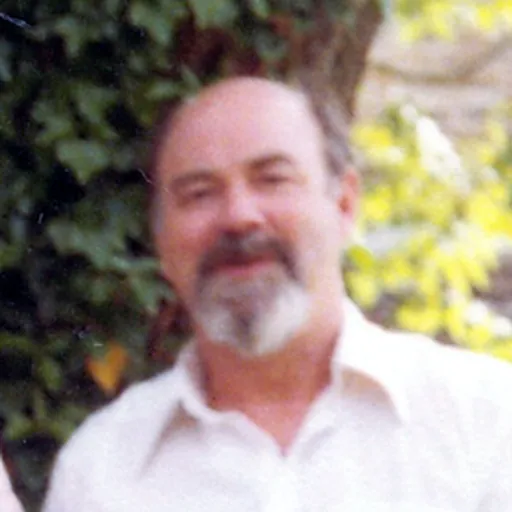
About John Lanchbery
Lived 1923 – 2003 (aged 79). John Lanchbery was a British and Australian composer, conductor and film score composer.
John 'Jack' Arthur Lanchbery (15 May 1923 – 27 February 2003) was an English conductor and composer who was known for his ballet arrangements, and for his ballet adaptations of non-ballet musical works.
He was the Principal Conductor of the Royal Ballet from 1959 to 1972, Principal Conductor of The Australian Ballet from 1972 to 1977, and Musical Director of the American Ballet Theatre from 1978 to 1980. He conducted for the Royal Ballet until 2001.
Rudolf Nureyev said that Lanchbery was "a conductor and music director of unmatched experience" who was "directly responsible for raising the status and the standards of musical performance". Maina Gielgud stated that he were "the finest conductor for dance of his generation and probably well beyond". One critic wrote that "the music was always on its best behaviour" when Lanchbery was conducting.
Early life Lanchbery was born in London on 15 May 1923, and began violin lessons and music composition when he was eight years of age. He was educated at Alleyn's School, and with Kenneth Spring, who was the founder of the National Youth Theatre and whose composer mother encouraged Lanchbery's musical talent. He was also a friend of Tchaikovsky's grandniece and translator Galina von Meck (1891 - 1985).
Lanchbery was in 1942 awarded the Henry Smart Composition Scholarship to the Royal Academy of Music, where he studied under Sir Henry Wood until the Second World War, during which he served in the Royal Armoured Corps, after which he returned to the Royal Academy of Music to study for two more years before he returned to his alma mater Alleyn's School to teach music. He was declined the job of Director of Music at Alleyn's School, and subsequently worked for a music publisher.
Musical career
Conductor of London Metropolitan Ballet and Sadler's Wells Theatre Ballet: 1948–1959 Lanchbery was recommended to apply for the post of Conductor of the Metropolitan Ballet. He obtained the position and made his debut with them at Edinburgh in 1948.
Principal Conductor of The Australian Ballet: 1972–1977 Notable successes for Lanchbery included the arrangement of the Liszt music for Kenneth MacMillan's stormy multi-act Mayerling, which premiered at Covent Garden in 1978; and the arrangement of Franz Lehár's score for the first full-length ballet production of The Merry Widow, for The Australian Ballet in 1976. In 1971, he composed the music for the ballet film The Tales of Beatrix Potter. He also arranged the music and conducted the orchestra for Nijinsky in 1980.
Lanchbery was the first composer to successfully convert operas into ballets (The Tales of Hoffmann, The Merry Widow, Die Fledermaus),
Director of American Ballet Theatre: 1978–1980 The American Ballet Theatre used 14 Lanchbery arrangements between 1962 and 2002: he was the Musical Director of the Company between 1978 and 2002. Their productions included his arrangement, for Natalia Makarova, Minkus's La Bayadère in 1980. Lanchbery arranged more than 30 pieces by Franz Liszt for Macmillan's Mayerling, which premiered at Covent Garden in 1978. Nureyev staged the full-length La Bayadère for the Paris Opera Ballet in 1992, which was his final production before his death. Nureyev's version used Minkus's original orchestration, which Nureyev had photocopied from the Mariinsky Theatre's library. However, the poor photocopying required Lanchbery, whom Nureyev considered to be the greatest ballet conductor of his time, to interpolate the passages of the score that were missing, in accordance with his conception of Minkus's original intentions.
In addition to London, Australia, and Sweden, Lanchbery was a guest conductor at many of the world's leading opera houses, including Paris, Stockholm, Rio de Janeiro, New York, and Houston. He also toured Japan, Russia, and China.
International reputation Lanchbery was widely considered (including by Rudolf Nureyev) to be the greatest ballet-conductor of his time, and to be "a conductor and music director of unmatched experience" who was "directly responsible for raising the status and the standards of musical performance".
Maina Gielgud, Artistic Director of The Australian Ballet, stated that he was "the finest conductor for dance of his generation and probably well beyond". One critic wrote that "the music was always on its best behaviour" when Lanchbery was conducting.
Lanchbery was the first non-Soviet conductor to receive the Bolshoi Medal. He also received the Carina Ari Medal of Sweden and the Queen Elizabeth II Coronation Award, which was Britain's highest award for ballet. In 1990, he was appointed an Officer of the Order of the British Empire.
Personal life Lanchbery married the Australian-born Elaine Fifield (d. 1999), who was a principal of Sadler's Wells Ballet, in 1951, but their marriage was dissolved in 1960. They had a daughter, Margaret Lanchbery, who lived in Melbourne and survived both of her parents.
Lanchbery became an Australian citizen in 2002, and resided in Melbourne, where he died of cancer on 27 February 2003. He was also survived by his gay companion Thomas Han.
Works
Some of the most popular ballet-scores are arrangements of non-ballet music. Lanchbery was the most successful adapter of non-ballet music for ballet:
Title – original composer The Tales of Beatrix Potter – Michael William Balfe and others, but also included much original music by Lanchbery The Hunchback of Notre Dame – Hector Berlioz A Month in the Country – Frédéric Chopin Peer Gynt – Edvard Grieg (based on his Peer Gynt incidental music) La fille mal gardée – Ferdinand Hérold Somnambulism – Stan Kenton The Merry Widow – Franz Lehár Mayerling – Franz Liszt Dracula – Liszt The Dream – Felix Mendelssohn Don Quixote – Ludwig Minkus La Bayadère – Minkus Grand Pas Classique from Paquita – Minkus House of Birds – Federico Mompou The Tales of Hoffmann – Jacques Offenbach Le Papillon – Offenbach Cleopatra – Nikolai Rimsky-Korsakov Monotones – Erik Satie Rosalinda – Johann Strauss II (based on Die Fledermaus) Designs with Strings – Pyotr Ilyich Tchaikovsky (based on his Piano Trio in A minor) The Snow Maiden – Tchaikovsky
Don’t just read it —
keep it.
Full-length biographies made to live with: read them, listen on the way to work, watch them tonight.
- E-book
- Audio
- Video
Instant download · yours to keep · every purchase keeps this site free
Important facts
People in John Lanchbery's life
Named in this biography and alive at the same time




Related people
Same field, nearest in time



Contemporaries
People whose lives overlapped John Lanchbery's


Frequently asked questions
Who was John Lanchbery?
British composer (1923–2003)
When was John Lanchbery born?
John Lanchbery was born on 15 May 1923 in London.
When did John Lanchbery die?
John Lanchbery died on 27 February 2003 in Melbourne.
What was John Lanchbery's occupation?
John Lanchbery was a composer, conductor and film score composer.
What nationality was John Lanchbery?
John Lanchbery was British and Australian.
Sources & further reading
Cite this page
APA: Biography.guide. (2026). John Lanchbery. https://biography.guide/john-lanchbery/
MLA: "John Lanchbery." Biography.guide, https://biography.guide/john-lanchbery/.
Chicago: "John Lanchbery." Biography.guide. https://biography.guide/john-lanchbery/.
Data last updated: 2026-09-20 · Spot an error? Report a correction.
Portrait: Wikimedia Commons · author & licence
Page generated 2026-09-27 04:57 UTC