
About John Kenneth Hilliard
Lived 1901 – 1989 (aged 87). John Kenneth Hilliard was an American military flight engineer, civil engineer and engineer.
John Kenneth Hilliard (October 1901 – March 21, 1989) was an American acoustical and electrical engineer who pioneered several important loudspeaker concepts and designs. He helped develop the practical use of recorded sound for film and won an Academy Award in 1935. Hilliard designed movie theater sound systems and worked on radar and submarine detection equipment during World War II. He collaborated with James B. "Jim" Lansing to create the long-lived Altec Voice of the Theatre speaker system.
Hilliard conducted research on high-intensity acoustics, vibration, miniaturization, and long-line communications for NASA and the U.S. Air Force. Toward the end of his career, he helped standardize noise-control criteria for home construction in California, a model that has since been applied to new homes throughout the United States.
Education Born in October 1901 in Wyndmere, North Dakota, Hilliard received his B.S. degree from Hamline University in St. Paul, Minnesota at 24 years of age. He then obtained a B.S.E.E. at the University of Minnesota. He married a laboratory biologist and began working toward a master's degree. Hilliard was contacted and hired by United Artists Studios (UA) in Hollywood, California in 1928 because of his studies in physics, engineering and acoustics. Having left his Masters studies behind in Minnesota, Hilliard, not yet 28 years old, supervised all sound recording for Coquette, UA's first talking motion picture. Western Electric provided recording equipment, but the specific techniques for achieving the best sound on film had to be developed by hard work and imagination. Hilliard's ground-breaking methods later became industry standards. Though the Great Depression was underway, Cannon Electric was kept very busy producing the popular connectors for film studios.
While at MGM, Hilliard was asked by Gordon Mitchell to chair the Motion Picture Research Council's sound committee. Hilliard's first task was standardizing a uniform method of reproducing film sound in the theater. He began by standardizing recording techniques among eight major film studios. Later, with Harry Kimball, he helped develop the 1938 "Academy Curve", a standard filter that attenuated recorded noise above 2,000 Hz while retaining prominent voice reproduction characteristics.
Shearer Horn System Hilliard's continued contact with Lansing and Blackburn led to a conversation about the poor state of loudspeakers in movie theaters. The three men shared ideas about how best to improve existing designs. Hilliard took his plans to MGM's head of sound, Douglas Shearer (brother of Norma Shearer), who decided to fund the effort. Hilliard was made responsible for the concept and design of the project. Lansing Manufacturing was tapped to develop the drive units while Hilliard worked to improve the electronic components. What came out of this collaboration was a well-received industry-standard loudspeaker system, "The Shearer Horn System for Theatres" (1937), that garnered a technical award "Oscar" for sound from the Academy of Motion Picture Arts and Sciences.
In May 1941, Lansing Manufacturing was bought by All Technical Services Company, an outgrowth of Western Electric's ERPI division which had become independent. The resulting company, with the established film industry contacts of ERPI combined with the extended manufacturing capability of Lansing, reformed as Altec Lansing. Hilliard had contacts in both parent firms.
World War II intervenes In 1942 when the United States was preparing to fight a long, technically challenging war, Hilliard left MGM to join his friend Blackburn who had begun research for Massachusetts Institute of Technology (MIT) to work on radar development for U.S. military applications.
Altec In 1946, Hilliard took over as vice president of engineering due to Jim Lansing's leaving Altec to start a new enterprise which would become JBL.
As chief engineer at Altec, Hilliard joined the Hollywood section of the Sapphire Group, a regular social gathering of sound recordists and a precursor to the Audio Engineering Society. In 1948, Hilliard was elected to chair the Sapphire Group Recording Standards Committee. He made certain, along with the Motion Picture Research Council, that proposed industry standards were forwarded to members of National Association of Broadcasters (NAB), Institute of Radio Engineers (IRE), Acoustical Society of America (ASA) and Royal Musical Association (RMA). Hilliard helped form the Los Angeles section of the Audio Engineering Society (AES) in 1951. At the beginning of 1963, IRE merged with the American Institute of Electrical Engineers (AIEE) to form the Institute of Electrical and Electronics Engineers (IEEE)—Hilliard retained his Fellowship.
Noise studies In 1960, Hilliard became director of the Ling-Temco-Vought (LTV) Western Research Center where he widened his scope of research to include the study of sonic booms, missile launch noise, atmospheric noise refraction, highway noise mitigation, hearing conservation and gun silencing. She accompanied him to California when UA offered him a job. In 1932, she introduced Hilliard to a young electrical engineer working at her Los Angeles laboratory, a doctoral graduate fresh out of Caltech: Dr. John "Blackie" Blackburn, a man Hilliard would continue to associate and collaborate with in many technical endeavors.
Don’t just read it —
keep it.
Full-length biographies made to live with: read them, listen on the way to work, watch them tonight.
- E-book
- Audio
- Video
Instant download · yours to keep · every purchase keeps this site free
Important facts
People in John Kenneth Hilliard's life
Named in this biography and alive at the same time




Related people
Same field, nearest in time

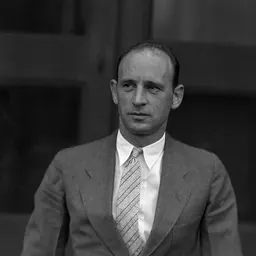

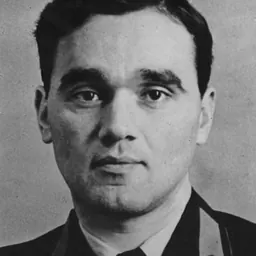
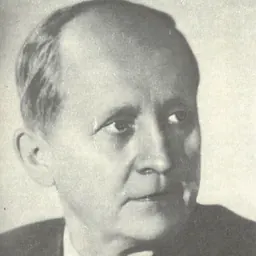
Contemporaries
People whose lives overlapped John Kenneth Hilliard's


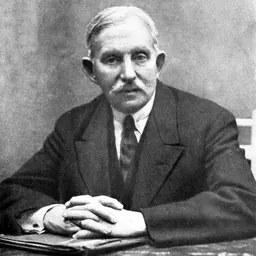

Frequently asked questions
Who was John Kenneth Hilliard?
American engineer
When was John Kenneth Hilliard born?
John Kenneth Hilliard was born on 1 October 1901 in Wyndmere.
When did John Kenneth Hilliard die?
John Kenneth Hilliard died on 21 March 1989.
What was John Kenneth Hilliard's occupation?
John Kenneth Hilliard was a military flight engineer, civil engineer and engineer.
What nationality was John Kenneth Hilliard?
John Kenneth Hilliard was American.
Sources & further reading
· Wikipedia: John Kenneth Hilliard
· DBpedia: John Kenneth Hilliard
Cite this page
APA: Biography.guide. (2026). John Kenneth Hilliard. https://biography.guide/john-kenneth-hilliard/
MLA: "John Kenneth Hilliard." Biography.guide, https://biography.guide/john-kenneth-hilliard/.
Chicago: "John Kenneth Hilliard." Biography.guide. https://biography.guide/john-kenneth-hilliard/.
Data last updated: 2026-09-22 · Spot an error? Report a correction.
Page generated 2026-09-27 05:10 UTC