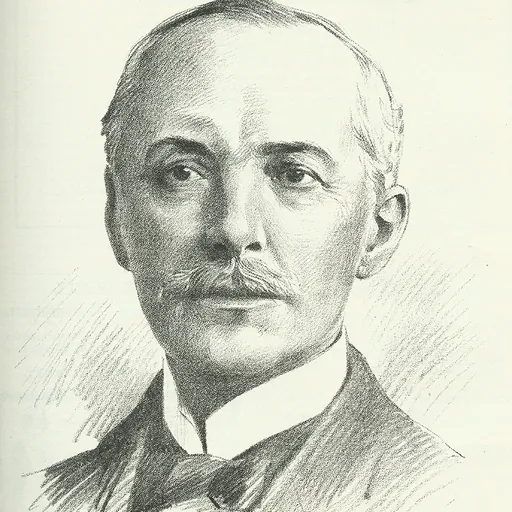
About John James Burnet
Lived 1857 – 1938 (aged 81). John James Burnet was a British architect.
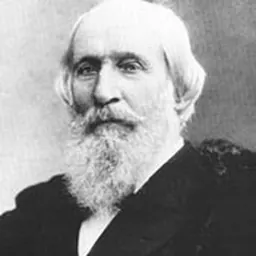
Sir John James Burnet (31 May 1857 – 2 July 1938) was a Scottish Edwardian architect who was noted for a number of prominent buildings in Glasgow and London. He was the son of the architect John Burnet, and later went into partnership with his father, joining an architectural firm which would become an influential force in British Modern architecture in the 20th century.
Biography John James Burnet was born in Blythswood Hill, Glasgow, on 31 May 1857. He was the youngest of the three sons of the architect John Burnet and his wife, Elizabeth Hay Bennet. They were a Congregationalist family. John James was educated in Glasgow at the original Collegiate School, at the Western Academy, and at Blairlodge School, Polmont.
Study in Paris He trained for two years in his father's architectural offices. His parents intended him to study at the Royal Academy Schools under Richard Phené Spiers, but Spiers advised him instead to study at the École des Beaux-Arts in Paris. Burnet's parents were at first reluctant to send their son to a Catholic country which had been subject to the political turmoil of the Paris Commune that year, but, in 1872, he began studying under Jean-Louis Pascal, Spiers' former teacher. He progressed rapidly and in 1876, gained his Diplôme du Gouvernement in architecture and engineering. He also spent time there as an assistant to François Rolland. While studying in Pascal's atelier, Burnet forged a lifelong friendship with Henri Paul Nénot.
In 1896 the Burnets visited the US, and Burnet was greatly inspired by American architecture. He began to design a number of low-profile buildings with broad eaves, including many churches and public buildings around Scotland (such as Dundas Memorial Church, Grangemouth (1894); MacLaren Memorial Church Stenhousemuir; Public Library and Museum in Campbeltown). The inspiration of American structural techniques on Burnet's work reached a peak in 1905–1910 with his design for McGeoch's Department Store on West Campbell Street, with its strong vertical lines and the expression of the building's structure in the facade.
Campbell left the partnership in 1897 with some suggestion of Campbell's problems with alcoholism, and the practice name reverted to John Burnet and Son. The same year, JJ Burnet was made a Fellow of the Royal Institute of British Architects (FRIBA) and elected President of the Glasgow Institute of Architects. In 1902, Burnet recruited a promising young architect called Thomas Smith Tait to be his assistant. Tait later became a partner in the firm and went on to be one of the most influential architects in the British Modern architecture movement.
British Museum As partners, Burnet and Campbell never succeeded in English architectural competitions and it was only after Campbell's departure that Burnet extended the practice south of the Border. In 1903–1904 the Office of Works selected Burnet to design the Edward VII Galleries at the British Museum in London. In 1905 Burnet opened a London office in the name of John J Burnet at 1 Montague Place (a grace-and-favour house rented to him by the Museum), taking the young Tait with him. and the Sick Children's Hospital at Yorkhill. Burnet continued his study visits to the United States in 1908 and 1910, looking at the design of warehouses, hospitals, museums and galleries.
Burnet was knighted in 1914 for his work in the British Museum galleries. He was also awarded the bronze medal of the Paris Salon and elected RSA. In 1921 he was made ARA in 1921 and received the Paris gold medal in 1922. Burnet helped to found the Royal Incorporation of Architects in Scotland. Although he kept in touch with developments in the Burnet Tait & Lorne office, he was unhappy in retirement. He died at home on 2 July 1938. His remains were cremated and his ashes were buried in his father-in-law's plot at Warriston Cemetery.
The Burnet Tait & Lorne practice continued to thrive after his death, and under the leadership of Thomas Smith Tait, went on to become an influential force in Modern Architecture.
Family
In 1886 he was married to Jean Watt Marwick (1864–1949), daughter of Sir James David Marwick.
Notable works
Among his surviving works are:
Remodelling of Auchterarder House (1887) Gardner Memorial Church, Brechin (1896) Clyde Navigation Trust (Clydeport) Building, Robertson Street, Glasgow (1883 and 1905) Barony Church, High Street, Glasgow (1886) John McIntyre Building, University of Glasgow (Glasgow University Union) (1886) Charing Cross Mansions, Charing Cross, Glasgow (1891) Athenaeum, 8 Nelson Mandela Place, Glasgow (1886) New Athenaeum Theatre, 179 Buchanan Street, Glasgow (1891) Royal Faculty of Physicians & Surgeons of Glasgow, St Vincent Street, Glasgow (1892) Campbeltown Cottage Hospital (1894) Glasgow Savings Bank, 177 Ingram Street, Glasgow (1896) Albany Chambers, Sauchiehall Street, Glasgow (1896) King Edward VII Gallery, British Museum, London (1905) RW Forsyth's Department Store, Gordon Street, Glasgow (1896 and 1906) Creagdhu Mansions, New Quay Street, Campbeltown (1896) Public Library and Museum, Campbeltown (1897-99) RW Forsyth's Department Store, Princes Street, Edinburgh (1906) Broomhill Trinity Congregational Church, Broomhill, Glasgow (1907) Kodak, Kingsway, London(1909) General Accident Assurance, Aldwych, London (1909) Restoration of Duart Castle, Isle of Mull (1911) Wallace Scott Tailoring Institute, Cathcart, Glasgow (1913) Royal Institute of Chemistry, London (1914) Lancashire Landing Commonwealth War Graves Commission Cemetery (1915) Balliol College Chapel, Oxford (1916) Selfridges Department Store, London (1919) Glasgow University Zoology Building (1922) War memorials at Gallipoli, and Jerusalem Glasgow Cenotaph in George Square, Glasgow (1924) Hunter Memorial, University of Glasgow (1924) Adelaide House, London Bridge Approach, London (1925) Daily Telegraph Building, Fleet Street, London (1925) North British & Mercantile Assurance, 200 St Vincent Street, Glasgow (1925) Lloyds Bank, Lombard Street, London (1927) Sydney Harbour Bridge, (1929) University of Glasgow Memorial Chapel (1929) Unilever House, Blackfriars, London (1930–33, with James Lomax-Simpson)
Other work has been destroyed or demolished, including: McGeoch's, West Campbell Street, Glasgow (1904) Kelvinside railway station, Kelvinside, Glasgow (1896) Alhambra Theatre, 41 Waterloo Street, Glasgow (1910) Wemyss Bay Episcopal Church (1880, demolished 1970)
Burnet's unsuccessful competition designs for prominent building projects included:
Glasgow Municipal Buildings (1880) Usher Hall, Edinburgh (1909) Kelvingrove Art Gallery and Museum (1891) Glasgow School of Art (1896)
Don’t just read it —
keep it.
Full-length biographies made to live with: read them, listen on the way to work, watch them tonight.
- E-book
- Audio
- Video
Instant download · yours to keep · every purchase keeps this site free
Important facts
People in John James Burnet's life
Named in this biography and alive at the same time




Related people
Same field, nearest in time



Contemporaries
People whose lives overlapped John James Burnet's




Frequently asked questions
Who was John James Burnet?
Scottish architect (1857-1938)
When was John James Burnet born?
John James Burnet was born on 31 March 1857 in Blythswood Hill.
When did John James Burnet die?
John James Burnet died on 2 July 1938 in Colinton.
What was John James Burnet's occupation?
John James Burnet was an architect.
What nationality was John James Burnet?
John James Burnet was British.
Sources & further reading
· Wikipedia: John James Burnet
Cite this page
APA: Biography.guide. (2026). John James Burnet. https://biography.guide/john-james-burnet/
MLA: "John James Burnet." Biography.guide, https://biography.guide/john-james-burnet/.
Chicago: "John James Burnet." Biography.guide. https://biography.guide/john-james-burnet/.
Data last updated: 2026-09-24 · Spot an error? Report a correction.
Portrait: Wikimedia Commons · author & licence
Page generated 2026-09-27 05:08 UTC