
John Hunt, Baron Hunt of Fawley
British general practitioner
About John Hunt, Baron Hunt of Fawley
Lived 1905 – 1987 (aged 82). John Hunt, Baron Hunt of Fawley was a British neurologist, writer, politician, general Practitioner and john Hunt, known for RCGP.
John Henderson Hunt, Baron Hunt of Fawley (3 July 1905 – 28 December 1987) was a British general practitioner (GP) who, in 1952, co-founded the College of General Practitioners. In 1967 the royal prefix was approved and the college was renamed the Royal College of General Practitioners (RCGP). He became its president in the same year.
Hunt was born in India, the son of a surgeon, and sent to England as a young child, accompanied by his mother. Educated at Charterhouse School and then at Oxford, he studied medicine at St Bartholomew's Medical College and qualified in 1931. His early house jobs were at St Bartholomew's Hospital, and later at the National Hospital, Queen Square, London.
During the Second World War, he was a Wing Commander with the Royal Air Force. On his return to civilian life, he entered general practice, working in Sloane Street, London. He was president of the Hunterian Society, the Section of General Practice at the Royal Society of Medicine, the Harveian Society and the Medical Society of London. In 1973 he was the first GP to be made a life peer as Baron Hunt of Fawley, of Fawley in the County of Buckingham.
Early life John Hunt was born on 3 July 1905, in Secunderabad, India, where Hunt's father, Edmund Henderson Hunt (1874–1952) was a surgeon with the Nizam of Hyderabad's State Railways.
Hunt's mother, Laura Mary, was the daughter of Colonel Sir James Buckingham, secretary of the Indian Tea Association. His younger brother was Alan Henderson Hunt DM, MCh, FRCS. As a result of contracting diphtheria whilst at school, he is believed to be one of the last cases in England to have his tonsils painted with cocaine and then removed by guillotine. chief draughtsman for Edwin Lutyens from 1899 to 1902; they had five children: twin sons who became general practitioners, a son who died in childhood, and two daughters. Despite the RSM wishing to stay neutral, seven members of the RSM's first two councils of general practice were heavily involved in the establishment of the College. Hence, in the words of John Fry, "there was a close liaison between ourselves and the Society".
At one stage, the question as to whether a "college" or "faculty" be pursued, Hunt had sought the opinion of his cousin, Lord Horder, the royal physician. Horder's opposition to either, although later revoked, disappointed Hunt and encouraged further his defence of general practice.
Along with other concerned GPs, Hunt offered the idea for a "college" in a letter to the General Practice Review Committee of the British Medical Association (BMA). The letter was also sent to the British Medical Journal and The Lancet, and was co-signed by Dr Fraser Rose:
There is a College of Physicians, a College of Surgeons, a College of Obstetricians and Gynaecologists, a College of Nursing, a College of Midwives, and a College of Veterinary Surgeons… but there is no college or academic body to represent primarily the interests of the largest group of medical personnel in this country – twenty thousand general practitioners.
Its response was aggravating. As well as receiving many encouraging comments, resistance was obvious, predominantly from the presidents of the traditional Royal Colleges:
"I had far rather start with a big idea in a small way than a small idea in a big way" wrote John Hunt to Fraser Rose on 3 December 1951.
A steering committee was formed, with members including former Minister of Health (1943–1945), Sir Henry Willink, who agreed to be chairman.
Although Hunt had failed to gain official support from the RSM to form a college, the close connection between the GP section members and the college steering committee was undeniable. Following the establishment of the college, he spent numerous evenings in 1953, in the RSM basement researching historical attempts to form a college and why they failed.
He received numerous honorary fellowships, including the Royal Society of Medicine, the Australian College of General Practice, the American Academy of Family Physicians, and the Singapore College of General Practice. He was an important contributor to the debate on the Medical Act of 1978. In 1980, he received the gold medal of the British Medical Association and became an honorary fellow of Green College, University of Oxford.
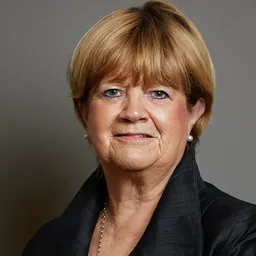
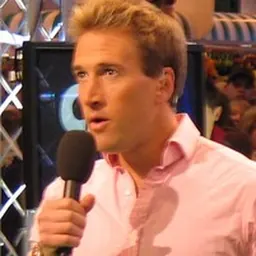
Later life and legacy In later life, Hunt was blind and had Parkinson's disease. He remained confined to his bed for the last three years of his life and died on 28 December 1987 at his home in Fawley, near Henley-on-Thames. Jonathan Hunt's daughter Marina is the wife of broadcaster Ben Fogle; her sister Olivia, formerly a girlfriend of William, Prince of Wales, married Nicholas Wilkinson, son of Dame Heather Hallett.
Established in 1992 to commemorate the College's 40th anniversary, the RCGP awards the John Hunt Lectureship to someone who is not medically qualified. The Prince of Wales gave the inaugural lecture.
Don’t just read it —
keep it.
Full-length biographies made to live with: read them, listen on the way to work, watch them tonight.
- E-book
- Audio
- Video
Instant download · yours to keep · every purchase keeps this site free
Important facts
People in John Hunt, Baron Hunt of Fawley's life
Named in this biography and alive at the same time




Related people
Same field, nearest in time

Contemporaries
People whose lives overlapped John Hunt, Baron Hunt of Fawley's



Frequently asked questions
Who was John Hunt, Baron Hunt of Fawley?
British general practitioner (1905-1987)
When was John Hunt, Baron Hunt of Fawley born?
John Hunt, Baron Hunt of Fawley was born on 3 July 1905 in Secunderabad.
When did John Hunt, Baron Hunt of Fawley die?
John Hunt, Baron Hunt of Fawley died on 28 December 1987 in Fawley.
What was John Hunt, Baron Hunt of Fawley's occupation?
John Hunt, Baron Hunt of Fawley was a neurologist, writer, politician, general Practitioner and john Hunt.
What was John Hunt, Baron Hunt of Fawley known for?
John Hunt, Baron Hunt of Fawley was known for RCGP.
What nationality was John Hunt, Baron Hunt of Fawley?
John Hunt, Baron Hunt of Fawley was British.
Sources & further reading
· Wikipedia: John Hunt, Baron Hunt of Fawley
· DBpedia: John Hunt, Baron Hunt of Fawley
Cite this page
APA: Biography.guide. (2026). John Hunt, Baron Hunt of Fawley. https://biography.guide/john-hunt-baron-hunt-of-fawley/
MLA: "John Hunt, Baron Hunt of Fawley." Biography.guide, https://biography.guide/john-hunt-baron-hunt-of-fawley/.
Chicago: "John Hunt, Baron Hunt of Fawley." Biography.guide. https://biography.guide/john-hunt-baron-hunt-of-fawley/.
Data last updated: 2026-09-22 · Spot an error? Report a correction.
Page generated 2026-09-27 05:09 UTC