
About John Holt
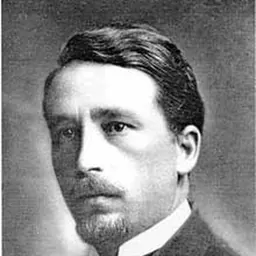
Lived 1923 – 1985 (aged 62). John Holt was an American pedagogue, writer, teacher and educator.
John Caldwell Holt (April 14, 1923 – September 14, 1985) was an American author and educator, a proponent of homeschooling (specifically the unschooling approach), and a pioneer in youth rights theory.
After a six-year stint teaching elementary school in the 1950s, Holt wrote the book How Children Fail (1964), which cataloged the problems he saw with the American school system. He followed it up with How Children Learn (1967). Both books were popular, and they started Holt's career as a consultant to American schools. By the 1970s he decided he would try reforming the school system and began to advocate homeschooling and, later, the form of homeschooling known as unschooling. He wrote a total of 11 books on the subject of schooling as well as starting the newsletter Growing Without Schooling (GWS).
Early life Holt was born on April 14, 1923, in New York City; he had two younger sisters. He attended Phillips Exeter Academy, then attended Yale University, graduating in 1943 with a degree in Industrial Engineering. Holt believed that children did not need to be coerced into learning; they would do so naturally if given the freedom to follow their own interests and a rich assortment of resources. This line of thought came to be called unschooling.
Holt's Growing Without Schooling newsletter, founded in 1977, was America's first home education newsletter. He also set up John Holt's Bookstore, which made selected books available by mail order. This brought in additional revenue that helped sustain the newsletter, which carried very little advertising.
Holt wrote several books that have greatly influenced the unschooling movement. His writings have influenced many individuals and organizations, including the Evergreen State College, Caleb Gattegno, Americans for a Society Free from Age Restrictions, the National Youth Rights Association, and the Freechild Project.
Holt did not have a teaching degree, which many believe allowed for his work in the private school sector to make way for him to have a more objective opinion on the American school system. Being new to the environment, it is thought that he was able to make more objective distinctions than other educators as to what the schools said they were doing and what they were actually doing. For the first many years of his teaching career, he maintained the belief that schools overall were not meeting their missions due to using the wrong methods and pedagogical approaches, and that these failures were the cause for rendering young scholars as children who were less willing to learn and more focused on avoiding the embarrassment and ridicule of not learning.
Writing career
How Children Fail (1964)
As Holt wrote in his first book, How Children Fail (1964) "...after all, if they (meaning us) know that you can't do anything, then they won't blame you or punish you for not being able to do what you have been told to do." This notion led him to make changes within his own classroom to provide an environment in which his students would feel more comfortable and confident. With the support of his colleague Bill Hull, Holt began putting less emphasis on grades and tests, and began taking steps to decrease the notion of ranking the children. He focused on his students being able to grasp concepts, rather than having them work for the correct answer. Instead of using the typical methods to determine students' progress, he adopted a more student-centered approach. Patrick Farenga paraphrased Holt's distinction between good and bad students: "a good student is careful not to forget what he studied until after the test is taken." Eventually, his new methods for teaching caused him to be terminated from his position, which he claimed was due to the school wanting to maintain "old 'new' ideas not new 'new' ideas." At the time, his notions of children having so many rights and responsibilities was not very popular, but since then the court systems have seen more and more cases of children attempting to realise many of Holt's suggestions, such as choosing their legal guardian. This manual has since been revised by Holt follower and homeschooling parent Patrick Farenga, and is still distributed today.
Death and Learning All the Time (1989) Even after his death in 1985, Holt's influence on homeschooling continued through his work. His final book, Learning All the Time: How Small Children Begin to Read, Write, Count and Investigate the World, Without Being Taught, was published posthumously in 1989. It contained a number of his writings for Growing Without Schooling. The GWS''' newsletter has since garnered followings in a number of different countries and has been continuously distributed since its inception as a tool for the promotion and encouragement of homeschooling in light of the lack of school system reform.
Don’t just read it —
keep it.
Full-length biographies made to live with: read them, listen on the way to work, watch them tonight.
- E-book
- Audio
- Video
Instant download · yours to keep · every purchase keeps this site free
Important facts
People in John Holt's life
Named in this biography and alive at the same time



Related people
Same field, nearest in time



Contemporaries
People whose lives overlapped John Holt's
Frequently asked questions
Who was John Holt?
American educator and author (1923–1985)
When was John Holt born?
John Holt was born on 14 April 1923 in New York City.
When did John Holt die?
John Holt died on 14 September 1985 in Boston.
What was John Holt's occupation?
John Holt was a pedagogue, writer, teacher and educator.
What nationality was John Holt?
John Holt was American.
Sources & further reading
· DBpedia: John Holt (American educator)
Cite this page
APA: Biography.guide. (2026). John Holt. https://biography.guide/john-holt-pedagogue/
MLA: "John Holt." Biography.guide, https://biography.guide/john-holt-pedagogue/.
Chicago: "John Holt." Biography.guide. https://biography.guide/john-holt-pedagogue/.
Data last updated: 2026-09-20 · Spot an error? Report a correction.
Page generated 2026-09-27 05:23 UTC