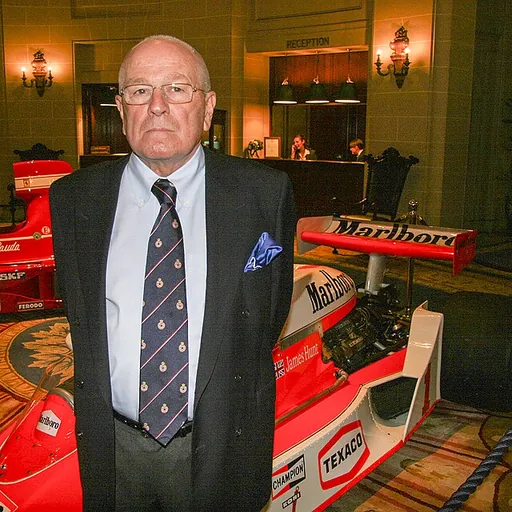
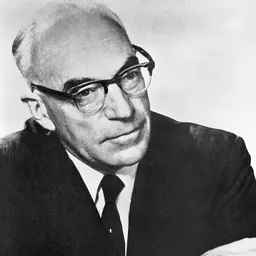
John Hogan
Australian Formula One advertising executive
About John Hogan
Lived 1943 – 2021 (aged 77).
John Scott Hogan (5 May 1943 – 3 January 2021; nicknamed "Hogie" The family moved around Asia several times for Justin's various postings. While attending the English boarding school Cannock House, he became friends with classmate Malcolm McDowell, who also liked auto racing. Hogan and McDowell visited Aintree to watch Moss win the 1957 British Grand Prix. Autosport said Hogan met Piers Courage while he was in London studying for the Cambridge entrance exams. In the early 1970s, he made an early foray into motorsport with Erwin Wasey, arranging for its client Coca-Cola to fund junior drivers.
Marlboro in Formula One
In 1973, Hogan joined the Lausanne, Switzerland, office of Marlboro manufacturer Philip Morris (PM). When he joined PM, Marlboro had recently begun advertising in Formula One. By the next race, Colin Chapman's Team Lotus signed Imperial Tobacco (the manufacturer of Gold Leaf and John Player Special) as its title sponsor, entrenching the practice in the sport. Formula One was not a particularly large-scale enterprise at the time, and Imperial's payment of less than £100,000 covered most of Lotus' costs that year. In the analogous context of IndyCar, during the 1989 Marlboro Grand Prix, it was calculated that Marlboro's name was spoken or shown 5,933 times in 94 minutes, and that Marlboro's name was on television for 46 of those minutes.
Other tobacco companies followed PM and Imperial's lead, "driv[ing] Formula One into an era where big-name corporate sponsors were essential to fund technological advances and soaring salaries". With sponsorships on both sides of the conflict (Marlboro was the title sponsor for both the FOCA-affiliated McLaren and the FISA-affiliated Alfa Romeo in the early 1980s), Marlboro took "an inevitable neutral line", but Hogan pushed the parties to reach a compromise.
By the end of the 20th century, European regulators began cracking down more harshly on cigarette advertising. France adopted a law restricting tobacco marketing at sporting events (the loi Évin) in 1991, and other European countries eventually passed similar laws. Formula One Group chief Bernie Ecclestone lobbied the British government for help, telling Tony Blair that no other industry would match tobacco's financial commitment to the sport. In 1997, Blair asked European authorities to exempt F1 from tobacco advertising restrictions. Although his attempt to secure a permanent exemption was unsuccessful, Europe granted F1 an extended grace period "to allow recipients of tobacco cash to find other forms of funding." multiple image
direction = horizontal total_width = 400 image1 = Michael Schumacher 2003 Silverstone 6.jpg image2 = Marlboro-Ferrari.jpg footer = To avoid European restrictions on cigarette advertising, which required F1 teams to blank out tobacco decals on their liveries, cigarette brands like Marlboro encouraged Formula One to race in new markets like Bahrain. In addition, he was chosen to represent F1's sponsors on the FIA's F1 Commission, Efn|In Hogan's words: "The options were James Hunt or Jacky Ickx. I never told James this, but I voted for Jacky Ickx. [Laughter.] So in the end, we went with James, and I had the task of going and finding James." [After being asked why he preferred Ickx] "It wasn't any reservation about James. It was just I knew Ickx was a very good driver."
The two friends did not always see eye to eye as businessmen. Hunt refused to give up smoking Rothmans cigarettes, although he agreed to pretend to smoke Marlboros. When Hunt won the 1976 title, Hogan paid for a long string of parties, sponsor events, and press interviews. Marlboro's European sales increased significantly after Hunt's victory. The publicity value from the title race was estimated at as much as $500 million.
Creating the modern-day superheroes Although Hunt never won another title, Hogan continued finding and sponsoring championship drivers. To maximise Marlboro's exposure on television, he hired ad men who "deliberately attempted to elevate the principal drivers from mere heroes to superhero status". Autoweek 's Joe Saward wrote that Hogan, Bernie Ecclestone, and Elf's François Guiter were "the primary forces in creating modern F1, not only by providing money for the sport, but also by putting together great teams". Many of the best Marlboro-sponsored drivers got their starts at McLaren, which was Marlboro's flagship team for most of Hogan's career.
In , Hogan gave Gilles Villeneuve his Formula One debut with McLaren after receiving a glowing recommendation from James Hunt. In , Hogan arranged for Alain Prost (a four-time champion) to debut with McLaren. Mayer initially preferred Kevin Cogan, but relented and signed the Frenchman after an excellent performance in testing. In , Hogan secured an option to sign Marlboro junior driver Ayrton Senna (a three-time champion) to the McLaren senior team,
Moreover, in at least one case, Marlboro placed a driver with McLaren because of the driver's personal ties to the tobacco industry: Philip Morris' leadership favoured Andrea de Cesaris, whose father was a PM distributor. However, de Cesaris spent only one season with McLaren. Marlboro also sponsored Alfa Romeo from 1980 to 1983, which overlapped with the years when de Cesaris drove for the team (1980, 1982, 1983).
Outside Formula One During the Hogan years, Marlboro's sponsorship work extended beyond Formula One. In Hogan's native Australia, Marlboro backed Peter Brock and the Holden Dealer Team, as well as Nissan Motorsport, Glenn Seton Racing, and Stone Brothers Racing. In the United States, Hogan encouraged McLaren to start an IndyCar team in the mid-1980s, but John Barnard scuppered the deal because the IndyCar and Formula One chassis regulations were too different.
McLaren (1974–1996) One of Hogan's first moves at Marlboro was to end its sponsorship of venerable British Racing Motors, The company had already begun sponsoring Frank Williams Racing Cars (FWRC), the predecessor of the more well-known Williams Racing. As part of the arrangement, the FWRC were renamed "Iso-Marlboro" for the season. However, the Iso-Marlboro was unsuccessful, prompting Hogan to look elsewhere. Ahead of the season, Hogan approached 1972 champion and free agent Emerson Fittipaldi with a deal, offering to sponsor Fittipaldi and pay his salary at the team of his choice. Fittipaldi met with Brabham, Tyrrell, and McLaren.
Marlboro's scouting network funneled promising juniors to McLaren, which occasionally caused tensions with team principal Teddy Mayer. In , Mayer released Gilles Villeneuve to Ferrari in the middle of his rookie season, over Hogan's objections, although in that case Hogan's Marlboro superiors supported the decision as they wanted a driver from France (Villeneuve was French Canadian) for marketing reasons. In , Hogan decided to back Alain Prost, resolving to put him in the team even if Mayer disagreed.
The team also fell behind technologically. Team Lotus outpaced McLaren during the ground effect revolution of the late 1970s. A frustrated Hogan considered switching Marlboro to a different team for 1980. In 1980, Hogan lured away Lotus star Mario Andretti and gave him a choice between McLaren and Alfa Romeo for 1981. Andretti chose Alfa Romeo over McLaren.
Ron Dennis era
Financed by Marlboro money, Dennis and John Barnard introduced the revolutionary carbon-fibre monocoque chassis to Formula One. At the time, the McLaren MP4/1 was considered "the most advanced and expensive race car in the world". or "McLaren Project Four". )
With Hunt's help, Hogan continued to attract elite drivers during the Dennis era. He arranged for Niki Lauda to return from retirement in (after James Hunt persuaded him to sponsor Lauda's comeback) and brokered Prost's return to McLaren for , sealing a driver pairing that won two Drivers' Championships and two Constructors' Championships. He helped welcome Ayrton Senna to McLaren in 1988; Senna's competition for the seat was Nelson Piquet, against whom Hogan harbored a long-running grudge. After Senna proceeded to win three Drivers' Championships with McLaren, Hogan's Marlboro paid Senna $1 million per race in , uncommonly high for its day.
Marlboro's grip on the team began to weaken in the late 1980s, when auto manufacturers (who could outspend even tobacco companies if motivated to do so) began to assert dominance over the sport. Following Honda's exit, McLaren eventually partnered with Mercedes, but Hogan grew disillusioned with the combination, explaining that Mercedes was "nowhere near ready" and that he expected "years of pain" before the team became competitive again. After an executive decision by Hogan, Marlboro stopped funding McLaren after the 1996 season. who allowed Villeneuve to lease out ad space on his race suit—thereby giving Marlboro a visual connection to the Ferrari brand.
As the costs of running a Formula One team spiraled upwards in the 1980s, Ferrari grew more open to tobacco money. In 1982, Hogan brokered a Ferrari sponsorship deal, which was "the first time [Ferrari] had agreed to sponsorship from a non-motor industry source". Marlboro paid much of Schumacher's $25 million salary, which was the highest in the history of the sport. (It was rumored that Hogan had offered Schumacher even more money to join McLaren, but the German chose Ferrari instead.) The following year, Marlboro left McLaren and became Ferrari's title sponsor. The then-struggling Ferrari team went on to win eight Constructors' Championships in ten years from 1999 to 2008.
Hogan retired from Marlboro in 2002. by which point only three teams had cigarette companies as their title sponsors.
Post-Marlboro career
Jaguar (2003) After a year working as an advisor for Vodafone, Hogan joined Jaguar Racing for the season. That year, the team abolished the position of team principal and split the duties between Hogan (sporting and commercial director) and David Pitchforth (managing director).
At Jaguar, Hogan signed up-and-coming driver Mark Webber to replace Eddie Irvine, However, the team failed to improve on the prior year's seventh-place finish, and Hogan left within a year. Hogan introduced Brown to Formula One figures like Bernie Ecclestone, Luca di Montezemolo, Flavio Briatore, and Frank Williams. Brown called Hogan "the king of Formula One sponsorship". He said that "I didn’t think I had that much street cred [among Formula One decisionmakers] … until John took me." After Hogan's death, Brown said that Hogan was the man "who made the biggest impact for me in Formula One," explaining that he could not have gotten the McLaren job without Hogan's early mentorship. In 2003, The Guardian incorrectly reported that Hogan's brother was Crocodile Dundee actor Paul Hogan. In the film, Hogan warns James Hunt that sponsors prefer Jacky Ickx, but Hunt persuades the McLaren leadership to give him a chance. A 2011 draft of the script included a scene where Hogan calls Niki Lauda and gloats that Hunt wanted to beat Lauda so badly, "he'd have taken [the job] for nothing!"
Don’t just read it —
keep it.
Full-length biographies made to live with: read them, listen on the way to work, watch them tonight.
- E-book
- Audio
- Video
Instant download · yours to keep · every purchase keeps this site free
Important facts
People in John Hogan's life
Named in this biography and alive at the same time





Contemporaries
People whose lives overlapped John Hogan's

Frequently asked questions
Who was John Hogan?
Australian Formula One advertising executive
When was John Hogan born?
John Hogan was born on 5 May 1943 in Sydney.
When did John Hogan die?
John Hogan died on 3 January 2021 in Verbier.
Sources & further reading
· DBpedia: John Hogan (motorsport executive)
Cite this page
APA: Biography.guide. (2026). John Hogan. https://biography.guide/john-hogan-1943/
MLA: "John Hogan." Biography.guide, https://biography.guide/john-hogan-1943/.
Chicago: "John Hogan." Biography.guide. https://biography.guide/john-hogan-1943/.
Data last updated: 2026-09-20 · Spot an error? Report a correction.
Portrait: Wikimedia Commons · author & licence
Page generated 2026-09-27 04:57 UTC