
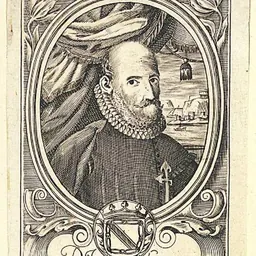
John Heywood
English writer known for plays, poems and a collection of proverbs
About John Heywood
Lived 1497 – 1580 (aged 82–83). John Heywood was a British poet, playwright, aphorist, writer and politician.
John Heywood ( – ) was an English writer known for his plays, poems, and collection of proverbs. Although he is best known as a playwright, he was also active as a musician and composer, though no musical works survive. A devout Catholic, he nevertheless served as a royal servant to both the Catholic and Protestant regimes of Henry VIII, Edward VI, Mary I, and Elizabeth I.
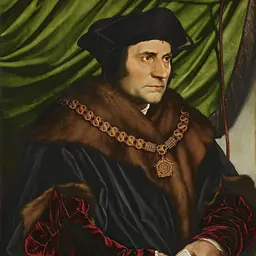
Life Heywood was born in 1497, probably in Coventry, and moved to London sometime in his late teens. He spent time studying at Broadgates Hall (now Pembroke College), Oxford, but did not obtain a degree. His language skills can be seen by his adaptation of his play Johan Johan from the French La Farce du pâté. His name first appears in the King Henry VIII's Household Books in 1519 as a 'synger', a job for which he received quarterly payments of 100 shillings. In 1521 he began receiving annual rents from lands in Essex, lands recently seized by the crown which made Heywood wealthy and propertied. In 1523, he received the freedom of the City of London with the help of Henry VIII. At Michaelmas 1525 he received £6. 13s. 4d. as a 'player of virginals'. At about the same time he married Jane Rastell, the niece of Sir Thomas More. Through this marriage, Heywood entered into a very theatrical family. Jane's father John Rastell was a composer of interludes and was the first publisher of plays in England. When Rastell built his own house in Finsbury Fields, he built a stage explicitly for the performance of plays, and his wife made costumes. It appears that the whole family, including Thomas More, were involved in these productions. In this private theatre, Heywood found an audience for his early works, and a strong artistic influence in his father-in-law. In the 1520s and 1530s, he was writing and producing interludes for the royal court. He enjoyed the patronage of Edward VI and Mary I, writing plays to present at court. While some of his plays call for music, no songs or texts survive. He died in Mechelen, in present-day Belgium.
His son was the poet and translator Jasper Heywood, his daughter was Elizabeth Heywood, and his grandson was the poet and preacher John Donne.
Themes Arthur F. Kinney writes that Heywood 'seems to have survived an unusually long and turbulent existence both by his use of "good learning" – his use of literary sources, especially More and Chaucer, and his intelligent if often oblique commentary on religious and social issues – and his wit, his sociability and his playfulness'. A Mery Play betwene the Pardoner and the Frere, the Curate and Neybour Pratte (written before 1521; published 1533) The Play called the foure PP; a newe and a very mery interlude of a palmer, a pardoner, a potycary, a pedler (c. 1530) The Play of the Wether, a new and mery interlude of all maner of Wethers (1533) The Play of Love (1533)
Verse The Spider and the Flie (1556) A Dialogue Conteinyng the Nomber in Effect of All the Prouerbes in the Englishe Tongue, Compacte in a Matter Concernyng Two Maner of Mariages (1546); (enlarged edition 1550) A Balade Specifyienge Partly the Maner, Partly the Matter, in the Mariage betwene Our Soueraigne Lord, and Our Soueraigne Lady (1554) A Breefe Balet Touchyng the Traytorous Takynge of Scarborow Castell (1557) A Ballad against Slander and Detraction (1562)
Collections Proverbs (c. 1538) The Proverbs of John Heywood (1546), originally titled A dialogue conteinyng the nomber ... of all the prouerbes in the englishe tongue.
Famous epigrams What you have, hold. Haste maketh waste. (1546) Out of sight out of mind. (1542) When the sun shineth, make hay. (1546) Look ere ye leap. (1546) Two heads are better than one. (1546) Love me, love my dog. (1546) Beggars should be no choosers. (1546) All is well that ends well. (1546) The fat is in the fire. (1546) I know on which side my bread is buttered. (1546) One good turn asketh another. (1546) A penny for your thought. (1546) Rome was not built in one day. (1546) Better late than never. (1546) An ill wind that bloweth no man to good. (1546) The more the merrier. (1546) You cannot see the wood for the trees. (1546) This hitteth the nail on the head. (1546) No man ought to look a given horse in the mouth. (1546) Tread a woorme on the tayle and it must turne agayne. (1546) Wolde ye bothe eate your cake and haue your cake? (1562)
Don’t just read it —
keep it.
Full-length biographies made to live with: read them, listen on the way to work, watch them tonight.
- E-book
- Audio
- Video
Instant download · yours to keep · every purchase keeps this site free
Important facts
People in John Heywood's life
Named in this biography and alive at the same time

Related people
Same field, nearest in time

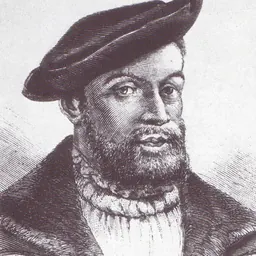
Contemporaries
People whose lives overlapped John Heywood's
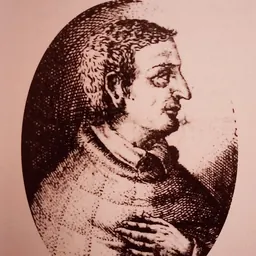
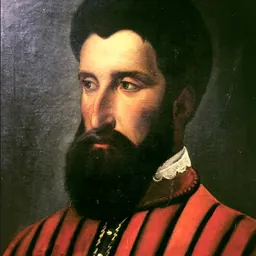
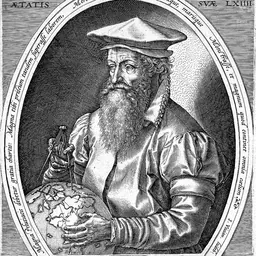

Frequently asked questions
Who was John Heywood?
English writer known for plays, poems and a collection of proverbs (1497-1580)
When was John Heywood born?
John Heywood was born in 1497 in London.
When did John Heywood die?
John Heywood died in 1580 in Mechelen.
What was John Heywood's occupation?
John Heywood was a poet, playwright, aphorist, writer and politician.
What nationality was John Heywood?
John Heywood was British.
Sources & further reading
Cite this page
APA: Biography.guide. (2026). John Heywood. https://biography.guide/john-heywood-poet/
MLA: "John Heywood." Biography.guide, https://biography.guide/john-heywood-poet/.
Chicago: "John Heywood." Biography.guide. https://biography.guide/john-heywood-poet/.
Data last updated: 2026-09-26 · Spot an error? Report a correction.
Page generated 2026-09-27 05:14 UTC