
John Hemings
American carpenter
About John Hemings
Lived 1776 – 1830 (aged 53–54). John Hemings was an American carpenter and wood carver.
John Hemmings (also spelled Hemings) (1776 – 1833) was an American woodworker. Born into slavery at Thomas Jefferson's Monticello as a member of the large mixed-race Hemings family, he trained in the Monticello Joinery and became a highly skilled carpenter and woodworker, making furniture and crafting the fine woodwork of the interiors at Monticello and Poplar Forest.
Hemmings also served as the master joiner to apprentices Beverley, Madison, and Eston Hemings, Jefferson's sons by Sally Hemings.
After decades of service, John Hemmings was freed in 1826 by Jefferson's will and given the tools to the joinery. He remained at Monticello until about 1831 and died in 1833.
Early life and education John Hemmings was born into slavery at Monticello on April 24, 1776. He was the youngest son of the enslaved, mixed-race Betty Hemings and his father was Joseph Neilson, an Irish workman and Jefferson's chief carpenter at Monticello. Hemmings was the eleventh of Betty's children and half-brother to her six children by her enslaver John Wayles, including Sally Hemings, as well as to the oldest four by an unknown father. The Hemings family had come to Monticello through the Wayles family when John Wayles's daughter Martha Wayles married Thomas Jefferson.
The vast majority of the Hemings family stayed within close proximity of each other for much of their lifetimes, as Thomas Jefferson's slave rolls at Monticello rarely changed. As many as 70 family members comprising five different generations of the family lived at Monticello. Due to this stability, the members of the Hemings family would have interacted with each other every day.
Marriage and family Although Virginian law then forbade marriages between enslaved people, John married Priscilla and had a lifelong partnership with her. Priscilla served as the nursemaid for Thomas Jefferson's daughter Martha Randolph's children, first at Edge Hill three miles away from Monticello, but later Priscilla lived with John after Martha Randolph moved to Monticello. The Monticello Joinery was well-stocked, as Jefferson was intensely engaged in refashioning his properties, and always had projects to complete. Hemmings, therefore, had the benefit of both materials and experience. Hemmings independently completed the Chinese railing, Venetian blinds, cellar sashes, bedchamber closet, and window shutters at Monticello.
After Hemmings became master craftsman of the Monticello Joinery,
Thomas Jefferson and John Hemmings developed a working relationship. They wrote letters to each other and shared drawings about woodworking and the work being done on both of Jefferson's houses; twelve of the letters survive. The interior furnishings of the cabin are taken from a description given by one of Jefferson's grandchildren in her diary. Monticello also offers a tour exploring the Hemings family experience at Monticello through seven of its members. The Joinery no longer stands, but the foundation and the chimney are still there.
In 2012, Slavery at Jefferson's Monticello: Paradox of Liberty, an exhibition co-presented by the National Museum of African American History and Culture and the Thomas Jefferson Foundation at Monticello, opened in the NMAAHC Gallery at the National Museum of American History. This exhibition highlighted Jefferson's paradoxical dual positions as the drafter of the Declaration of Independence and a slaveholder. Some objects on display were the "Campeachy" (campeche) chair Hemmings created for Jefferson, a copy of the French chairs at Monticello attributed to the joinery, and a hanging cabinet Hemmings made.
The entrance to Slavery at Jefferson's Monticello: Paradox of Liberty featured a large statue of Jefferson standing in front of stacks of bricks. Each of the bricks was stamped with the name of one of the 607 people Jefferson enslaved in his lifetime, including the name of John Hemmings . This statue is visible today in the Paradox of Liberty section of the National Museum of African American History and Culture .
Don’t just read it —
keep it.
Full-length biographies made to live with: read them, listen on the way to work, watch them tonight.
- E-book
- Audio
- Video
Instant download · yours to keep · every purchase keeps this site free
Important facts
Family & relationships
People in John Hemings's life
Named in this biography and alive at the same time

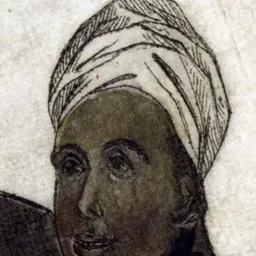

Related people
Same field, nearest in time




Contemporaries
People whose lives overlapped John Hemings's



Frequently asked questions
Who was John Hemings?
American carpenter
When was John Hemings born?
John Hemings was born in 1776 in Monticello.
When did John Hemings die?
John Hemings died in 1830.
What was John Hemings's occupation?
John Hemings was a carpenter and wood carver.
What nationality was John Hemings?
John Hemings was American.
Sources & further reading
Cite this page
APA: Biography.guide. (2026). John Hemings. https://biography.guide/john-hemings/
MLA: "John Hemings." Biography.guide, https://biography.guide/john-hemings/.
Chicago: "John Hemings." Biography.guide. https://biography.guide/john-hemings/.
Data last updated: 2026-09-22 · Spot an error? Report a correction.
Page generated 2026-09-27 05:33 UTC