
About John Hay
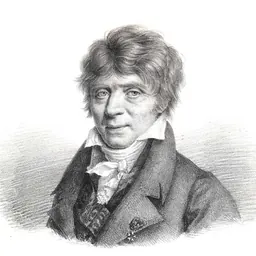
Lived 1793 – 1851 (aged 58). John Hay was a British politician and naval officer.
Rear-Admiral Lord John Hay (1 April 1793 – 9 September 1851) was a British naval officer and Whig politician.
Naval career The third son of George Hay, 7th Marquess of Tweeddale, Hay entered the Navy in December 1804, appearing on the books of HMS Monarch. However, this was probably a nominal enrollment to increase his seniority. Hay's first real service was probably aboard HMS Seahorse, beginning in December 1806.
In 1826, he was returned as Member of Parliament for Haddingtonshire. However, due to his Whig connections, he was unable to obtain another command until 24 December 1832, when he was given the new frigate HMS Castor. In 1833, he received a medal from the Society for the Encouragement of the Arts for inventing a telescope-holder that could be used by a one-handed man. On 19 November 1836, he was transferred to the paddle sloop HMS Phoenix, and on 8 March 1837 to HMS North Star, which he commanded until 1840.
During much of this time, Hay acted as commodore of a squadron off the northern coast of Spain, with a naval brigade providing support for the Spanish government during the First Carlist War. For his actions during the war, particularly in helping to defend Bilbao, he was made a Companion of the Bath and received the Grand Cross of the Order of Charles III. After the war, Hay commanded HMS Warspite on the North American and West Indies station from 17 August 1841 to October 1845. It was Warspite which, in 1842, carried Lord Ashburton to America to negotiate the Webster-Ashburton Treaty. After briefly serving as superintendent of Woolwich Dockyard, Hay was returned as Member of Parliament for Windsor in 1847. He was also appointed Fourth Naval Lord in 1846 and Third Naval Lord in 1847.
Hay chaired the "Committee of Reference" that resulted in the retirement of Sir William Symonds as Surveyor of the Navy. However, Hay's own attempts at directing steam warship design, despite his interest in the subject, proved unsuccessful. The committee was disbanded, design placed in the hands of Symonds' successor, Sir Baldwin Walker, and Hay removed from the Board and made superintendent of Devonport Dockyard on 9 February 1850. Hay also resigned from Parliament by becoming Steward of the Manor of Northstead at this time. He was promoted rear admiral on 7 September 1851, hoisting his flag aboard HMS St George, but died two days later.
Family In 1846, Hay married Mary Anne Cameron (died 30 November 1850), daughter of Donald Cameron, 22nd Lochiel: they had no children.
Don’t just read it —
keep it.
Full-length biographies made to live with: read them, listen on the way to work, watch them tonight.
- E-book
- Audio
- Video
Instant download · yours to keep · every purchase keeps this site free
Important facts
People in John Hay's life
Named in this biography and alive at the same time


Related people
Same field, nearest in time



Contemporaries
People whose lives overlapped John Hay's





Frequently asked questions
Who was John Hay?
British navy officer and politician (1793-1851)
When was John Hay born?
John Hay was born on 1 April 1793 in Yester House.
When did John Hay die?
John Hay died on 9 September 1851.
What was John Hay's occupation?
John Hay was a politician and naval officer.
What nationality was John Hay?
John Hay was British.
Sources & further reading
· DBpedia: Lord John Hay (Royal Navy officer, born 1793)
Cite this page
APA: Biography.guide. (2026). John Hay. https://biography.guide/john-hay-politician-1793/
MLA: "John Hay." Biography.guide, https://biography.guide/john-hay-politician-1793/.
Chicago: "John Hay." Biography.guide. https://biography.guide/john-hay-politician-1793/.
Data last updated: 2026-09-20 · Spot an error? Report a correction.
Page generated 2026-09-27 05:30 UTC