
John Harry Grainger
Australian architect and civil engineer
About John Harry Grainger
Lived 1854 – 1917 (aged 62). John Harry Grainger was an Australian and British architect, civil engineer and engineer.
John Harry Grainger (30 November 1854 – 15 April 1917
Early career Grainger started his engineering training when he was fifteen, in the office of William E. Wilson MICE of Dean's Yard, Westminster. Wilson was a well-connected consultant to contractors for railway and other big projects. Grainger also studied architecture under I. J. Eden & W. K. Green of Westminster. In the mid-1870s, while still in Wilson's employ, Grainger travelled throughout Europe, visiting Spain, Italy and France. An article in the Melbourne Age disclosed that Grainger learned how to construct iron bridges in London. "[He] worked with Mr Wilson, the well-known engineer of the Metro. District Railways and with him, iron bridge making has been a special study".
Career in Australia
Eastern states
In 1877, at the age of 22, Grainger travelled to Australia and took a position in the office of A. C. Mais, Engineer-in-Chief of the South Australian Public Works Department. He resigned in July 1878 after he had won a design competition for the Albert Bridge in Adelaide and was starting to get private work from a number of wealthy clients, In 1882, the couple moved to Victoria and settled in the Melbourne suburb of North Brighton, where their only son, christened George Percy Grainger, was born on 8 July 1882.
John Grainger was an accomplished artist, with broad cultural interests and a wide circle of friends. These included David Mitchell, whose daughter Helen later gained worldwide fame as an operatic soprano under the name Nellie Melba. Many years later in 1912, he designed extensions to Coombe Cottage, Melba's home in Coldstream.
For four years (18811885), he worked in partnership with an old friend, Charles D'Ebro, with whom he had sailed from England and with whom he had also worked in the South Australian Public Works Department.
Grainger was a heavy drinker and a womaniser who, Rose learned after the marriage, had fathered a child in England before coming to Australia. His promiscuous lifestyle placed heavy strains upon the relationship, particularly when Rose discovered shortly after Percy's birth that she had contracted a form of syphilis from her husband. Supreme Court, former Perth Museum, Library and Art Gallery, Parliament House, Perth (18991904), Perth Central Police Courts, the Old Northam Railway Station, and a number of substantial goldfields buildings, including the Warden's Court, Coolgardie and the Public Buildings in Kalgoorlie. After pursuing a curative journey in Europe with his companion Winifred Falconer, Grainger returned to Melbourne in 1906, where he was awarded first prize in a design competition for the administrative block of the Melbourne Town Hall. Though experiencing the debilitating symptoms and pain of tertiary syphilis, he continued in practice in partnership with Phillip Kennedy and John Little as Grainger, Kennedy and Little. By 1910 the firm was reduced to Grainger and Little but continued to secure significant projects, including the first stage of the State Savings Bank in Elizabeth Street, and Collins House (both now demolished). Grainger retired in 1915, but his name lived on in the firm Grainger, Little and Barlow for many years. He died two years later in 1917,
Bridge designs In August 1879, at the age of 24, having already designed Adelaide's Albert Bridge, and while still resident in Adelaide, he entered a partnership in Melbourne (Jenkins and Grainger—sometimes spelt Granger) through which he forwarded designs for two new bridges in Victoria. One was for a new Princes Bridge over the Yarra River in Melbourne, the other a unique swing bridge over the Latrobe River at Sale. These were entirely his own work, both earning him lucrative first prizes and being followed by construction of the prestigious bridges.
He overcame chronic illness to design at least 14 bridges as well as five water supply and irrigation schemes, and a large number of buildings, many of which are on heritage registers in Australia and New Zealand.
Don’t just read it —
keep it.
Full-length biographies made to live with: read them, listen on the way to work, watch them tonight.
- E-book
- Audio
- Video
Instant download · yours to keep · every purchase keeps this site free
Important facts
People in John Harry Grainger's life
Named in this biography and alive at the same time


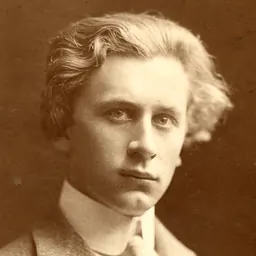

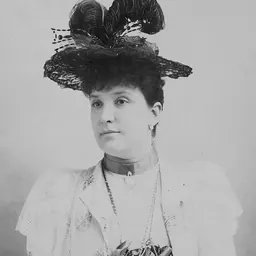

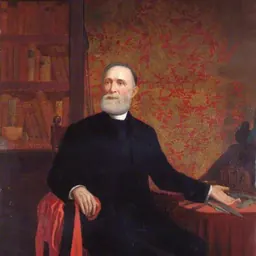
Related people
Same field, nearest in time

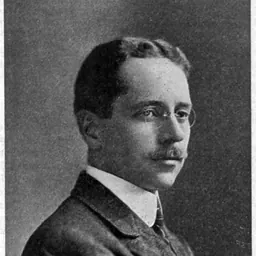

Contemporaries
People whose lives overlapped John Harry Grainger's




Frequently asked questions
Who was John Harry Grainger?
Australian architect and civil engineer
When was John Harry Grainger born?
John Harry Grainger was born on 30 November 1854 in Melbourne.
When did John Harry Grainger die?
John Harry Grainger died on 13 April 1917 in Melbourne.
What was John Harry Grainger's occupation?
John Harry Grainger was an architect, civil engineer and engineer.
What nationality was John Harry Grainger?
John Harry Grainger was Australian and British.
Sources & further reading
· Wikipedia: John Harry Grainger
· DBpedia: John Harry Grainger
Cite this page
APA: Biography.guide. (2026). John Harry Grainger. https://biography.guide/john-harry-grainger/
MLA: "John Harry Grainger." Biography.guide, https://biography.guide/john-harry-grainger/.
Chicago: "John Harry Grainger." Biography.guide. https://biography.guide/john-harry-grainger/.
Data last updated: 2026-09-20 · Spot an error? Report a correction.
Page generated 2026-09-27 05:21 UTC