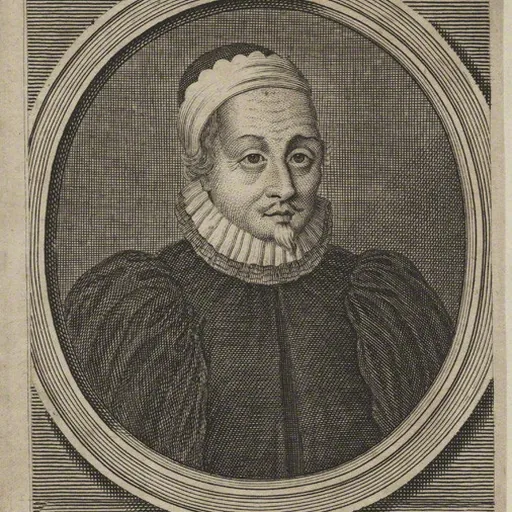
About John Hales
Lived 1584 – 1656 (aged 71–72). John Hales was a theologian and university teacher.
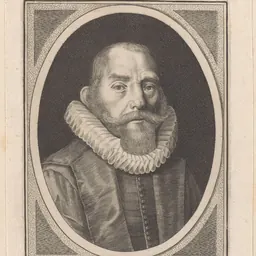
John Hales (19 April 1584 – 19 May 1656) was an English cleric, theologian and writer. An eminent if modest author and critic, his posthumous works earned him the title of the "Ever-memorable".
Early life He was born in St. James' parish, Bath, on 19 April 1584. His father, John Hales, had an estate at Highchurch, near Bath, and was steward to the Horner family. After passing through the Bath grammar school, King Edwards, Hales went on 16 April 1597 as a scholar of Corpus Christi College, Oxford at the age of thirteen and graduated B.A. on 9 July 1603. He came to the notice of Sir Henry Savile, and was elected as a fellow of Merton College in 1605. He took orders; shone as a preacher, though not for his voice; and graduated M. A. on 20 June 1609. At Merton he distinguished himself as lecturer in Greek; he is said by Clarendon to have been largely responsible for Savile's edition of Chrysostom (1610–13). In 1612 he became public lecturer on Greek to the university. Next year he delivered (29 March) a funeral oration on Sir Thomas Bodley. Soon after (24 May) he was admitted fellow of Eton College, of which Savile was Provost. He was Regius Professor of Greek in 1615.
Synod of Dort In 1616 Hales went to the Netherlands as chaplain to the ambassador, Sir Dudley Carleton. Carleton sent him in 1618 to the Synod of Dort, as observer, and he remained there from 13 November till the following February. Then Walter Balcanquhall took over for him. Anthony Farindon states (as on Hales's own authority) that Hales departed from Calvinism when Simon Episcopius pressed the verse St. John iii. 16 to support his own doctrine. According to Hales's own letter (19 January 1619) it was Matthias Martinius of Bremen, who took a middle position, who employed this text. It is not clear that Hales became an Arminian, but in any case he came away less sectarian, and he was impressed by the debate on schism, which he reported on 1 December 1618. and sister to Brian Duppa, as tutor to her son William. To this house Henry King also retreated, with some members of his family, and they lived a sort of a collegiate life, with Hales acting as chaplain. After the order against harbouring malignants, he left Mrs. Salter against her wish, and lodged in Eton and was forced to sell his library.
Hales died at Eton in the house of widow Dickenson, the wife of his servant in 19 May 1656 age 72. he was commonly but inaccurately accredited with their authorship. Hales wrote little for publication. His works are: Oratio Funebris habita in Collegio Mertonensi . . . quo die . . . Thomse Bodleio funus ducebatur, &c., Oxford, 1613. A Sermon . . . concerning the Abuses of the obscure places of Holy Scripture, &c., Oxford, 1617. The sermon Of Dealing with Erring Christians, preached at St. Paul's Cross, seems also to have been printed, at Farindon's instigation. The sermon Of Duels, preached at the Hague, is said to have been printed, though Farindon implies the contrary.
Other works Other pieces, published during his lifetime, but apparently without his authority, were: The Way towards the Finding of a Decision of the Chief Controversie now debated concerning Church Government, &c., 1641, anon. A Tract concerning Schisme and Schismatiques... by a learned and judicious divine, &c., 1642; two London editions, same year, also one at Oxford, with animadversions. Of the Blasphemie against the Holy Ghost, &c., 1646, anon.
Posthumous Golden Remains of the Ever Memorable Mr. John Hales, &c., 1659; 2nd edit., with additions, 1673; 3rd edit. Sermons preached at Eton, &c. Several Tracts, &c., 1677; 2nd edit., 1716, with addition of the letter to Laud.
The Works . . . now first collected, &c., were edited by Sir David Dalrymple, Lord Hailes, and printed at Glasgow by Foulis, 1765, in 3 vols.
It was circulated in manuscript, and a copy fell into the hands of William Laud. Hearing that the paper had given offence to the archbishop, Hales wrote, and Laud interviewed him. Des Maizeaux mentions the story that Hales assisted Laud in the second edition (1639) of his Conference with John Percy. Laud made him one of his chaplains, and obtained for him a canonry at Windsor, into which he was installed on 27 June 1639.
Don’t just read it —
keep it.
Full-length biographies made to live with: read them, listen on the way to work, watch them tonight.
- E-book
- Audio
- Video
Instant download · yours to keep · every purchase keeps this site free
Important facts
People in John Hales's life
Named in this biography and alive at the same time




Related people
Same field, nearest in time


Contemporaries
People whose lives overlapped John Hales's


Frequently asked questions
Who was John Hales?
theologian
When was John Hales born?
John Hales was born in 1584 in Bath.
When did John Hales die?
John Hales died in 1656.
What was John Hales's occupation?
John Hales was a theologian and university teacher.
Sources & further reading
· DBpedia: John Hales (theologian)
Cite this page
APA: Biography.guide. (2026). John Hales. https://biography.guide/john-hales-theologian/
MLA: "John Hales." Biography.guide, https://biography.guide/john-hales-theologian/.
Chicago: "John Hales." Biography.guide. https://biography.guide/john-hales-theologian/.
Data last updated: 2026-09-20 · Spot an error? Report a correction.
Portrait: Wikimedia Commons · author & licence
Page generated 2026-09-27 04:57 UTC