
About John Gunther
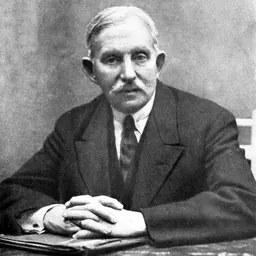
Lived 1901 – 1970 (aged 68). John Gunther was an American journalist, novelist, writer, opinion journalist and author.
John Gunther (August 30, 1901 – May 29, 1970) was an American journalist and writer.
His success came primarily by a series of popular sociopolitical works, known as the "Inside" books (1936–1972), including the best-selling Inside U.S.A. in 1947. However, he is now best known for his memoir Death Be Not Proud (1949), on the death of his teenage son, Johnny Gunther, from a brain tumor.
Life Gunther was born in 1901 in the Lakeview district of Chicago and grew up on the North Side of the city. He was the first child of a German-American family: his father was Eugene Guenther, a traveling salesman; his mother Lizette Schoeninger Guenther.
During World War I, the family changed the spelling of its name from Guenther to Gunther to avoid having an obviously-German name.
In 1922, he was awarded a Bachelor of Philosophy from the University of Chicago, where he was literary editor of the student paper.
He worked briefly in the city as a reporter for the Chicago Daily News, but he soon moved to Europe to be a correspondent with the Daily News London bureau, where he covered Europe, the Balkans, and the Middle East.
Gunther met Frances Fineman in London in 1925 and the two were married in 1927. Until 1936, they worked together (Frances as a foreign correspondent for London's News Chronicle) throughout Europe. Gunther wrote, "I was at one time or another in charge of Daily News offices in London, Berlin, Vienna, Moscow, Rome, and Paris, and I also visited Poland, Spain, the Balkans, and Scandinavia. I have worked in every European country except Portugal. I saw at first hand the whole extraordinary panorama of Europe from 1924 to 1936." In Vienna, Gunther worked alongside a group of English-speaking central European correspondents that included Marcel Fodor, Dorothy Thompson, Robert Best, and George Eric Rowe Gedye.
Gunther later described those years as
the bubbling, blazing days of American foreign correspondence in Europe. ... Most of us traveled steadily, met constantly, exchanged information, caroused, took in each other's washing, and, even when most fiercely competitive, were devoted friends. ... We were scavengers, buzzards, out to get the news, no matter whose wings got clipped.
According to Michael Bloch, Gunther enjoyed a same-sex relationship in the 1930s in Vienna with the future Leader of the British Labour Party, Hugh Gaitskell.
Gunther's experiences as a journalist in interwar Vienna formed the basis for his novel The Lost City.
His research and the contacts that Gunther developed as a reporter also led directly to the first of the Inside books, Inside Europe, which was intended by Gunther to summarize the European political situation for the general reader. With the success of the Inside books starting in the late 1930s, Gunther resigned his position to devote his full-time to the books. During World War II, he worked as a war correspondent in Europe.
The Gunthers had two children: Judy, who died in 1929 before the age of 1, and John Jr. (Johnny), who was born in 1929 and died in 1947 of a brain tumor. The Gunthers divorced in 1944.
Gunther died of liver cancer in 1970.
Other nonfiction and fiction works In addition to the "Inside" series and related volumes, Gunther wrote eight novels and three biographies. The most notable of them are Bright Nemesis, The Troubled Midnight, Roosevelt in Retrospect (published in 1950) and Eisenhower, a biography of the famous general released in 1952, the year that Dwight Eisenhower was elected President. In addition, Gunther published several books for young readers, including a biography of Alexander the Great in 1953, and Meet Soviet Russia, a two-volume adaptation of Inside Russia Today in 1962.
Death Be Not Proud The book for which Gunther is best remembered today, however, does not deal with politics. Death Be Not Proud is the story of his son, Johnny, who died of a brain tumor at the age of 17. In the book, "a restrained and moving work intended for family and friends,"
Television – High Road From September 7, 1959, until September 17, 1960, Gunther was host and narrator of a television program on the ABC network entitled John Gunther's High Road. It originally aired Monday nights at 8:30, but soon switched to Saturday night at 8 p.m., immediately following the Dick Clark variety show. The High Road program consisted of travelogues of various nations around the world. Some of the films were produced especially for this program and others were obtained from other sources. The common thread of all episodes was Gunther's narration, although he had little or nothing to do with the actual content.
List of works Nonfiction (1932) Not To Be Repeated: Merry-Go-Round of Europe by Anonymous (1934) Habsburgs Again? (1936) Inside Europe (1938 ed) Inside Europe (includes minor updates) (1939 ed) Inside Europe (includes minor updates) (1939) The High Cost of Hitler (1939) Inside Asia (1940 ed) Inside Europe (includes major additions and changes due to the geopolitical impacts of Hitler and Nazi Germany) (1941) Inside Latin America (1944) D-Day (1947) Inside U.S.A. (1949) Death Be Not Proud, memoir (1949) Behind the Curtain (published in the UK as Behind Europe's Curtain) (1950) Roosevelt in Retrospect: A Profile in History, biography (1951) The Riddle of MacArthur: Japan, Korea, and the Far East (1952) Eisenhower, the Man and the Symbol, biography (1953) Alexander the Great, biography (1955) Inside Africa (1956) Days to Remember: America 1945-1955 (with Bernard Quint) (1958) Inside Russia Today (1959) Julius Caesar (1960) Taken at the Flood: The Story of Albert D. Lasker, biography (1961) Inside Europe Today (1961) A Fragment of Autobiography: The Fun of Writing the Inside Books (1962) Meet Soviet Russia (2 volumes) (1965) Procession (1967) Inside South America (1969) Twelve Cities (1972) John Gunther's Inside Australia and New Zealand (with W. H. Forbis)
Novels (1926) The Red Pavilion (1927) Peter Lancelot: An Amusement (published in the U.S. as Eden for One: An Amusement) (1929) The Golden Fleece (1932) Bright Nemesis (1945) The Troubled Midnight (1964) The Lost City (1970) The Indian Sign (published in the UK as Quatrain)
Don’t just read it —
keep it.
Full-length biographies made to live with: read them, listen on the way to work, watch them tonight.
- E-book
- Audio
- Video
Instant download · yours to keep · every purchase keeps this site free
Important facts
People in John Gunther's life
Named in this biography and alive at the same time

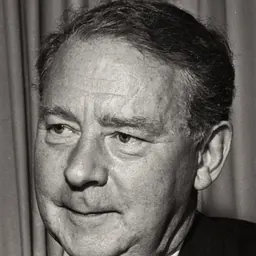
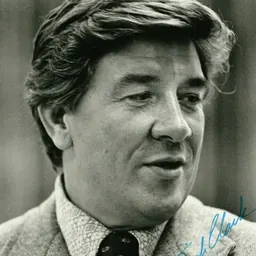





Related people
Same field, nearest in time




Contemporaries
People whose lives overlapped John Gunther's



Frequently asked questions
Who was John Gunther?
American journalist (1901-1970)
When was John Gunther born?
John Gunther was born on 30 August 1901 in Chicago.
When did John Gunther die?
John Gunther died on 29 May 1970 in New York City.
What was John Gunther's occupation?
John Gunther was a journalist, novelist, writer, opinion journalist and author.
What nationality was John Gunther?
John Gunther was American.
Sources & further reading
Cite this page
APA: Biography.guide. (2026). John Gunther. https://biography.guide/john-gunther/
MLA: "John Gunther." Biography.guide, https://biography.guide/john-gunther/.
Chicago: "John Gunther." Biography.guide. https://biography.guide/john-gunther/.
Data last updated: 2026-09-20 · Spot an error? Report a correction.
Page generated 2026-09-27 05:16 UTC