
About John Griffith
Lived 1818 – 1885 (aged 66–67). John Griffith was a cleric.
John Griffith was among the most prominent clergymen in industrial south Wales during the second half of the nineteenth century. He was rector of Aberdare from 1846 until 1859. From 1859 until his death in 1885 he was vicar of Merthyr Tydfil where he proved a strong supporter of workers' rights and, by the end of his life a supporter of the disestablishment of the Church of England in Wales. This reflected the way in which he gradually abandoned the strong Tory principles that he espoused at the beginning of his career at Aberdare. He died on 24 April 1885. After a short period as curate of Astbury in Cheshire, Griffith benefitted from the patronage of Sir Stephen Glynne, brother-in-law of W.E. Gladstone, and for a short time became family chaplain at Hawarden. However, a collapse in the family finances in 1846 made it necessary for Griffith to seek alternative employment.
At this time, Griffith had been writing to the Cardiff and Merthyr Guardian, using the pseudonym, Cambro Sacerdos, and in these articles drew attention to deficiencies that still existed within the church despite reforms undertaken in the 1830s. The articles came to the attention of the owner of the newspaper, the Marquis of Bute. Bute was not only an evangelical and supporter of church reform but also, as Lord Lieutenant of Glamorgan, concerned about the preservation of law and order within the developing industrial communities in the upland parts of the county. Under these circumstances, Griffith emerged as a candidate for the vacant parish of Aberdare which was endowed by the Marquis.
John Griffith at Aberdare
The parish of Aberdare was established in 1846 when it ceased to be part of the pre-industrial parish of Llantrisant, many miles to the south. The new parish was a large one, extending from Hirwaun in the north to Mountain Ash in the south, an area of some fifty square miles centred on the town of Aberdare. The whole area was expanding rapidly due to the opening of ironworks and collieries, with the population increasing by approximately 1,000 people each year. The only Anglican place of worship was the small and ancient St John's Church, while there were already at least fourteen substantial nonconformist chapels in the parish. It was only towards the end of his ministry at Aberdare that St John's Church became suitable for regular worship once again after a restoration costing £900. By that time however, Griffith had instigated the building of St Elvan's Church, commonly known as the Cathedral of the Valleys, which revitalised the influence of the Church in this industrial community.
However, his initial impact on the parish did not attract a positive response. Soon after his arrival at Aberdare, Griffith became embroiled in the controversy over the 1847 Education Reports following evidence he gave to the commissioners about the alleged immorality of the local population. He later elaborated upon or repeated his claims in letters to the press, such as that published in the Cardiff and Merthyr Guardian in February 1848. On that occasion, Griffith argued that he merely repeated what had been said for many years by David Owen (Brutus) in the Anglican journal, Yr Haul. This provoked fury form local nonconformist ministers led by the Rev Thomas Price and it has been argued that this episode enabled Price to assume the leadership of political nonconformity in Aberdare and further afield.
However, he soon proved to be a more complex figure than the caricature attacked by Price. In late 1848 he criticised his own church's apparent indifference towards the Welsh-speaking population, most clearly seen in the appointment of monoglot Englishmen to ecclesiastical posts in Wales. 'I venture to declare', wrote one correspondent, ' no man in this part of the kingdom could be more popular in his day and generation than the Rev. John Griffith.' Among the nonconformist ministers present at the funeral was his old rival, Dr Thomas Price of Aberdare.
Don’t just read it —
keep it.
Full-length biographies made to live with: read them, listen on the way to work, watch them tonight.
- E-book
- Audio
- Video
Instant download · yours to keep · every purchase keeps this site free
Important facts
People in John Griffith's life
Named in this biography and alive at the same time

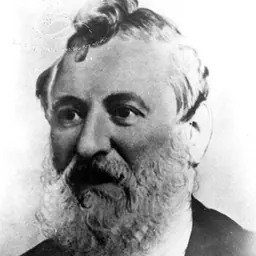


Related people
Same field, nearest in time


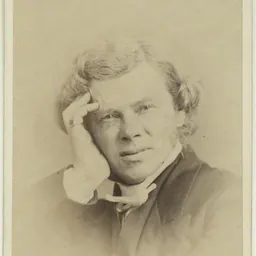

Contemporaries
People whose lives overlapped John Griffith's



Frequently asked questions
Who was John Griffith?
Welsh clergyman (died 1885)
When was John Griffith born?
John Griffith was born in 1818.
When did John Griffith die?
John Griffith died on 22 April 1885.
What was John Griffith's occupation?
John Griffith was a cleric.
Sources & further reading
· DBpedia: John Griffith (priest)
Cite this page
APA: Biography.guide. (2026). John Griffith. https://biography.guide/john-griffith-cleric/
MLA: "John Griffith." Biography.guide, https://biography.guide/john-griffith-cleric/.
Chicago: "John Griffith." Biography.guide. https://biography.guide/john-griffith-cleric/.
Data last updated: 2026-09-20 · Spot an error? Report a correction.
Page generated 2026-09-27 05:29 UTC