
About John Green Crosse
Lived 1790 – 1850 (aged 59–60). John Green Crosse was a writer.
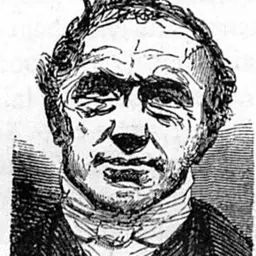
John Green Crosse, FRCS, FRS (6 September 1790 – 9 June 1850) was a well-known English surgeon of his day, at the Norfolk and Norwich Hospital. After completing his apprenticeship in Stowmarket, he studied at St. George's Hospital and at the Windmill Street School of Medicine in London. He then moved to Dublin and Paris, finally settling in Norwich in 1815. In 1823 he became assistant-surgeon to the Norfolk and Norwich Hospital, and in 1826 surgeon. His reputation as a lithotomist, and in 1836 he was elected a Fellow of the Royal Society.
Among his publications were Sketches of the Medical Schools of Paris, describing hospital practice there, and A History of the Variolous Epidemic which occurred in Norwich in the year 1819. Crosse worked on bladder stones. In 1833 he won the Jacksonian prize of the Royal College of Surgeons of England for The Formation, Constituents, and Extraction of the Urinary Calculus.
Life Norfolk and Norwich Hospital, Norwich (line engraving by W. Wellcome) Crosse was born on 6 September 1790, at Boyton Hall, Great Finborough, Suffolk, the second son of William Cross, a farmer, and Ann (née Green).
At an early age he was apprenticed to Thomas Bayly, a surgeon-apothecary in Stowmarket. When his apprenticeship was finished he went to London, and studied at St. George's Hospital and at the Windmill Street School of Medicine. Benjamin Brodie then recommended him to James Macartney as a demonstrator at Trinity College, Dublin. Not receiving a diploma there, Crosse (who had added an 'e' to his surname in line with several of his paternal ancestors) left Dublin and went to Paris, where he spent the winter of 1814–15. In March 1815 he settled in Norwich.
In 1823 Crosse became assistant-surgeon to the Norfolk and Norwich Hospital, and in 1826 surgeon. He became known as a lithotomist, and had a large surgical practice. In 1848 his health began to fail. He died on 9 June 1850, and was buried in the cloisters of Norwich Cathedral. In 1833 he obtained the Jacksonian prize of the Royal College of Surgeons of England for a work on The Formation, Constituents, and Extraction of the Urinary Calculus, which was published in 1835, with illustrations by the Norwich artist Obadiah Short. He also published several papers in the Transactions of the Provincial Medical and Surgical Association, of which he was president in 1846; and some cases of midwifery written by him were published after his death by Dr. Copeman, one of his pupils.
Family Crosse married Dorothy, daughter of Thomas Bayly of Stowmarket (as above), on 18 May 1816, at the Church of St. Peter and St. Mary, Stowmarket. Lavinia Crosse was the third of the couple's eight children.
Don’t just read it —
keep it.
Full-length biographies made to live with: read them, listen on the way to work, watch them tonight.
- E-book
- Audio
- Video
Instant download · yours to keep · every purchase keeps this site free
Important facts
People in John Green Crosse's life
Named in this biography and alive at the same time




Related people
Same field, nearest in time



Contemporaries
People whose lives overlapped John Green Crosse's



Frequently asked questions
Who was John Green Crosse?
British doctor
When was John Green Crosse born?
John Green Crosse was born in 1790.
When did John Green Crosse die?
John Green Crosse died in 1850.
What was John Green Crosse's occupation?
John Green Crosse was a writer.
Sources & further reading
· Wikipedia: John Green Crosse
Cite this page
APA: Biography.guide. (2026). John Green Crosse. https://biography.guide/john-green-crosse/
MLA: "John Green Crosse." Biography.guide, https://biography.guide/john-green-crosse/.
Chicago: "John Green Crosse." Biography.guide. https://biography.guide/john-green-crosse/.
Data last updated: 2026-09-20 · Spot an error? Report a correction.
Page generated 2026-09-27 05:24 UTC