
About John George Lambton Durham
Lived 1792 – 1840 (aged 48). John George Lambton Durham was a British diplomat, politician and statesperson.
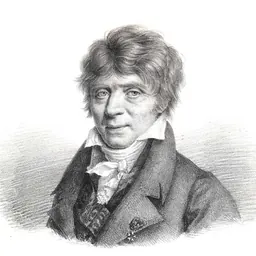
John George Lambton, 1st Earl of Durham (12 April 1792 – 28 July 1840), also known as "Radical Jack" and commonly referred to in Canadian history texts as Lord Durham, was a British Whig statesman, colonial administrator, Governor General and high commissioner of British North America.
A leading reformer, Lord Durham played a major role in the passage of the Reform Bill of 1832. He later served as ambassador to Russia. He was a founding member and chairman of the New Zealand Company that played a key role in the colonisation of New Zealand.
George Woodcock wrote Lord Durham was "proud, wayward, immensely rich, with romantic good looks and an explosive temper", one of those "natural rebels who turn their rebellious energies to constructive purposes. Both at home and abroad he became a powerful exponent of the early nineteenth-century liberal spirit."
Background and education Lambton was born 12 April 1792 in the house of his father William Henry Lambton at 14 Berkeley Square in St George Hanover Square (now within the City of Westminster). His mother was Lady Anne Barbara Frances, daughter of George Bussy Villiers, 4th Earl of Jersey. He was christened with the names of his grandfathers, John Lambton and George Villiers. At the time of his birth, his father was taking part in the formation and chairing of the Society of the Friends of the People.
After attending Eton College, Lambton joined the army in 1809 as a cornet in the 10th Hussars, but resigned in 1811. Following his father's death in 1797, he inherited an immense fortune, derived largely from mining on lands surrounding Lambton Castle, the ancestral family home in County Durham, which formed the basis of Lambton Collieries. Other properties in County Durham included Dinsdale Park and Low Dinsdale Manor..
In 1821, Lambton earned the epithet "Jog Along Jack" after he was asked what he considered an adequate income for an English gentleman and replying that "a man might jog along comfortably enough on £40,000 a year" (equivalent to an annual income of £10 million in 2026).
Lambton supported educational projects such as the Mechanics' Institutes and the newly founded University of London. with his interest being philanthropic. The venture failed at colonisation.
Political career Lambton was first elected to Parliament for County Durham in the general election of 1812, a seat he held until 1828, when he was raised to the peerage as Baron Durham, of the City of Durham and of Lambton Castle in the County Palatine of Durham. In Parliament he supported liberal causes, from the defence of Queen Caroline to the removal of political disabilities on Dissenters and Roman Catholics. When his father-in-law Lord Grey became prime minister in 1830, he was sworn into the Privy Council and appointed Lord Privy Seal. Along with Lord Russell he was a leading promoter of reform. He helped draft the famous Reform Bill of 1832. It reformed the electoral system by abolishing tiny districts, gave representation to cities, gave the vote to small landowners, tenant farmers, and shopkeepers and to householders who paid a yearly rental of £10 or more and some lodgers. Between 1835 and 1837, he served as Ambassador to Russia. While in Russia, he was invested as a Knight of the Order of St. Alexander Nevsky, of the Order of St. Andrew and of the Order of St. Anna. In 1837, he was appointed a Knight Grand Cross of the Order of the Bath.
Canada In 1838, Lord Durham was named Governor General and High Commissioner for British North America (several North American colonies administered collectively by the Colonial Office, including: the provinces of Lower Canada and Upper Canada, Nova Scotia, New Brunswick, and their several Dependencies, Newfoundland, Prince Edward Island, Cape Breton and Bermuda). A main task set for him was to investigate the political situation there after the Rebellions of 1837 in Upper Canada (Ontario) and Lower Canada (Quebec) and recommendations as to necessary reforms.
Lord Durham and his longtime colleague Edward Gibbon Wakefield arrived in Lower Canada on 29 May 1838. One of his tasks as governor general was to investigate the circumstances surrounding the Lower Canada Rebellion of Louis-Joseph Papineau and the Upper Canada Rebellion of William Lyon Mackenzie, which had occurred in 1837. His decisions with regard to the Rebellion prisoners encountered stiff opposition at Westminster. He lost the support of the Prime Minister, Melbourne, whereupon he published his repudiation and resignation 9 October 1838 and set sail for London on 1 November.
Lord Durham's detailed Report on the Affairs of British North America (London, January 1839) recommended a modified form of responsible government and a legislative union of Upper Canada, Lower Canada and the Maritime Provinces in order to assimilate the French Canadians, whom he considered inferior. Lord Durham is less well regarded for recommending the union of Upper and Lower Canada, which resulted in the creation of the united Province of Canada.
As early as 1844, Lord Durham's intended policy of assimilation faced setbacks, as Louis-Hippolyte Lafontaine's party in the House forced de facto reestablishment of French as a language of Parliament. Once responsible government was achieved (1848), French Canadians in Canada East succeeded by voting as a bloc in ensuring that they were powerfully represented in any cabinet, especially as the politics of Canada West was highly factional. The resulting deadlock between Canada East and West led to a movement for federal rather than unitary government, which resulted in the creation of confederation, a federal state known as the Dominion of Canada, incorporating New Brunswick and Nova Scotia, and dividing the United Canadas into two provinces, Ontario (Canada West) and Quebec (Canada East), in 1867. They had two sons and three daughters:
The Hon. Charles William (16 January 1818 – 24 September 1831) – see The Red Boy Lady Mary Louisa (8 May 1819 – 9 March 1898), married James Bruce, 8th Earl of Elgin Lady Emily Augusta (17 May 1823 – 2 November 1886), married Henry Cavendish, son of the Hon. Henry Cavendish The Hon. George Frederick D'Arcy (5 September 1828 – 27 November 1879), later 2nd Earl of Durham Lady Alice Anne Caroline (16 April 1831 – 15 January 1907), married Sholto Douglas, Lord Aberdour (later 18th Earl of Morton)
Lord Durham died at Cowes on the Isle of Wight in July 1840, aged 48, and was buried at St Mary and St Cuthbert, Chester-le-Street. He was succeeded by his eldest and only surviving son, George. The Countess of Durham only survived her husband by a year and died aged 44 on 26 November 1841 at Genoa from a serious cold.
In literature In one of her occasional political forays, Letitia Elizabeth Landon in her poetical illustration to Sir Thomas Lawrence's portrait, 'The Right Honourable Lord Durham. Now on an Embassy at the Court of Russia' in Fisher's Drawing Room Scrap Book, 1833', expresses her hopes that Lord Durham be able to persuade the Russians to return to Poland its lost freedom and sovereignty.
Legacy
Names given in honour of the Earl include Lambton County, Ontario, Lambton, Toronto (including Lambton Mills, Lambton Mills Cemetery and Lambton House), Lambton Avenue in Toronto, Lord Durham Public School (Ajax, Ontario, closed), Lambton, Québec, Lambton Quay, Lambton Ward and Lambton Harbour in Wellington in New Zealand, and Durham Heights and Cape Lambton (both in the southern tip of Banks Island in the Northwest Territories). The Penshaw Monument in County Durham, on a hill west of Sunderland, was built in his honour.
Coat of arms
Don’t just read it —
keep it.
Full-length biographies made to live with: read them, listen on the way to work, watch them tonight.
- E-book
- Audio
- Video
Instant download · yours to keep · every purchase keeps this site free
Important facts
Family & relationships
People in John George Lambton Durham's life
Named in this biography and alive at the same time


Related people
Same field, nearest in time




Contemporaries
People whose lives overlapped John George Lambton Durham's



Frequently asked questions
Who was John George Lambton Durham?
British politician (1792-1840)
When was John George Lambton Durham born?
John George Lambton Durham was born on 12 April 1792 in London.
When did John George Lambton Durham die?
John George Lambton Durham died on 28 July 1840 in Isle of Wight, Cowes.
What was John George Lambton Durham's occupation?
John George Lambton Durham was a diplomat, politician and statesperson.
What nationality was John George Lambton Durham?
John George Lambton Durham was British.
Sources & further reading
· Wikipedia: John George Lambton Durham
· DBpedia: John Lambton, 1st Earl of Durham
Cite this page
APA: Biography.guide. (2026). John George Lambton Durham. https://biography.guide/john-george-lambton-durham/
MLA: "John George Lambton Durham." Biography.guide, https://biography.guide/john-george-lambton-durham/.
Chicago: "John George Lambton Durham." Biography.guide. https://biography.guide/john-george-lambton-durham/.
Data last updated: 2026-09-20 · Spot an error? Report a correction.
Page generated 2026-09-27 05:31 UTC