
About John Elder Moultray
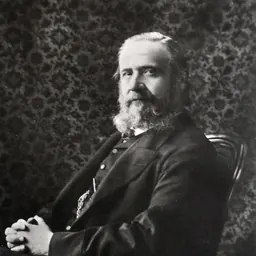
Lived 1865 – 1922 (aged 56–57). John Elder Moultray was a New Zealand painter and war correspondent.
John Moultray (6 August 18654 May 1922) was a New Zealand artist, active in the late 19th/early 20th century and best known for his history paintings. Originally from Edinburgh, Moultray migrated to New Zealand with his parents in 1883. In the years that followed, he executed several works, with many depicting aspects of the New Zealand Wars. He was also a war correspondent, reporting on the activities on the first contingent of troops sent by New Zealand to South Africa in 1899 during the Second Boer War.
Early life John Elder Moultray was born in Edinburgh, Scotland, on 6 August 1865, the second son of James Douglas Moultray, a landscape painter who had initially trained under Walter Ferguson and later worked with Horatio McCulloch. Tutored initially in art by his father, Moultray subsequently studied at the Edinburgh School of Art. In 1883, the Moultray family emigrated to New Zealand and settled in Dunedin. Seeking to connect with the local art community, Moultray and his father joined the Otago Art Society (OSA), and the latter was appointed to its committee. However, they later came into conflict with the other members over a design competition and resigned from the OSA.
Professional career Moultray sought a career as history painter, writing in 1898, he claimed that his "life's work should be the transference to canvas of the leading events of the colony, as I had discovered upon my arrival in New Zealand that it was a well-nigh neglected field among artists". Among his efforts were depictions of Maori sighting Captain James Cook's ship as it came into view off the New Zealand coast and of the 1886 eruption of Mount Tarawera, the latter a commission from Alfred Henry Burton, a prominent resident of Dunedin. Of particular interest to Moultray was the depiction of scenes from the New Zealand Wars, known to the Europeans as the 'Maori Wars'. He came to be considered one of the leading exponents in New Zealand in the subject. Among his works are Episode of the Maori Wars, A Trooper of the Wanganui Cavalry Attacked by a Hau-Hau, and The Battle of Te Ngutuo-te-Manu, Sept. 7, 1868. He made some effort towards accuracy, often making field trips to visit the sites of the events he was portraying and interviewing participants. Art historian Marilyn Park notes that some of the interviewees, usually British soldiers and Colonial militia, may have distorted the telling the events.
After his return to New Zeaand, Moultray worked out of an art studio on Frederick Street in Dunedin teaching art. He also resumed painting. In addition to his history work, he executed landscapes and works with Māori themes. In 1904 the Otago Daily Times and Witness published its Christmas Annual with numerous reproductions of his illustrations of events and notable individuals of Māori culture and mythology. Moultray would make other works with similar themes.
Later life Affected by poor health in his later years, Moultray gave up his Frederick Street studio and retired to Herbert, nearby to Dunedin. His health was such that he was unable to accept an offer to become headmaster at the Dunedin Art School. He died on 4 May 1922 at his home. He was survived by his wife and had no children.
Much of his artwork is privately owned but the Hocken Library has 24 of his paintings in its collection. Others are held by the Grey Moyle Trust with some on loan to the Auckland Museum although in storage. Another is held by the National Library of Australia. In modern times, his work is seen as archaic and old-fashioned but according to Park, Moultray's contributions to New Zealand art have been somewhat overlooked.
Don’t just read it —
keep it.
Full-length biographies made to live with: read them, listen on the way to work, watch them tonight.
- E-book
- Audio
- Video
Instant download · yours to keep · every purchase keeps this site free
Important facts
People in John Elder Moultray's life
Named in this biography and alive at the same time




Related people
Same field, nearest in time

Contemporaries
People whose lives overlapped John Elder Moultray's




Frequently asked questions
Who was John Elder Moultray?
New Zealand artist (1865-1922)
When was John Elder Moultray born?
John Elder Moultray was born in 1865.
When did John Elder Moultray die?
John Elder Moultray died in 1922.
What was John Elder Moultray's occupation?
John Elder Moultray was a painter and war correspondent.
What nationality was John Elder Moultray?
John Elder Moultray was New Zealand.
Sources & further reading
· Wikipedia: John Elder Moultray
Cite this page
APA: Biography.guide. (2026). John Elder Moultray. https://biography.guide/john-elder-moultray/
MLA: "John Elder Moultray." Biography.guide, https://biography.guide/john-elder-moultray/.
Chicago: "John Elder Moultray." Biography.guide. https://biography.guide/john-elder-moultray/.
Data last updated: 2026-09-20 · Spot an error? Report a correction.
Page generated 2026-09-27 05:29 UTC