
About John Colter
Lived 1774 – 1812 (aged 37–38). John Colter was an American explorer and trapper, known for European ethnic groups, Lewis and Clark Expedition and Mountain man.
John Colter (c.1770–1775 – May 7, 1812 or November 22, 1813) was a member of the Lewis and Clark Expedition (1804–1806). Though party to one of the more famous expeditions in history, Colter is best remembered for explorations he made during the winter of 1807–1808, when he became the first known person of European descent to enter the region which later became Yellowstone National Park and to see the Teton Mountain Range. Colter spent months alone in the wilderness and is widely considered to be the first known mountain man.
Early life John Colter was born in Stuarts Draft, Colony of Virginia in 1774, based on assumptions by his family. There is some debate as to which variation of the family name, Coalter, Coulter, or Colter, is correct, and the issue was further convoluted by William Clark utilizing all three spelling variations during his daily journals. It is unknown whether Colter was literate or knew how to write. Two signatures possessed by the Missouri State Historical Society assert that the proper spelling of the family name was "Colter" and that Colter was at least able to write his own name.
Lewis and Clark Expedition John Colter, along with George Shannon and Patrick Gass, joined the expedition while Lewis was waiting for the completion of their vessels in Pittsburgh and nearby Elizabeth, Pennsylvania. The outdoor skills he had developed from this frontier lifestyle impressed Meriwether Lewis, and on October 15, 1803, Colter was offered the rank of private and a pay of five dollars per month when he was recruited to join what became the Lewis and Clark Expedition. The expedition arrived at the Mississippi River in November and in December established its 1803-1804 winter camp at Wood River, north of St. Louis. While Lewis and Clark were away from camp making preparations, Colter and three other recruits disobeyed Lewis’ orders, leaving the camp to go to a whiskey shop. Upon his return, Lewis disciplined Colter and the others with ten days’ confinement to quarters. Soon thereafter, Colter was court-martialed after threatening to shoot sergeant John Ordway. After a review of the situation, Colter was reinstated after he offered an apology and promised to reform.
Colter was considered to be one of the best hunters in the group and was routinely sent out alone to scout the surrounding countryside for game meat.
After traveling thousands of miles, in 1806 the expedition returned to the Mandan villages in present-day North Dakota. There, they encountered Forrest Hancock and Joseph Dickson, two frontiersmen who were headed into the upper Missouri River country in search of beaver furs. On August 13, 1806, Lewis and Clark permitted Colter to be honorably discharged almost two months early so that he could lead the two trappers back to the region they had explored. Upon his discharge, Colter had earned payment for 35 months and 26 days, totaling $179.67 1/3rd dollars. However, Wyoming historian J.K. Rollinson asserts in a personal letter that he had met the stepson of one of Colter's companions, mostly likely Hancock's as Dixon is known to have left the region for Wisconsin in 1827. Colter probably passed along portions of the shores of Jackson Lake after crossing the Continental Divide near Togwotee Pass or more likely, Union Pass in the northern Wind River Range. Colter then explored Jackson Hole below the Teton Range, later crossing Teton Pass into Pierre's Hole, known today as the Teton Basin in the state of Idaho. His body was brought ashore and hacked to pieces. After a council, Colter was told to leave and encouraged to run. It soon became apparent that he was running for his life pursued by a group of Indians. A fast runner, after several miles the naked Colter was exhausted and bleeding from his nose but far ahead of most of the group with only one assailant still close to him. He then managed to overcome the lone man:
Colter took a blanket from the Indian he had killed. Continuing his run with a pack of Indians following, he reached the Madison River, from his start, and hiding inside a beaver lodge, escaped capture. Emerging at night he climbed and walked for eleven days to a trader's fort on the Little Big Horn.
In 1810, Colter assisted in the construction of another fort located at Three Forks, Montana. After returning from gathering fur pelts, he discovered that two of his partners had been killed by the Blackfeet. This event convinced Colter to leave the wilderness for good, and he returned to St. Louis before the end of 1810. He had been away from civilization for almost six years. Around 1810, he visited with William Clark and provided detailed reports of his explorations since they had last met. From this information, Clark created a map which, despite its previously mentioned discrepancies, was the most comprehensive map produced of the region of the explorations for the next 75 years. Other sources indicate he died on November 22, 1813.
Legacy Colter's legacy has had a profound impact on the image of the American West and frontier, with Colter's Run seeing many incarnations and recreations, including a retelling by Washington Irving. The stereotypes of reclusive frontier mountain men may be thanks to Nicholas Biddle's written characterizations of Colter, which paint him a man easily beguiled by the trapping prospects of the wilderness and intimidated by the possibility of returning to regular society. A plaque commemorating Colter was displayed at a roadside pulloff on U.S. Route 340 just east of Stuarts Draft, near his birthplace. When the road was widened in 1998, the plaque was moved just north of the intersection of 340 and Route 608. A Kentucky historical marker commemorating Colter as one of the Lewis and Clark Expedition's "nine young men from Kentucky" is located in Maysville, Kentucky.
Popular culture The first motion picture about John Colter's life was the 1912 silent film, John Colter's Escape. The original script for director Cornel Wilde's 1965 movie The Naked Prey was largely based on Colter being pursued by Blackfeet Indians in Montana. Films such as Run of the Arrow (1957) and The Mountain Men (1980) have incidents closely based upon Colter's Run. A. B. Guthrie Jr.'s 1947 story "Mountain Medicine" is a fictionalized account of Colter's Run. The TV series (2022) Into the Wild Frontier has one episode devoted to John Colter. Season 1, Episode 3: John Colter: King of the Mountain Men, 43 minutes. Colter's exploits are recounted throughout T.C. Boyle's 2015 novel The Harder They Come, as they are an inspiration for the character Adam Stensen.
Colter Stone
Sometime between 1931 and 1933, an Idaho farmer named William Beard and his son discovered a rock carved into the shape of a man's head while clearing a field in Tetonia, Idaho, which is immediately west of the Teton Range. The rhyolite lava rock is long, wide and thick and has the words "John Colter" carved on the right side of the face and the number "1808" on the left side and has been dubbed the "Colter Stone". The stone was reportedly purchased from the Beards in 1933 by A.C. Lyon, who presented it to Grand Teton National Park in 1934.
Fritiof Fryxell, noted mountain climber of numerous Teton Range peaks, geologist and Grand Teton National Park naturalist, concluded that the stone had weathering that indicated that the inscriptions were likely made in the year indicated.
Another possible artifact of Colter's was discovered within Yellowstone National Park in the 1880s. A log with the carved initials "J C" underneath a large X was discovered by Philip Ashton Rollins near Coulter Creek, a coincidentally named stream of no relation to Colter. Rollins and his party determined that the carving was roughly eighty years old. The artifact was lost by Yellowstone employees around 1890 while being transferred to the park museum.
Don’t just read it —
keep it.
Full-length biographies made to live with: read them, listen on the way to work, watch them tonight.
- E-book
- Audio
- Video
Instant download · yours to keep · every purchase keeps this site free
Important facts
People in John Colter's life
Named in this biography and alive at the same time
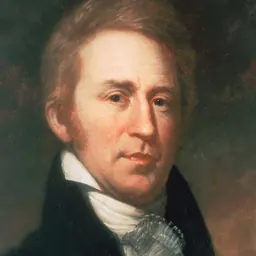



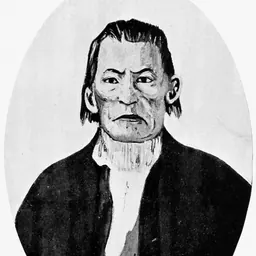


Related people
Same field, nearest in time



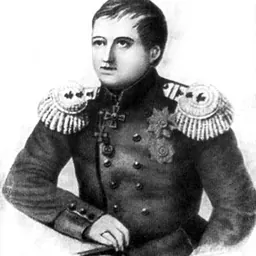
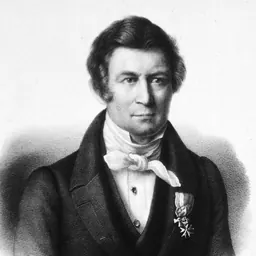
Contemporaries
People whose lives overlapped John Colter's


Frequently asked questions
Who was John Colter?
mountain man, explorer
When was John Colter born?
John Colter was born in 1774 in Virginia.
When did John Colter die?
John Colter died on 7 May 1812 in Missouri Territory.
What was John Colter's occupation?
John Colter was an explorer and trapper.
What was John Colter known for?
John Colter was known for European ethnic groups, Lewis and Clark Expedition, Mountain man, Pacific Ocean, Rocky Mountains and Teton Mountain Range.
What nationality was John Colter?
John Colter was American.
Sources & further reading
Cite this page
APA: Biography.guide. (2026). John Colter. https://biography.guide/john-colter/
MLA: "John Colter." Biography.guide, https://biography.guide/john-colter/.
Chicago: "John Colter." Biography.guide. https://biography.guide/john-colter/.
Data last updated: 2026-09-22 · Spot an error? Report a correction.
Page generated 2026-09-27 05:29 UTC