
John C. Gorman
American military officer and politician
About John C. Gorman
Lived 1835 – 1892 (aged 57).
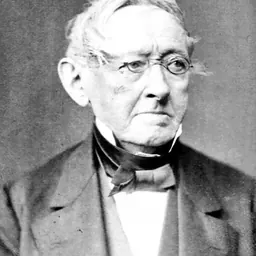
John Calvin Gorman (November 1, 1835 – December 27, 1892) was an American military officer, printer, and politician who served as Adjutant General of North Carolina from 1871 to 1877.
Early life John Calvin Gorman was born on November 1, 1835, to Thomas and Elizabeth Gorman in Tuscaloosa, Alabama, United States. His father, a carpenter, soon thereafter moved to North Carolina, dying in Wilmington. Elizabeth Gorman then moved to Raleigh, North Carolina with John and his sister.
As a youth, Gorman undertook an apprenticeship in printing at the offices of The Raleigh Register. Before completing it, he moved with his cousin to Kansas. In 1854 he returned to Raleigh, working for The Raleigh Register and freelancing as a journalist. He then moved to Beaufort to work as a journalist. While there, he met and married Emma Boushall, with whom he would have eight children. to fill the unexpired term of Joseph W. Holden, who had died in office. Gorman's election forced him to vacate his place on the board. He was succeeded as mayor by J. H. Separk on May 4.
Governor Tod Robinson Caldwell appointed Gorman as Adjutant General of North Carolina on August 14, 1871, following the resignation of Abial W. Fisher. He shortly thereafter travelled to Robeson County to assess the ongoing Lowry War, a conflict between local authorities and outlaws of the Lowry Gang. While there, he promoted local militia captain Francis M. Wishart to the rank of colonel and instructed him to raise a permanent voluntary company of 50 militiamen to combat the gang with the assistance of 50 U.S. Army soldiers. Gorman would go on to spend five weeks in Robeson interviewing local residents, and came to advocate for compromise and conciliation as means of ending the conflict.
Through an intermediary, the Lowry Gang contacted Wishart and asked him to connect them with Gorman to negotiate a deal. Gorman met the outlaws alone in a swamp, where they maintained they were not guilty of some of the crimes ascribed to them, and claimed they had always acted in self-defense. They assured Gorman that they would not attack any U.S. troops, but told him that since they were unable to find work they would continue taking food and supplies from local farmers. They also indicated to him that they would leave the country if permitted. Gorman told them that he lacked the power to settle to their terms, but had several more meetings with the gang. The North Carolina General Assembly refused to offer terms to the outlaws, eventually choosing to increase bounties upon them in February 1872. Shortly thereafter, the Lowry Gang conducted a brazen robbery in Lumberton before gang leader Henry Berry Lowry disappeared. Several accounts, including Gorman's memoirs, maintain that Berry accidentally shot himself with his own gun. One nephew of Lowry maintained that Gorman helped to disguise the outlaw as a soldier and smuggled him out of the county.
Gorman served as adjutant general until 1877.
On June 20, 1877, Gorman was appointed special deputy collector of internal revenue for North Carolina. The following day, the National Republican ran an article attacking the credibility of J. G. Hester, a special deputy of the United States Department of Justice, signed "Tar Heel". The article criticized the removal of Asheville, North Carolina postmaster John Alphin Fagg due to accusations leveled by Hester and itself said that Hester possessed "no character among North Carolinians, at home or abroad, for honor and fair dealing". Afterwards, Hester went to the offices of the newspaper and gathered that Gorman was the author of the article. Hester swore out a warrant against Gorman for malicious libel and had him arrested at a hotel in Washington D. C. and brought to a police station, though a group of his friends—including United States Solicitor General Samuel F. Phillips—quickly arrived and posted his bail.
Later life Gorman moved to Washington D.C. in 1887 and found employment with the United States Government Printing Office. He began suffering the effects of heart disease in 1890.
Don’t just read it —
keep it.
Full-length biographies made to live with: read them, listen on the way to work, watch them tonight.
- E-book
- Audio
- Video
Instant download · yours to keep · every purchase keeps this site free
Important facts
People in John C. Gorman's life
Named in this biography and alive at the same time



Contemporaries
People whose lives overlapped John C. Gorman's




Frequently asked questions
Who was John C. Gorman?
American military officer and politician
When was John C. Gorman born?
John C. Gorman was born on 1 November 1835.
When did John C. Gorman die?
John C. Gorman died on 27 December 1892.
Sources & further reading
Cite this page
APA: Biography.guide. (2026). John C. Gorman. https://biography.guide/john-c-gorman/
MLA: "John C. Gorman." Biography.guide, https://biography.guide/john-c-gorman/.
Chicago: "John C. Gorman." Biography.guide. https://biography.guide/john-c-gorman/.
Data last updated: 2026-09-20 · Spot an error? Report a correction.
Page generated 2026-09-27 05:23 UTC