
About John C. Goodman
Born 1946. John C. Goodman is an American writer and economist.
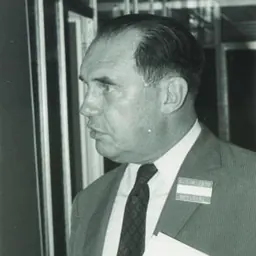
John C. Goodman (born 22 May 1946) is an American health economist and president and CEO of the Goodman Institute for Public Policy Research. He is a senior fellow at the Independent Institute. The Wall Street Journal and National Journal have called Goodman the "father of Health Savings Accounts."
He was the founding president and CEO of the National Center for Policy Analysis (NCPA), a Dallas-based think tank that he led from 1983 until 2014. The NCPA operated until 2017.
Early life and education Goodman was born on 22 May 1946 in Waco, Texas. He attended the University of Texas at Austin, where he was elected vice president of the student body. The following year he lost the race for student body president to Lloyd Doggett, who later served as a senior Democratic member of the United States House of Representatives.
Goodman received a Ph.D. in economics from Columbia University in 1977. He has taught and conducted research at Columbia, Stanford University, Dartmouth College, Southern Methodist University, and the University of Dallas.
Academic work
Public choice theory
Goodman's doctoral dissertation, The Market for Coercion: A Neoclassical Theory of the State (1976), applied marginal analysis to political systems - a departure from the voting models associated with James Buchanan, Gordon Tullock, and George Stigler's regulatory capture theory. With colleague Philip K. Porter, Goodman published extensions of this framework to regulation, public goods, and welfare economics. Their 1988 article on competitive regulatory equilibrium won the Duncan Black Prize, awarded by the Public Choice Society.
A central result of this research, sometimes called Goodman's theorem, holds that optimal government policy is in principle unachievable in any political system, because differences in organization and information costs mean that opposing groups will almost never exert politically equivalent effort per dollar of benefit at stake. He subsequently examined the history of health care market regulation in the United States, arguing that the American Medical Association had systematically advocated for restrictions on medical practice, education, and insurance.
His 1992 book Patient Power, co-authored with Gerald Musgrave, argued that patients should be empowered as consumers in the health care marketplace and proposed the concept that later became Health Savings Accounts (HSAs). In a 1995 article in Health Affairs, Goodman and Wharton School economist Mark Pauly argued for a universal refundable tax credit as the appropriate mechanism for subsidizing health insurance.
His 2012 book Priceless: Curing the Healthcare Crisis argued that the health care system is a complex adaptive system that cannot be adequately modeled with standard supply-and-demand tools, and that perverse incentives affect patients, providers, and insurers alike.
Policy work
Health Savings Accounts
HSAs, which allow individuals to deposit pre-tax funds into accounts used to pay qualified medical expenses, were first proposed in Patient Power (1992). They were opposed by major health and business lobbying groups for over a decade before becoming available to most Americans in 2004 as part of the Medicare Prescription Drug, Improvement, and Modernization Act. Former Senator Phil Gramm has credited Goodman and businessman Pat Rooney as the two people most responsible for HSAs becoming law.
Other policy contributions
Goodman helped develop a replacement plan for the Affordable Care Act with House Rules Committee Chairman Pete Sessions (R-TX) and Senator Bill Cassidy (R-LA), centered on a universal tax credit for health insurance and a flexible Roth-style HSA.
With economist Peter Orszag, then at the Brookings Institution, Goodman co-authored a proposal that contributed to reforms allowing employers to automatically enroll employees in diversified 401(k) portfolios.
The tax credit approach to health insurance Goodman and Pauly outlined in Health Affairs
In 1989, NCPA research on taxation of the elderly contributed to the repeal of the Medicare Catastrophic Coverage Act of 1988, the first repeal of a major federal welfare program in more than a century.
Television
Goodman appeared approximately two dozen times on William F. Buckley Jr.'s PBS program Firing Line during the 1990s, serving as Buckley's debating partner on several prime-time two-hour debates covering topics including the flat tax, school vouchers, Social Security privatization, and Health Savings Accounts.
Publications The Regulation of Medical Care: Is the Price Too High? (Cato public policy research monograph) (1980) National Health Care in Great Britain (1980) Social Security in the United Kingdom: Contracting Out of the System (AEI Studies, 335) (1981) Economics of Public Policy: The Micro View, with Edwin G. Dolan (1985) Privatization. (1985) National Center for Policy Analysis. Fighting the War of Ideas in Latin America, with Ramona Marotz-Baden (1990) Patient Power: Solving America's Health Care Crisis (1992) with Gerald L. Musgrave. Patient Power: The Free-Enterprise Alternative to Clinton's Health Plan, with Gerald L. Musgrave (1993) Economics of Public Policy, with Edwin G. Dolan (1995) Lives at Risk: Single-Payer National Health Insurance Around the World, with Gerald L. Musgrave, Devon M. Herrick and Milton Friedman (2004)
Leaving Women Behind: Modern Families, Outdated Laws. (2005) With Kimberley Strassel and Celeste Cogan. Rowman & Littlefield Handbook on State Health Reform. (2007) National Center for Policy Analysis
Living with ObamaCare: A Consumer's Guide. (2014) National Center for Policy Analysis. A Better Choice: Healthcare Solutions for America Independent Institute (2015) New Way to Care: Social Protections that Put Families First (2020) The Independent Institute Priceless: Curing the Healthcare Crisis Second Edition The Independent Institute (2024)
Don’t just read it —
keep it.
Full-length biographies made to live with: read them, listen on the way to work, watch them tonight.
- E-book
- Audio
- Video
Instant download · yours to keep · every purchase keeps this site free
Important facts
People in John C. Goodman's life
Named in this biography and alive at the same time





Related people
Same field, nearest in time



Contemporaries
People whose lives overlapped John C. Goodman's


Frequently asked questions
Who is John C. Goodman?
health care economist
When was John C. Goodman born?
John C. Goodman was born on 22 May 1946.
What is John C. Goodman's occupation?
John C. Goodman is a writer and economist.
What nationality is John C. Goodman?
John C. Goodman is American.
Sources & further reading
Cite this page
APA: Biography.guide. (2026). John C. Goodman. https://biography.guide/john-c-goodman/
MLA: "John C. Goodman." Biography.guide, https://biography.guide/john-c-goodman/.
Chicago: "John C. Goodman." Biography.guide. https://biography.guide/john-c-goodman/.
Data last updated: 2026-09-21 · Spot an error? Report a correction.
Portrait: Wikimedia Commons · author & licence
Page generated 2026-09-27 05:00 UTC