
About John Bennet
Lived 1553 – 1627 (aged 73–74). John Bennet was an English judge and politician.
Sir John Bennet (1553 – 15 February 1627) was a civil lawyer, ecclesiastical judge, diplomat, royal commissioner, university administrator, politician, and devotional writer, who sat in the House of Commons between 1597 and 1621. Educated at both Oxford and Cambridge, he held many senior legal and ecclesiastical offices including Chancellor of Queen Anne's Household, Vicar General and Chancellor of the Diocese of York, Judge of the Prerogative Court of Canterbury, Judge of the Admiralty Court, and Master in Chancery in ordinary, to name but a few. He served repeatedly as a member of parliament, representing Ripon, York, and Oxford University, he sat on numerous royal commissions, acted as envoy to Brussels, rebuilt the University Schools at Oxford alongside Sir Thomas Bodley, and was a Founding Governor of Pembroke College. Regarded in his lifetime as one of Oxford University's "three worthies," Bennet played an influential role in the academic, legal, and political life of Early-Stuart England. His career eventually ended in controversy after he was found guilty of extorting bribes and excessive fees, though his family retained their estates. Whilst confined to Fleet Prison, he wrote his devotional work The Psalme of Mercy or, A Meditation vpon the 51. Psalme, by a true Penitent which gives deep insight into the mind of a man grappling with the moral and psychological consequences of sin, temptation, and self-examination.
Education Bennet was the second son of Richard Bennet of Clapcot, Berkshire (now in Oxfordshire) and his wife, Elizabeth Tesdale, the daughter of Thomas Tesdale of Stanford Dingley and Abingdon. She was the half-sister of Thomas Tesdale, the founder of Pembroke College, Oxford. He was probably educated at John Roysse's Free School in Abingdon (now Abingdon School). He matriculated at Christ Church, Oxford in 1573. He was awarded BA on 11 June 1577 and was promoted to MA on 15 June 1580. In 1583 he was incorporated at Cambridge and awarded MA there. He returned to Oxford and was elected a proctor in 1585. He was awarded his BCL and DCL by special dispensation on 6 July 1589.
Career Bennet began his career as vicar-general and chancellor in the Diocese of York,
The Psalme of Mercy (1625)
While historians of psychology have generally traced the articulation of causal models of mind to the mid-seventeenth-century mechanistic turn associated with René Descartes and Thomas Hobbes, it has been argued that the devotional treatise The Psalme of Mercy or, A Meditation vpon the 51. Psalme, by a true Penitent by Sir John Bennett, indicates that sequential conceptions of cognition and action were already being articulated within the introspective theological literature of early-Stuart England. The passage under consideration appears on pages 92 and 93 of The Psalme of Mercy or, A Meditation vpon the 51. Psalme, by a true Penitent (1625), written by Sir John Bennet while confined in the Fleet Prison following his impeachment from judicial office. Within this devotional meditation Bennett outlines an inward progression:
“I was conceived in finne:] And therefore there is no finne that I am not apt and ready to conceive, yea, to engender, and produce from imagination, to assent; from assent, to delectation; from delectation, to resolution; from resolution, to execution.”
On p. 92, he confessed that from his “sinfull passions” and “euill affections” flow his “sinnes of action, or omission.” The text traces the process by which inward temptation issues in overt sin. Bennet sets out a sequence in which internal states (imagination, assent, delectation) generate volitional decisions (resolution) that result in outward behaviour (execution). The marginal “Aug. Confef.” (For Augustine, Confessions), indicates Bennet’s reliance on Augustinian psychology of temptation, though the five-stage syntax is his own elaboration, not a citation. There is no doubt that Bennett’s vocabulary draws on Augustinian and Scholastic moral psychology, but his contribution is its systematic formalisation.
This formulation precedes the well-documented mechanistic accounts of mind by Hobbes and Descartes, yet it has remained entirely overlooked in the historical narrative of cognitive theory for centuries. Bennet’s devotional treatise, rooted in introspective theology, provides what may be the earliest extant English expression of a sequential model linking mental activity to behavioural outcome in this manner. By reframing cognition as a function of spiritual self-regulation, Bennet not only extends Augustine’s moral psychology but also, it can be argued, anticipates later philosophical developments. This challenges the prevailing view that modern cognitive theory emerged solely from philosophical or scientific discourse, suggesting instead that its conceptual roots may lie in the affective and penitential culture of early-Stuart religious thought.
There is no evidence that Bennet consciously anticipated mechanistic psychology, nor that he intended to formulate a cognitive model in the modern sense; rather, it would be more apt to assert that his devotional sequencing incidentally reproduced a structure that later theorists would formalise explicitly. Considering the texts obscurity, despite its publication in London at the time, it would be an overreach to suggest that Bennet explicitly influenced these later theorists, as there appears to be no explicit evidence of such at this time.
Personal life Bennet married firstly Alice Weekes daughter of Christopher Weekes of Salisbury, and had four sons and two daughters. She died in 1601 and he married secondly Elizabeth Lowe, daughter of Sir Thomas Lowe, alderman of London. She died in 1614 and he married thirdly Leonora daughter of Adrian Vierandeels of Antwerp, a widow.
Bennet died on 15 February 1627 and was buried at Christ Church, Newgate, City of London.
Don’t just read it —
keep it.
Full-length biographies made to live with: read them, listen on the way to work, watch them tonight.
- E-book
- Audio
- Video
Instant download · yours to keep · every purchase keeps this site free
Important facts
People in John Bennet's life
Named in this biography and alive at the same time
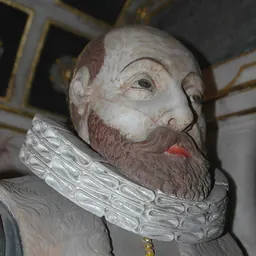
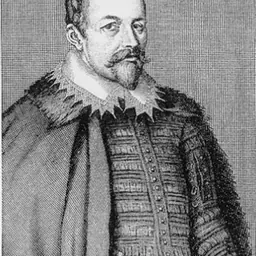


Related people
Same field, nearest in time

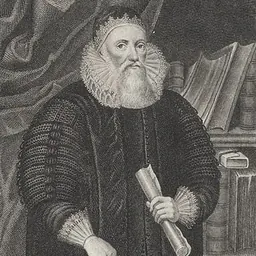
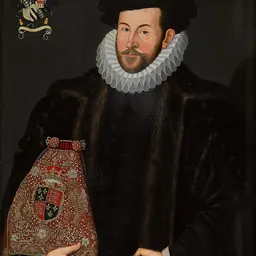
Contemporaries
People whose lives overlapped John Bennet's



Frequently asked questions
Who was John Bennet?
English judge and politician
When was John Bennet born?
John Bennet was born in 1553 in Berkshire.
When did John Bennet die?
John Bennet died on 15 February 1627.
What was John Bennet's occupation?
John Bennet was a judge and politician.
What nationality was John Bennet?
John Bennet was English.
Sources & further reading
· DBpedia: John Bennet (judge)
Cite this page
APA: Biography.guide. (2026). John Bennet. https://biography.guide/john-bennet-judge/
MLA: "John Bennet." Biography.guide, https://biography.guide/john-bennet-judge/.
Chicago: "John Bennet." Biography.guide. https://biography.guide/john-bennet-judge/.
Data last updated: 2026-09-20 · Spot an error? Report a correction.
Page generated 2026-09-27 05:07 UTC