
About John Baxter
Lived 1819 – 1886 (aged 67). John Baxter was an American lawyer, judge, politician, jurist and prosecutor.
John Baxter (March 5, 1819 – April 2, 1886) was an American attorney and jurist who served as a United States circuit judge of the United States Circuit Courts for the Sixth Circuit from 1877 to 1886. Initially a Whig, he had previously served several terms in the North Carolina House of Commons, including one term as Speaker, before moving to Knoxville, Tennessee to practice law.
Baxter opposed secession on the eve of the American Civil War, and was a delegate to the East Tennessee Convention, which sought to create a separate, Union-aligned state in East Tennessee. He subsequently took the Oath of Allegiance to the Confederacy, in part to provide legal defense for Unionists charged in Confederate courts. Those he defended during the course of the war included several members of the East Tennessee bridge-burning conspiracy and several participants of the Great Locomotive Chase. He ran unsuccessfully for the Confederate Congress in September 1861. By mid-1862, he had returned to his pro-Union stance.
Baxter supported Democratic presidential candidate George B. McClellan in 1864, but would eventually join the Republican Party. In 1870, he was a delegate to the state constitutional convention that created the current Tennessee State Constitution.
Early life
Baxter was born in Rutherford County, North Carolina, the son of William and Catherine (Lee) Baxter. His father, William, was described as a "thrifty and wealthy" farmer who had immigrated from Northern Ireland in 1789. Young John initially worked as a merchant in South Carolina, but found it unfulfilling, and turned to the study of law. He read law and was admitted to the bar in 1841, initially practicing in Rutherford County before moving to Henderson County, North Carolina in 1845. He served as Speaker for the 1852 session. which lay across the Great Smoky Mountains to the west. Temple later recalled that Baxter's first argument before a Knoxville court was "so clear and strong that it marked him at once as one of the leaders of the Knoxville bar."
Civil War
Although a slaveholder, Baxter opposed secession during the sectional crisis that swept the South in the wake of the election of Abraham Lincoln in November 1860. In an article entitled, "What Shall the South Do?", which was published in the November 24, 1860, edition of the Knoxville Whig, Baxter called for a convention of delegates from all Southern states, believing it would provide an opportunity to calm the secession fervor in the lower South. In late December, he again travelled to Richmond to help secure the release of Brownlow, who had been jailed in Knoxville. In February 1862, Baxter launched a newspaper, the East Tennessean, the purpose of which was to reconcile Southern Unionists with the Confederacy.
When Union forces occupied Knoxville in September 1863, Baxter was recognized as a friend of the Union, and was appointed to the East Tennessee Relief Association, which provided aid to Unionists who had suffered at the hands of the Confederacy.
In the late 1860s, a feud erupted between Baxter and mercurial Knoxville businessman Joseph Mabry. Mabry had been president of the bankrupt Knoxville and Kentucky Railroad, which had been issued millions of dollars in state bonds. In July 1869, Baxter sued Mabry, charging him with looting the company. Mabry likewise accused Baxter of committing fraud in his dealings with the Mineral Home Railroad. The two viciously attacked one another in newspaper columns in early 1870, and sued one another for libel. Finally, on June 13, 1870, Mabry shot Baxter in front of the Lamar House Hotel in downtown Knoxville. Though armed, Baxter ran away. Mabry was arrested, but Baxter did not press charges.
In 1872, Baxter supported the Liberal Republican Party. He had aligned himself with the main Republican Party by 1876, however, when he supported Rutherford B. Hayes for president. In another, Dinsmore v. Louisville, Cincinnati and Lexington Railway Company (1880), he ruled that railroads were "quasi-public instrumentalities," and thus railroad companies could not refuse transportation to any company (in this case an express courier), so long as that company paid a reasonable rate.
In 1884, Baxter overturned an injunction issued by a lower court that prevented baseball pitcher Tony Mullane from playing for the Toledo Blue Stockings, since he had already signed with the St. Louis Maroons. Baxter argued that baseball matters were too insignificant to occupy the courts' time.
Death
Baxter died on April 2, 1886, in Hot Springs, Arkansas. He was buried in Old Gray Cemetery in Knoxville.
Family Baxter's brother, Elisha Baxter, served as Governor of Arkansas from 1872 to 1874. Another son, George W. Baxter (1855–1929), briefly served as the territorial governor of Wyoming in 1886. Baxter was married four times: 1) Mahalah Hinds (m. 1836), Orra Alexander (m. 1843), Catherine Alexander (m. 1860) and Kate White (m. 1867).
Don’t just read it —
keep it.
Full-length biographies made to live with: read them, listen on the way to work, watch them tonight.
- E-book
- Audio
- Video
Instant download · yours to keep · every purchase keeps this site free
Important facts
People in John Baxter's life
Named in this biography and alive at the same time

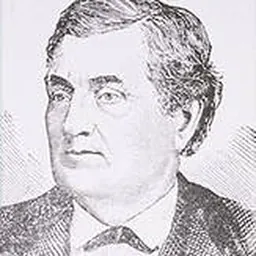
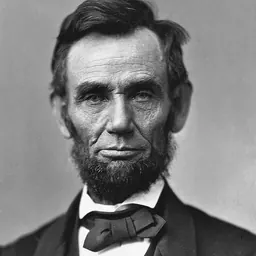


Related people
Same field, nearest in time


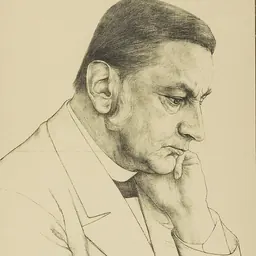


Contemporaries
People whose lives overlapped John Baxter's
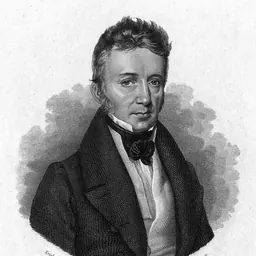

Frequently asked questions
Who was John Baxter?
United States federal judge, born 1819
When was John Baxter born?
John Baxter was born on 5 March 1819 in Rutherford County.
When did John Baxter die?
John Baxter died on 2 April 1886 in Hot Springs.
What was John Baxter's occupation?
John Baxter was a lawyer, judge, politician, jurist and prosecutor.
What nationality was John Baxter?
John Baxter was American.
Sources & further reading
· DBpedia: John Baxter (judge)
Cite this page
APA: Biography.guide. (2026). John Baxter. https://biography.guide/john-baxter/
MLA: "John Baxter." Biography.guide, https://biography.guide/john-baxter/.
Chicago: "John Baxter." Biography.guide. https://biography.guide/john-baxter/.
Data last updated: 2026-09-25 · Spot an error? Report a correction.
Page generated 2026-09-27 05:11 UTC