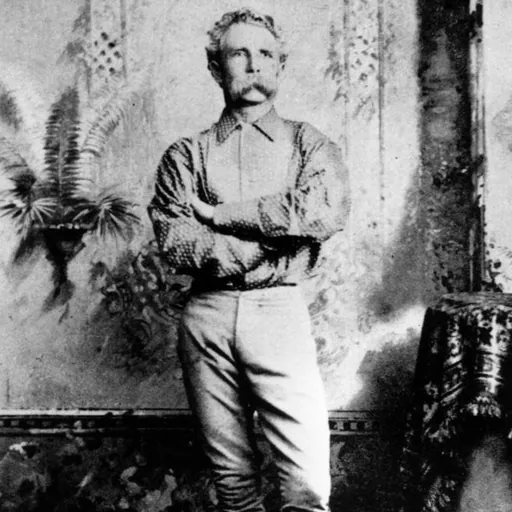
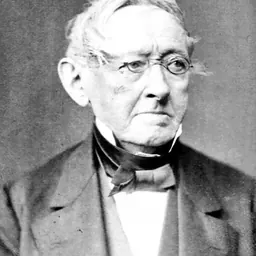
John Arthur Macartney
(1834-1917) pastoralist and horseman
About John Arthur Macartney
Lived 1834 – 1917 (aged 82–83).
John Arthur Macartney (5 April 1834 – 10 June 1917) was an Irish-born Australian colonist, pastoralist, squatter and grazier who established a large number of frontier cattle stations in Queensland and the Northern Territory.
Early life John Arthur Macartney was born into the prominent Macartney-Burgh family at Creagh, County Cork, Ireland in 1834. His ancestors were notable members of the British ruling class of Ireland generally known as the Protestant Ascendancy. His great-grandfather was Walter Hussey Burgh, Chief Baron of the Irish Exchequer, and his grandfather was Sir John Macartney, 1st Baronet of Lish, County Armagh. He was educated at Lucan School and by private tutors in Dublin.
Acquiring land in the Rockhampton region In 1857, Macartney decided to travel to the northern limits of British colonisation with a view to acquire landholdings. At this point of time the frontier was the Port Curtis District where the fledgling township of Rockhampton was situated. In early 1858, Macartney rode into Rockhampton with fellow colonist Dan Connor and Native Police officers John Murray and G.P.M. Murray. They found that the town only consisted of a store, an inn and two residents. Macartney soon acquired two large parcels of land: Glenmore on the northern bank of the Fitzroy River; and Waverley on grassland plains inland from Broad Sound. He also travelled out to the Mackenzie River with his cousin Sir John Macartney 3rd baronet, and P.F. MacDonald and staked further ownership claims to large acreages. When Macartney wrote his memoir, he concluded it with one of his favourite poems which was entitled "Take It Now" giving a further indication of his philosophy toward life. One account of this incident describes how around hundred of the tribe were rounded up and "it ended in the usual way and the bulk of the wild mob were shot".
In 1860 and 1861, Macartney formed or bought several other squatting pastoral properties in the region including Yatton, Avon Downs, Wolfang, Huntley, St Helens and Bloomsbury. He quickly sold these on for profit and focused on establishing his Waverley property as both a place of residence and a working cattle station. He sold St Helens and Bloomsbury to his cousins Sir John Macartney and William George Macartney, who subsequently had years of frontier conflict with the local Aboriginal population, calling in the Native Police on several occasions to conduct punitive expeditions. Waverley became Macartney's main residence until 1896.
Expansion into western Queensland Drought, flood and financial difficulties in the early 1870s at Waverley contributed to Macartney deciding to expand his pastoral interests into the newly colonised areas of western Queensland. Macartney journeyed out to the Diamantina River where he established the Diamantina Lakes Station in 1875. In the following years he also bought the Bladensburg, Manuka, Tamworth, Yarrowmere and Amphitheatre stations in the Pelican Waterhole and Hughenden regions. Further north toward the Gulf of Carpentaria and in partnership with Hugh Louis Heber-Percy, he bought the Escott station in 1882. Carl Lumholtz, a travelling ethnographer from Norway, was shown the remaining skulls by Macartney's station manager in the early 1880s. The site of the massacre was and still is called Skull Hole and is now part of a national park.
Macartney held Diamantina Lakes until 1909 and many of the geographical features on the property are named after him and his business partner E.G. Mayne. These include Mount Macartney, Mayne Range and Macartney Range. Much of the landholding is now also a national park.
Northern Territory In 1884, the government of the British colony of South Australia opened up large parcels of uncolonised land in the Northern Territory for sale. Macartney took up the offer and purchased Florida Station for "half-a-crown per mile", the station consisting of 10,000 square miles of country and 300 miles of coastline, most of which is now called the East Arnhem Region. The government report of the region just before Macartney's purchase read that some of the country consisted of "magnificent plains" but also that "the natives are numerous and inclined to be hostile". In 1885, Macartney himself went to the region to inspect the property, where he and his companions had a skirmish with local Aboriginal people, firing their rifles at them. Poisoned horse-meat was also given out to the local Aboriginal people which resulted in the deaths of many.
Initially, Florida Station looked like being a successful venture, however, monsoonal floods in the wet-season and a previously unknown fatal disease in his cattle brought misfortune to Macartney. Increasingly aggressive resistance from the Aboriginal people in the region brought matters to a point and in 1892, Macartney decided to abandon Florida Station. As Ernestine Hill wrote in her book The Territory, "the blacks chased them out".
Prior to abandoning Florida Station, Macartney had also bought into several other pastoral properties in the Northern Territory of which the large Auvergne Station on the Victoria River was the principal one. Macartney's experiences at Auvergne were as equally violent and financially disastrous as they were at Florida. His first manager there, Tom Hardy, was speared to death by members of the local Ngarinman people in 1889. Hardy's replacement, James "Barney" Flynn, who had worked for Macartney at Florida, appears to have developed severe psychological trauma from the frontier conflict there. When colonist Michael Durack visited Auvergne in 1890, he described Flynn as having hallucinations of being "surrounded by wild blacks" and waking up in the middle of the night "yelling like a maniac", running into the yard and firing his revolver into the empty night. Flynn soon left and Macartney employed Sam "Greenhide" Croker as station manager who was famous for helping establish the nearby Wave Hill Station. In 1892 Croker was shot dead at Auvergne by an Aboriginal stockman during a game of cards.
After the killing of Croker, Macartney hired John "Jack" Watson as manager for Auvergne. Watson came with an extreme reputation, being described as "one of the most violent men on the Northern frontier". With Frank Hann, Watson had established the Lawn Hill cattle station in Queensland. A visitor to the Lawn Hill homestead in 1883 noted that "Mr Watson has 40 pairs of blacks' ears nailed round the walls collected during raiding parties." Watson had been in charge of Macartney's Florida Station during its final years and transferred the cattle from that abandoned station to Auvergne in 1893. By this stage, a global economic depression had set in and Macartney fell into severe financial difficulty. By 1896 he had sold off all his property interests in the Northern Territory. Macartney now owned only relatively small interests in land near Longreach and at Baffle Creek and obtained employment as general manager for the Queensland Cattle Company.
Some of his descendants include mountaineer Tim Macartney-Snape and Australian Broadcasting Corporation board member Georgie Somerset.
Don’t just read it —
keep it.
Full-length biographies made to live with: read them, listen on the way to work, watch them tonight.
- E-book
- Audio
- Video
Instant download · yours to keep · every purchase keeps this site free
Important facts
People in John Arthur Macartney's life
Named in this biography and alive at the same time





Contemporaries
People whose lives overlapped John Arthur Macartney's




Frequently asked questions
Who was John Arthur Macartney?
(1834-1917) pastoralist and horseman
When was John Arthur Macartney born?
John Arthur Macartney was born on 5 April 1834.
When did John Arthur Macartney die?
John Arthur Macartney died in 1917.
Sources & further reading
· Wikipedia: John Arthur Macartney
· DBpedia: John Arthur Macartney
Cite this page
APA: Biography.guide. (2026). John Arthur Macartney. https://biography.guide/john-arthur-macartney/
MLA: "John Arthur Macartney." Biography.guide, https://biography.guide/john-arthur-macartney/.
Chicago: "John Arthur Macartney." Biography.guide. https://biography.guide/john-arthur-macartney/.
Data last updated: 2026-09-21 · Spot an error? Report a correction.
Portrait: Wikimedia Commons · author & licence
Page generated 2026-09-27 04:59 UTC