
About John Acland
Lived 1823 – 1904 (aged 80). John Acland was a New Zealand farmer, politician and barrister.
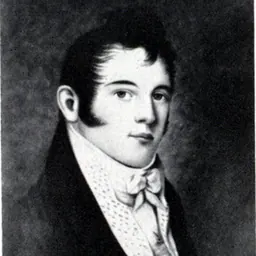
John Barton Arundel Acland (25 November 1823 – 18 May 1904), often referred to as J. B. A. Acland, was born in Devon, England, as the youngest child of Sir Thomas Dyke Acland, 10th Baronet. He followed his father's path of education and became a barrister in London. With his colleague and friend Charles George Tripp, he formed the plan to emigrate to Canterbury, New Zealand, to take up sheep farming. They were the first to take up land in the Canterbury high country for this purpose. When they divided their land into separate holdings, Acland kept the that made up the Mount Peel station.
Acland was a committed Anglican and married Emily Weddell Harper, who was one of the daughters of Bishop Harper. He gave the land for a church, which they called the Church of the Holy Innocents with reference to four children buried there, including two of the Aclands. They had a homestead built for themselves, which was probably the first large building in South Canterbury constructed from permanent materials. Both the church and the homestead are registered with Heritage New Zealand. Acland took on many public roles, including serving on the Legislative Council for a third of a century.
John Acland and his wife Emily died in 1904 and 1905, respectively. They were survived by eight of their children, including the prominent surgeon Hugh Acland. The homestead is still owned by the Acland family, who take care of the restoration of the church, as it was damaged in the 2010 Canterbury earthquake.
Early life Acland was born in 1823 in Devon, England, the ninth and youngest child of Sir Thomas Dyke Acland, 10th Baronet and his wife, Lydia Elizabeth Acland (née Hoare). Like his father, he was educated at Harrow and Christ Church, Oxford, from where he graduated BA in 1846, promoted by seniority to MA in 1849. That same year, he was called to the bar from Lincoln's Inn and began to practice as a barrister in London. His friend Charles George Tripp introduced him to members of the Canterbury Association, who were proposing the organised settlement of Canterbury in New Zealand with Anglican ideals; and he was introduced to James FitzGerald and John Robert Godley. Both needed to obtain experience first and thus worked as cadets on established runs; Established runholders did not take them seriously, Acland called the house 'Holnicote', after the family property in England. In September 1984, the homestead was registered with Heritage New Zealand as a Category I heritage item, with registration number 313.
Family
On 17 January 1860, Acland married Emily Weddell Harper, the eldest daughter of Bishop Harper, at St Michael's Church. The Bishop's fifth daughter, Sarah Shephard Harper, was married at the same ceremony. In 1858, Charles Tripp had married Ellen Shephard Harper, the third daughter of Bishop Harper.
The Aclands had eleven children. Two of them, Barton Dyke (1860–1863) and Emily Dyke (1864–1864), died in infancy. Five daughters (Harriet Dyke, Lucy Alice Dyke, Elizabeth "Bessie" Dyke, Emily Rosa Dyke, Agnes Dyke and Mary Emily Dyke) lived to adulthood. John Dyke Acland returned to live in England and was a Justice of the Peace in Somerset. Henry Dyke Acland was chairmen of the Board of Governors of Canterbury College (1918–1928) and became the Danish consul to Christchurch in 1926. Hugh Acland, later to become a prominent surgeon, was their eleventh and youngest child. Hugh Acland's son Jack Acland became MP for .
JBA Acland's sister Agnes married Arthur Mills, who later became MP in the Parliament of the United Kingdom. His father's baronetcy was passed onto his brother Thomas. Another brother, Henry, was a physician and educator.
Public roles
Acland, John Parkin Taylor, Arthur Seymour, James Crowe Richmond, James Rolland, James Prendergast, Henry Miller, Henry Joseph Coote and Alfred Rowland Chetham-Strode were all appointed to the Legislative Council on 8 July 1865. Acland remained a member for over 30 years until his resignation on 1 June 1899. He was chairman of the Mount Peel Road Board from its inception in 1870.
Church of the Holy Innocents
Acland was active in the Anglican Church, a member of the synod for many years and licensed as a lay reader. In 1866, he donated land for a church, to be known as the Church of the Holy Innocents where four children who died in infancy were buried, including two of the Acland children. Emily Acland laid the foundation stone in December 1868 and the first service was held in the church on 30 May 1869 by his father in law. John and Rosemary Acland, descendants of JBA Acland who still live at Mount Peel, pulled every splinter of stained glass out of the rubble that they could find. This will allow a stained-glass artist, Graham Stewart, to restore the window.
In December 2003, the church was registered with Heritage New Zealand as a Category II heritage item, with registration number 1976. Emily Acland died at her Christchurch residence on 24 July 1905. Survived by three sons and five daughters, she was buried at Mount Peel Church Cemetery.
Don’t just read it —
keep it.
Full-length biographies made to live with: read them, listen on the way to work, watch them tonight.
- E-book
- Audio
- Video
Instant download · yours to keep · every purchase keeps this site free
Important facts
Family & relationships
People in John Acland's life
Named in this biography and alive at the same time

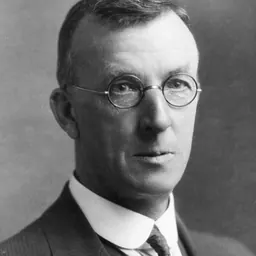



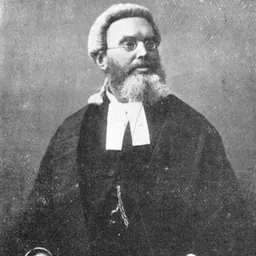
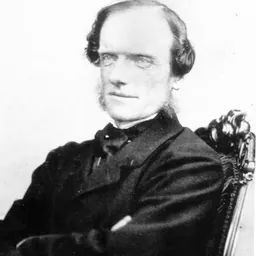
Related people
Same field, nearest in time
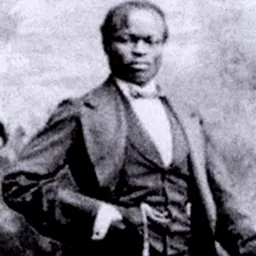



Contemporaries
People whose lives overlapped John Acland's




Frequently asked questions
Who was John Acland?
New Zealand farmer and politician (1823-1904)
When was John Acland born?
John Acland was born on 25 November 1823 in Devon.
When did John Acland die?
John Acland died on 18 May 1904 in Christchurch.
What was John Acland's occupation?
John Acland was a farmer, politician and barrister.
What nationality was John Acland?
John Acland was New Zealand.
Sources & further reading
· DBpedia: John Acland (runholder)
Cite this page
APA: Biography.guide. (2026). John Acland. https://biography.guide/john-acland-farmer/
MLA: "John Acland." Biography.guide, https://biography.guide/john-acland-farmer/.
Chicago: "John Acland." Biography.guide. https://biography.guide/john-acland-farmer/.
Data last updated: 2026-09-20 · Spot an error? Report a correction.
Page generated 2026-09-27 05:19 UTC