
About John A. Hartwell
Lived 1869 – 1940 (aged 71). John A. Hartwell was an American rowing coach and american football player.
John Augustus "Josh" Hartwell (September 27, 1869 – November 30, 1940) was an American college football player and coach, military officer, and physician. Hartwell attended Yale University, where he played end for Walter Camp's Bulldogs football team from 1888 to 1891. In 1891, Hartwell was named an All-American for a season in which Yale was unbeaten, untied, unscored against, and later recognized as a national champion by a number of selectors.
Hartwell graduated from Yale in 1892, holding both PhD and MD degrees, and began a career as a surgeon in New York City. He also continued with football as a coach. He served as the head football coach at Lehigh University in 1892, the United States Naval Academy in 1893, New York University in 1894, and at his alma mater in 1895, compiling a career coaching record of 21–12–2. Hartwell's 1895 Yale squad went 13–0–2 and was later recognized as a national champion by Parke H. Davis.
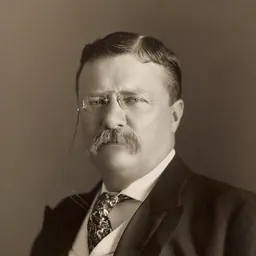
In 1918, Hartwell was commissioned a major in the U.S. Army Medical Corps, with which he served in France during World War I. From 1910 until his retirement in 1938, he was a professor of clinical surgery at Cornell University Medical College. Hartwell was a pioneer of thoracic surgery and an early champion of safe and effective contraception. He was a well-known outdoorsman throughout his life and a friend and caregiver to Theodore Roosevelt.
Early life and college Hartwell was born on September 27, 1869, in Deckertown, New Jersey, to Samuel Slawson Hartwell, an 1859 graduate of Yale University, and Mary Clarinda (Stiles) Hartwell. John was one of four children born to the couple. The elder Hartwell served as headmaster for a private school, allowing for an easy education to be provided to the family. However, when John was twelve, his mother died, and his father followed he a year later. Other members of the "closely knit family" came and helped the four children, converting the school building into a boarding house. The house provided the family with enough money to live on, and continued to provide education to the children. While in secondary school, John began playing sports and developed a wish to enter the medical field.
Hartwell served as the assistant professor of physiological chemistry to Russell Henry Chittenden. In 1885, Hartwell entered biology classes at Yale University, majoring in biology. In order to cover the cost of schooling, Hartwell took up a number of jobs; among them were participating in athletic tests and coaching sports teams during his vacation periods. Hartwell was relatively quiet his sophomore year, quitting the class crew team. However, he was still very competitive in his studies. He was also a starting member of the university crew team, before graduating and earning a Bachelor of Philosophy (Ph.B.). Although he was taken out of a game against the Crescent Athletic Club for being "out of practice", Hartwell helped out with the team's captain's responsibilities and was named as a consensus member of that year's All-American Team.
Hartwell finished his college career in 1892, having led the crew team to three consecutive victories, from 1888 to 1890, while maintaining his spot as team captain and bow rower No. 6. Hartwell was a well-known member of the football team for four years, where he earned his nickname of old "Josh" Hartwell. Returning to football, he became the first head coach for the Lehigh Mountain Hawks football team, leading them through the 1892 season. The school had participated in football for eight years previously, all without a coach. In his first ever game coached, Hartwell led the Mountain Hawks to a 51–0 shutout victory over Swarthmore. After the win, Hartwell's squad went on a six-game losing streak, first falling to Princeton, 16–0, and subsequently to the Orange Athletic Club, 8–4, then suffering consecutive blowout losses to Princeton and Cornell, and a 4–0 loss at the hands of Penn. During the streak, the team lost to bitter rival Lafayette, 4–0, ending a nine-game unbeaten streak in the annual competition. The losing streak was broken on November 19, when the team beat Lafayette in the second playing of the rivalry, 15–6. In March 1893, Hartwell took over as the coach of the Yale crew team, leading several former teammates. Hartwell began as a one-week replacement for then-coaches Alfred Cowles, Jr. and Fred Stephenson, and was hired as an assistant coach along with John Rogers, holding the position for over two months. During that time, Hartwell remained involved with other Yale sports, at one point betting $1000 (equivalent to $ respectively in ) on a tense baseball game between Cornell and Yale (Yale won 5–1).
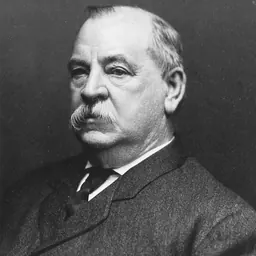
Worden Field, on the Naval Academy campus, is where Hartwell's Navy team hosted all of its games for the 1893 season. Later that year, Hartwell was hired as head coach for the United States Naval Academy's football team. He replaced fellow Yale football player and 1892 alumni Ben Crosby, who had died late the previous year from typhoid fever he contracted while coaching the Navy team. Hartwell began his tenure with Navy in a 34–0 blowout loss to Penn. The game was followed by two shutout wins, before Hartwell was defeated by his former team, Lehigh, 12–6. The team recovered, the next week beating Georgetown, 22–10, at home. After that game, Hartwell took a short break from coaching and played at left end with the New York Athletic Club in a game against Yale. Although The Sun stated that Hartwell "made monkeys of the Yale players" and recorded several tackles, his team was blown out. Returning to his job Hartwell's team won in a blowout victory over the Franklin & Marshall Diplomats, followed by a 12–0 shutout loss to Virginia. Navy ended their season with a 6–4 defeat of Army in the annual Army–Navy Game. The contest was described as "so bloody" due to multiple large fistfights breaking out between fans in the stands that the game was banned by president Grover Cleveland, and did not return until 1899 at the insisting of Theodore Roosevelt.
Later life and death Hartwell died on November 30, 1940, of a heart attack at the South Side Sportsmen's Club in Oakdale, New York.
Writings During his medical career, Hartwell was a prolific writer, authoring 133 articles in a number of different publications. His first published article was written while he was still an undergraduate, co-authoring two papers with Rusell Chittenden. He covered a number of topics, from cancer to methods of blood transfusion. Among his many works were:
Head coaching record
Don’t just read it —
keep it.
Full-length biographies made to live with: read them, listen on the way to work, watch them tonight.
- E-book
- Audio
- Video
Instant download · yours to keep · every purchase keeps this site free
Important facts
People in John A. Hartwell's life
Named in this biography and alive at the same time





Related people
Same field, nearest in time



Contemporaries
People whose lives overlapped John A. Hartwell's



Frequently asked questions
Who was John A. Hartwell?
American football player and coach (1869-1940)
When was John A. Hartwell born?
John A. Hartwell was born on 27 September 1869 in Sussex.
When did John A. Hartwell die?
John A. Hartwell died on 30 November 1940 in Oakdale.
What was John A. Hartwell's occupation?
John A. Hartwell was a rowing coach and american football player.
What nationality was John A. Hartwell?
John A. Hartwell was American.
Sources & further reading
Cite this page
APA: Biography.guide. (2026). John A. Hartwell. https://biography.guide/john-a-hartwell/
MLA: "John A. Hartwell." Biography.guide, https://biography.guide/john-a-hartwell/.
Chicago: "John A. Hartwell." Biography.guide. https://biography.guide/john-a-hartwell/.
Data last updated: 2026-09-20 · Spot an error? Report a correction.
Page generated 2026-09-27 05:21 UTC