
Johannes Schott
Book printer
About Johannes Schott
Lived 1477 – 1550 (aged 72–73).
Johannes Schott (19 June 1477 – 1550) was a book printer from Strasbourg. He printed a large number of books, including tracts from Martin Luther and other Reformers. He was a well-educated man, who had relationships with some of the leading humanists of his time. His press also was one of the first to be able to print chiaroscuro woodcuts.
Biography Schott's father, Martin Schott, established a printing business in Strasbourg around 1480; his mother was one of the children of printer Johannes Mentelin. Johannes attended university in Freiburg (in 1490, at age 13), in Heidelberg (1492), and in Basel (1497). This German humanist education affected his later printing career; he likely edited the Enchiridion poëticum that his press printed in 1514. Prefaces to his books indicate his scholarly education, and he seems to have had personal relationships on equal footing with the scholars of his time. Kusukawa proposes that the first printing may have happened in Freiburg "to allow Schott to work closely with the author". He also published books on medicine, many of which were reprinted, even abroad. Like his father, he valued the esthetics of his books; a number of them are embellished richly with woodprints, some of which by Hans Baldung and Hans Wechtlin. Schott's formschneider or block-cutter was (according to the Allgemeine Deutsche Biographie) the first to create chiaroscuro woodcuts with three blocks. by copying from his Herbarium Vivae Icones, illustrated by Hans Weiditz and compiled and annotated by Otto Brunfels. Egenolff countered that his book was in fact copied from a much older book, by Johannes von Cube, and this was not forbidden. Furthermore, fifty of the images in his book were not in Schott's, and vice versa. Third, images based on nature are likely to resemble each other because the objects represented will be the same. Finally, there is no exclusive right on a subject, say Adam and Eve, that forbids an artist to depict it if someone else had already done so. It is not known how the lawsuit was decided. Das Leben Jesu Christi (1508) Hans von Gersdorff, Feldbuch der Wundarzney (with woodcuts by Hans Wechtlin, 1517) Martin Waldseemüller, Matthias Ringmann, Jacobus Eszler, and Georgius Ubelin, Ptolemy's Geographia (1513) Johannes Indagine, Introductiones apotelematiscae (1522) Johannes Indagine, Die Kunst der chiromanzey (German translation of Introductiones apotelematiscae, 1523) Ulrich von Hutten, Ulrichi ab Hutten cum Erasmo Rotirodamo, Presbytero, Theologo, Expostulatio (1523)
Don’t just read it —
keep it.
Full-length biographies made to live with: read them, listen on the way to work, watch them tonight.
- E-book
- Audio
- Video
Instant download · yours to keep · every purchase keeps this site free
Important facts
People in Johannes Schott's life
Named in this biography and alive at the same time

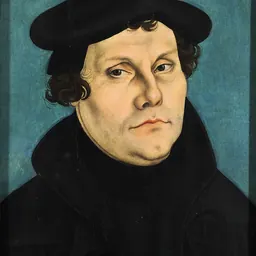
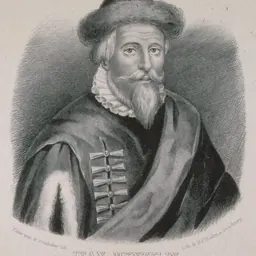

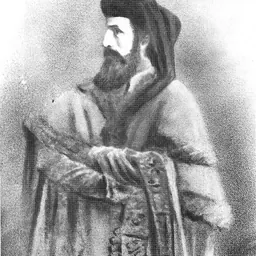


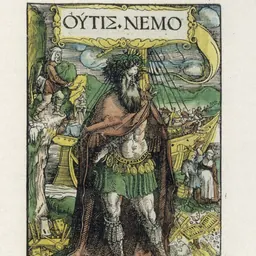
Contemporaries
People whose lives overlapped Johannes Schott's



Frequently asked questions
Who was Johannes Schott?
book printer
When was Johannes Schott born?
Johannes Schott was born in 1477.
When did Johannes Schott die?
Johannes Schott died in 1550.
Sources & further reading
Cite this page
APA: Biography.guide. (2026). Johannes Schott. https://biography.guide/johannes-schott/
MLA: "Johannes Schott." Biography.guide, https://biography.guide/johannes-schott/.
Chicago: "Johannes Schott." Biography.guide. https://biography.guide/johannes-schott/.
Data last updated: 2026-09-20 · Spot an error? Report a correction.
Page generated 2026-09-27 05:12 UTC