
About Johannes R. Becher
Lived 1891 – 1958 (aged 67). Johannes R. Becher was a German poet, politician, novelist, writer, resistance fighter and songwriter.
Johannes Robert Becher (; 22 May 1891 – 11 October 1958) was a German politician, novelist, and poet. He was affiliated with the Communist Party of Germany (KPD) before World War II. He was part of the literary avant-garde, writing in an expressionist style.
With the rise of the Nazi Party in Germany, modernist artistic movements were suppressed. Becher escaped from a military raid in 1933 and settled in Paris for a couple of years. He migrated to the Soviet Union in 1935 with the central committee of the KPD. After the German invasion of the Soviet Union in June 1941, Becher and other German communists were evacuated to internal exile in Tashkent, Uzbekistan.
He returned to favor in 1942 and was recalled to Moscow. After the end of World War II, Becher left the Soviet Union and returned to Germany, settling in the Soviet-occupied zone that later became East Berlin. As a member of the KPD, he was appointed to various cultural and political positions and became part of the leadership of the Socialist Unity Party. In 1949, he helped found the East German Academy of Arts, Berlin, and served as its president from 1953 to 1956. In 1953 he was awarded the Stalin Peace Prize (later the Lenin Peace Prize). He was the culture minister of the German Democratic Republic (GDR; commonly known as East Germany) from 1954 to 1958.
Early life Johannes R. Becher was born in Munich in 1891, the son of Judge Heinrich Becher and his wife Johanna, née Bürck. He attended local schools.
In April 1910, Becher and Fanny Fuss, a young woman he had encountered in January of that year, planned a joint suicide; Becher shot them both, killing her and wounding himself severely. His father succeeded in quashing the case of killing on demand. Becher was certified insane. His early poetry was filled with struggling to come to terms with this event.
From 1911 he studied medicine and philosophy in college in Munich and Jena.
His art entered an expressionist period, from which he would later dissociate himself. He was part of , an artistic group based in Magdeburg. During this time, his work was published in the magazines , Die Aktion (The Action) and .
In 1925 government reaction against his anti-war novel, , resulted in his being indicted for (literary high treason). It was not until 1928 that this law was amended.
That year, Becher became a founding member of the KPD-aligned Association of Proletarian-Revolutionary Authors , serving as its first chairman
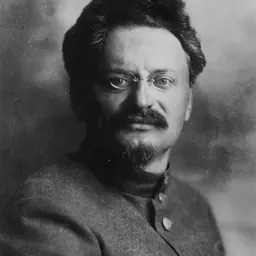
Finally, in 1935 Becher emigrated to the Soviet Union as did other members of the central committee of the KPD. In Moscow he became editor-in-chief of the German émigré magazine, Internationale Literatur-Deutsche Blätter. He was selected as a member of the Central Committee of the KPD. Soon Becher was caught up in the midst of the Great Purge. In 1935 he was accused of links with Leon Trotsky. Becher tried to save himself by “informing” on other writers' alleged political misdemeanors. From 1936, he was forbidden to leave the USSR. During this period, he struggled with depression and tried several times to commit suicide. They intensively studied 18th- and 19th-century literature together, after which Becher turned from modernism to Socialist realism.
Becher was recalled to Moscow by 1942. In 1943, he became one of the founders of the National Committee for a Free Germany.
Return to East Germany After the Second World War, Becher returned to Germany with a KPD team, where he settled in the Soviet zone of occupation. There he was appointed to various cultural-political positions. He took part in the establishment of the Cultural Association, to "revive German culture", and founded the Aufbau Verlag publishing house and the literature magazine, Sinn und Form. He also contributed to the satirical magazine, Ulenspiegel.
In 1946, Becher was selected for the Party Executive Committee and the Central Committee of the Socialist Unity Party. After the establishment of the German Democratic Republic (GDR) on 7 October 1949, he became a member of the Volkskammer. He wrote the lyrics to Hanns Eisler's melody "Auferstanden aus Ruinen" which became the national anthem of the GDR.
That year, he helped establish the DDR Academy of Arts, Berlin. He served as its president from 1953 to 1956, succeeding Arnold Zweig. In January 1953 he received the Stalin Peace Prize (later renamed the Lenin Peace Prize) in Moscow.
In Leipzig in 1955, the German Institute for Literature was founded and originally named in Becher's honor. The institute's purpose was to train socialist writers. Institute graduates include Erich Loest, Volker Braun, Sarah Kirsch and Rainer Kirsch.
From 1954 to 1958, Becher served as Minister of Culture of the GDR. During the Khrushchev thaw, Becher fell out of favor. Internal struggles of the party eventually led to his political demotion in 1956.
Late in his life, Becher began to renounce socialism. His book Das poetische Prinzip (The Poetic Principle) wherein he calls socialism the fundamental error of his life ["Grundirrtum meines Lebens"] was only published in 1988.
The following year, in declining health, Becher gave up all his offices and functions in September 1958. He died of cancer on 11 October 1958 in the East Berlin government hospital. Becher was buried at the Dorotheenstadt Cemetery in central Berlin, with his gravesite designated as a grave of honor of Berlin. Becher lived at Majakowskiring 34, Pankow, East Berlin.
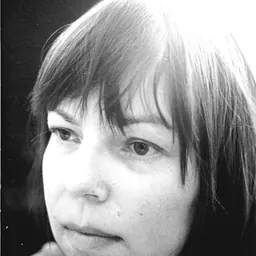
Legacy and honours The party praised Becher after his death as the "greatest German poet in recent history". However, his work was criticised by younger East German authors, such as Katja Lange-Müller, as backward.
Official awards and honours include the following: 1953 Stalin Peace Prize (later renamed the Lenin Peace Prize) The Institut für Literatur Johannes R. Becher was founded in 1955 in Leipzig and named in his honor.
Works
Der Ringende. Kleist-Hymne. (1911) Erde, novel (1912) De profundis domine (1913) Der Idiot (1913) Verfall und Triumph (1914) Erster Teil, Poetry Zweiter Teil. Versuche in Prosa. Verbrüderung, Poetry (1916) An Europa, Poetry (1916) Päan gegen die Zeit, Poetry (1918) Die heilige Schar, Poetry (1918) Das neue Gedicht. Auswahl (1912–1918), Poetry (1918) Gedichte um Lotte (1919) Gedichte für ein Volk (1919) An alle!, Poetry (1919) Zion, Poetry (1920) Ewig im Aufruhr (1920) Mensch, steh auf! (1920) Um Gott (1921) Der Gestorbene (1921) Arbeiter, Bauern, Soldaten. Entwurf zu einem revolutionären Kampfdrama. (1921) Verklärung (1922) Vernichtung (1923) Drei Hymnen (1923) Vorwärts, du rote Front! Prosastücke. (1924) Hymnen (1924) Am Grabe Lenins (1924) Roter Marsch. Der Leichnam auf dem Thron/Der Bombenflieger (1925) Maschinenrhythmen, Poetry (1926) Der Bankier reitet über das Schlachtfeld, Narrative (1926) (CHCl=CH)3As (Levisite) oder Der einzig gerechte Krieg, Novel (1926) Die hungrige Stadt, Poetry (1927) Im Schatten der Berge, Poetry (1928) Ein Mensch unserer Zeit: Gesammelte Gedichte, Poetry (1929) Graue Kolonnen: 24 neue Gedichte (1930) Der große Plan. Epos des sozialistischen Aufbaus. (1931) Der Mann, der in der Reihe geht. Neue Gedichte und Balladen., Poetry (1932) Der Mann, der in der Reihe geht. Neue Gedichte und Balladen., Poetry (1932) Neue Gedichte (1933) Mord im Lager Hohenstein. Berichte aus dem Dritten Reich. (1933) Es wird Zeit (1933) Deutscher Totentanz 1933 (1933) An die Wand zu kleben, Poetry (1933) Deutschland. Ein Lied vom Köpferollen und von den „nützlichen Gliedern“ (1934) Der verwandelte Platz. Erzählungen und Gedichte, Narrative and Poetry (1934) Der verwandelte Platz. Erzählungen und Gedichte, Narrative and Poetry (1934) Das Dritte Reich, Poetry illustrated by Heinrich Vogeler (1934) Der Mann, der alles glaubte, Poetry (1935) Der Glücksucher und die sieben Lasten. Ein hohes Lied. (1938) Gewißheit des Siegs und Sicht auf große Tage. Gesammelte Sonette 1935–1938. (1939) Wiedergeburt, Poetry (1940) Die sieben Jahre. Fünfundzwanzig ausgewählte Gedichte aus den Jahren 1933–1940. (1940) Abschied. Einer deutschen Tragödie erster Teil, 1900–1914., Novel (1940) Deutschland ruft, Poetry (1942) Deutsche Sendung. Ein Ruf an die deutsche Nation. (1943) Dank an Stalingrad, Poetry (1943) Die Hohe Warte Deutschland-Dichtung, Poetry (1944) Dichtung. Auswahl aus den Jahren 1939–1943. (1944) Das Sonett (1945) Romane in Versen (1946) Heimkehr. Neue Gedichte., Poetry (1946) Erziehung zur Freiheit. Gedanken und Betrachtungen. (1946) Deutsches Bekenntnis. 5 Reden zu Deutschlands Erneuerung. (1945) Das Führerbild. Ein deutsches Spiel in fünf Teilen. (1946) Wiedergeburt. Buch der Sonette. (1947) Lob des Schwabenlandes. Schwaben in meinem Gedicht. (1947) Volk im Dunkel wandelnd (1948) Die Asche brennt auf meiner Brust (1948) Neue deutsche Volkslieder (1950) Glück der Ferne – leuchtend nah. Neue Gedichte, Poetry (1951) Auf andere Art so große Hoffnung. Tagebuch 1950. (1951) Verteidigung der Poesie. Vom Neuen in der Literatur. (1952) Schöne deutsche Heimat (1952) Winterschlacht (Schlacht um Moskau). Eine deutsche Tragödie in 5 Akten mit einem Vorspiel. (1953) Der Weg nach Füssen, Play (1953) Zum Tode J. W. Stalins (1953) Wir, unsere Zeit, das zwanzigste Jahrhundert (1956) Das poetische Prinzip (1957) Schritt der Jahrhundertmitte. Neue Dichtungen, Poetry (1958)
Don’t just read it —
keep it.
Full-length biographies made to live with: read them, listen on the way to work, watch them tonight.
- E-book
- Audio
- Video
Instant download · yours to keep · every purchase keeps this site free
Important facts
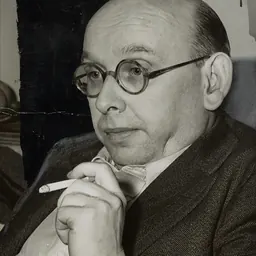
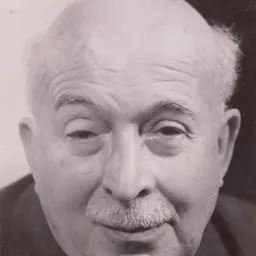
People in Johannes R. Becher's life
Named in this biography and alive at the same time



Related people
Same field, nearest in time

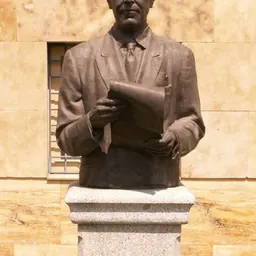
Contemporaries
People whose lives overlapped Johannes R. Becher's
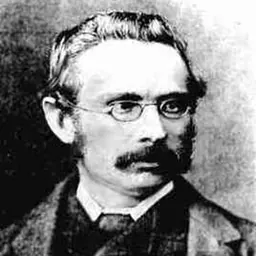
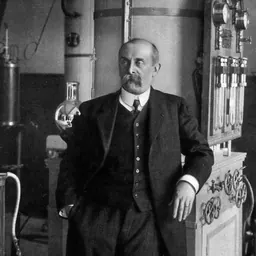


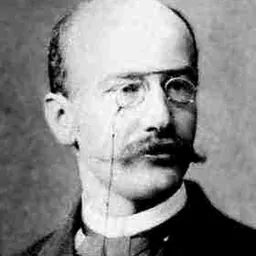
Frequently asked questions
Who was Johannes R. Becher?
German politician, novelist and poet (1891–1958)
When was Johannes R. Becher born?
Johannes R. Becher was born on 22 May 1891 in Munich.
When did Johannes R. Becher die?
Johannes R. Becher died on 11 October 1958 in East Berlin.
What was Johannes R. Becher's occupation?
Johannes R. Becher was a poet, politician, novelist, writer, resistance fighter and songwriter.
What nationality was Johannes R. Becher?
Johannes R. Becher was German.
Sources & further reading
· Wikipedia: Johannes R. Becher
Cite this page
APA: Biography.guide. (2026). Johannes R. Becher. https://biography.guide/johannes-r-becher/
MLA: "Johannes R. Becher." Biography.guide, https://biography.guide/johannes-r-becher/.
Chicago: "Johannes R. Becher." Biography.guide. https://biography.guide/johannes-r-becher/.
Data last updated: 2026-09-20 · Spot an error? Report a correction.
Page generated 2026-09-27 05:26 UTC