
Johann Hieronymus Kapsberger
German-Italian virtuoso performer and composer
About Johann Hieronymus Kapsberger
Lived 1580 – 1651 (aged 70–71). Johann Hieronymus Kapsberger was an Italian composer and lutenist.
Johannes Hieronymus von Kapsberger, commonly known by his Italian name: Giovanni Girolamo Kapsperger, (also: Johann Hieronymus Kapsberger, Giovanni Geronimo Kapsperger; possibly Venice, c. 1580 – Rome, 17 January 1651) was an Austrian-Italian virtuoso performer and composer of the early Baroque period. A prolific and highly original composer, Kapsberger is chiefly remembered today for his lute and theorbo (chitarrone) music, which was seminal in the development of these as solo instruments.
He was nicknamed "the noble German" and "the German of the theorbo", referencing his ethnicity and fame as a virtuoso of the theorbo and of the other instruments belonging to the lute family. Life Nothing is known about Kapsberger's date and place of birth. His father Colonel Wilhelm (Guglielmo) von Kapsperger was a military official of the Imperial House of Austria, and may have settled in Venice, the city which may have been Kapsberger's birthplace.
After 1605 Kapsberger moved to Rome, where he quickly attained a reputation as a brilliant virtuoso. He cultivated connections with various powerful individuals and organizations and organized "academies" in his house, which were counted among the "wonders of Rome". Around 1609 Kapsberger married Gerolima di Rossi, with whom he had at least three children. He started publishing his music at around the same time, with more than a dozen collections of music appearing during the next ten years. These included the celebrated Libro I d'intavolatura di lauto (1611), Kapsberger's only surviving collection of music for lute.
In 1624 Kapsberger entered the service of Cardinal Francesco Barberini, where he worked with numerous important composers, such as Girolamo Frescobaldi and Stefano Landi, and poets which included Giulio Rospigliosi, the future Pope Clement IX. Kapsberger worked in Barberini's household until 1646. He died in 1651. One notable exception was the critic Giovanni Battista Doni, who was initially supportive of the composer, but then turned against him for unclear reasons and criticised his music in print.
Some contemporaries, such as Stefano Landi, mentioned that Kapsberger was not as meticulous a composer as he was as a performer.
Regardless of how one regards his compositional prowess, Kapsberger was one of the principal composers of lute and theorbo music during the early Baroque era (together with Alessandro Piccinini) and greatly contributed towards advancing European plucked string instruments of the time. much like French lute music would, some years later, influence Johann Jakob Froberger's suites.
Kapsberger's other music includes two collections of instrumental ensemble dances, rare for the period, and a wealth of vocal music, which was widely performed during his lifetime, but which is now critically less acclaimed. Kapsberger also wrote stage music, almost all currently lost. The only surviving work of this kind is Apotheosis sive Consecratio SS Ignatii et Francisci Xaverii (1622). now at Yale: 8 toccatas, 1 "gagliarda partita", 2 correntes; then an entire section as practical tutorial for chitarrone players including "passaggi diversi su le note per sonare sopra la parte", cadenzas in tablature, a «tavola per intavolare sopra il Chitarrone, alla Italiana et alla Francese,» a «tavola per sonare il chitarrone sopra il basso». Libro quarto d'intavolatura di chitarrone (1640): 12 toccatas, 16 preludes, 10 passacaglias, 5 chaconnes, and numerous other pieces, including dances, variations, canzonas, etc.
Other instrumental Libro primo de balli, gagliarde et correnti, a quattro voci (1615): 8 balli, 6 gagliards, 6 correntes Libro primo di sinfonie, a quattro voci (1615): 18 sinfonies à 4 with basso continuo
Sacred vocal Libro primo di mottetti passeggiati (1612), 20 motets for voice and basso continuo Cantiones sacrae (1628), 21 pieces for 3–6 voices and basso continuo Modulatus sacri diminutis voculis concinnati (1630), for voice and basso continuo I pastori di Bettelemme (1630), for six voices and basso continuo Missae urbanae (1631), three masses for 4, 5 and 8 voices with basso continuo Litaniae deiparae virginis (1631), four litanies for 4, 6 and 8 voices with basso continuo
Secular vocal
Villanellas Libro primo di villanelle (1610), 20 villanellas for 1–3 voices and basso continuo Libro secundo di villanelle (1619), 21 villanellas for 1–3 voices and basso continuo Libro terzo di villanelle (1619), 20 villanellas for 1–3 voices and basso continuo Libro quarto di villanelle (1623), 23 villanellas for 1–3 voices and basso continuo Libro quinto di villanelle (1630), villanellas for 1–4 voices and basso continuo Li fiori – Libro sesto di villanelle (1632), villanellas for 1–4 voices and basso continuo Libro settimo di villanelle (1640), villanellas for 1–3 voices and basso continuo
Arie passeggiate Libro primo di arie passeggiate (1612), 22 arias for voice and theorbo basso continuo Libro secundo di arie passeggiate (1623), 30 arias for 1–2 voices and basso continuo
Other works Libro primo de madrigali (1609), madrigals for five voices and basso continuo Poematia et carmina [...] liber I (1624), 10 settings of verses by Pope Urban VIII, for voice and basso continuo Coro musicale (1627), wedding songs for voice and basso continuo
Stage Apotheosis sive Consecratio SS Ignatii et Francisci Xaverii (1622)
Lost Maggio Cantata nel Real Palazzo de Pitti (1612), secular cantata Libro secundo d'intavolatura di chitarrone (1616) Libro secundo d'intavolatura di lauto (1619) Epitalamio [...] recitativo a piu voci (1628), secular vocal music Libro terzo d'arie passeggiate (1630) Poematia et carmina [...] liber II (1633), settings of verses by Pope Urban VIII La vittoria del principe Vladislao in Valacchia (1625), opera Fetonte (1630), dramma recitato Also, a compositional treatise by Kapsberger, Il Kapsperger della musica, was announced in 1640 in the preface to Libro quarto d'intavolatura di chitarrone, but is now lost.
Don’t just read it —
keep it.
Full-length biographies made to live with: read them, listen on the way to work, watch them tonight.
- E-book
- Audio
- Video
Instant download · yours to keep · every purchase keeps this site free
Important facts
People in Johann Hieronymus Kapsberger's life
Named in this biography and alive at the same time
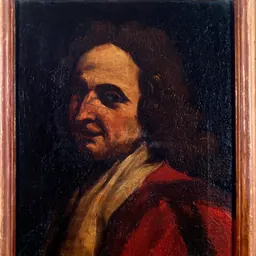
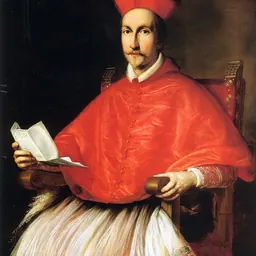

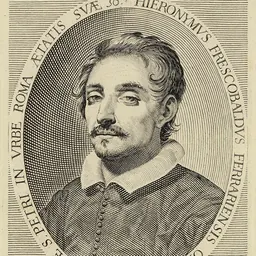


Related people
Same field, nearest in time

Contemporaries
People whose lives overlapped Johann Hieronymus Kapsberger's



Frequently asked questions
Who was Johann Hieronymus Kapsberger?
German-Italian virtuoso performer and composer
When was Johann Hieronymus Kapsberger born?
Johann Hieronymus Kapsberger was born in 1580 in Venice.
When did Johann Hieronymus Kapsberger die?
Johann Hieronymus Kapsberger died on 17 January 1651 in Rome.
What was Johann Hieronymus Kapsberger's occupation?
Johann Hieronymus Kapsberger was a composer and lutenist.
What nationality was Johann Hieronymus Kapsberger?
Johann Hieronymus Kapsberger was Italian.
Sources & further reading
· Wikipedia: Johann Hieronymus Kapsberger
· DBpedia: Giovanni Girolamo Kapsperger
Cite this page
APA: Biography.guide. (2026). Johann Hieronymus Kapsberger. https://biography.guide/johann-hieronymus-kapsberger/
MLA: "Johann Hieronymus Kapsberger." Biography.guide, https://biography.guide/johann-hieronymus-kapsberger/.
Chicago: "Johann Hieronymus Kapsberger." Biography.guide. https://biography.guide/johann-hieronymus-kapsberger/.
Data last updated: 2026-09-27 · Spot an error? Report a correction.
Page generated 2026-09-27 05:17 UTC