
About Johann Cochlaeus
Lived 1479 – 1552 (aged 73). Johann Cochlaeus was a German renaissance humanist, music theorist, musicologist, catholic priest, humanist and canon.
Johann Cochlaeus (Cochläus) (1479 – 10 January 1552) was a German humanist, music theorist, and controversialist.
Life Originally Johann Dobneck, he was born of poor parents at Wendelstein (near Nuremberg), from which he obtained the punning surname Cochlaeus, for which he occasionally substituted Wendelstinus. Educated at Nuremberg by the humanist Heinrich Grieninger, he entered the University of Cologne in 1504, and there associated with Hermann von Neuenahr, Ulrich von Hutten, and other humanists. He also knew well Carl von Miltitz, who later became papal chamberlain. In 1507 he graduated; he left Cologne in May 1510 to become schoolmaster at Nuremberg, where he brought out several school manuals.
During the years 1515 to 1519 he traveled in Italy as tutor to three nephews of Willibald Pirkheimer. his humanist ideas raised the suspicion of many Catholics, and his polemical writings won him the hatred of the Reformers. Leaf from Johannes Cochlaeus' Musica, 1507. From the Rosenwald Collection, Library of Congress. He published under the name of Wendelstein his first piece, Musica (1507).
In his Colloqium Cochlaei cum Luthero, Cochlaeus reported on his discussion with Luther on 24 April 1521 about issues, such as the origin of Luther's doctrine of predestination, the Eucharist, and the authority of the Bible. (See Plowboy trope.) After writing a series of pamphlets discussing the main themes of Luther's theology, Cochlaeus became convinced that any further argumentation with Luther was futile. Accordingly, instead of convincing Luther, Cochlaeus attempted to come to an agreement with Melanchthon at the Diet of Augsburg in 1530, but without much success. was popular and influential. It became a model and source for later polemics, and the view expounded in it that the Protestant Reformation was nothing but an incidental jealousy between the Dominican and Augustinian orders had a wide circulation.
He left one of the few contemporary notices of the young Michael Servetus as well as notes on Tyndale's abortive attempt to print his New Testament at Cologne in 1525.
Don’t just read it —
keep it.
Full-length biographies made to live with: read them, listen on the way to work, watch them tonight.
- E-book
- Audio
- Video
Instant download · yours to keep · every purchase keeps this site free
Important facts
People in Johann Cochlaeus's life
Named in this biography and alive at the same time


Related people
Same field, nearest in time
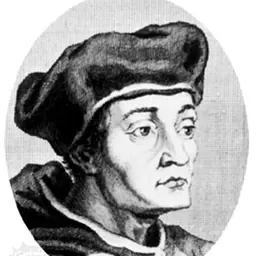
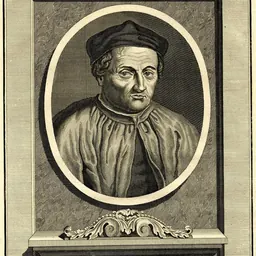
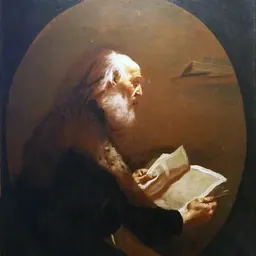


Contemporaries
People whose lives overlapped Johann Cochlaeus's
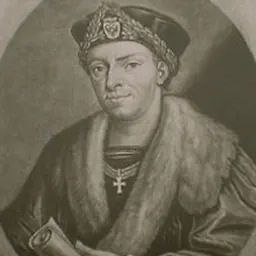

Frequently asked questions
Who was Johann Cochlaeus?
German humanist (1479–1552)
When was Johann Cochlaeus born?
Johann Cochlaeus was born on 10 January 1479 in Wendelstein.
When did Johann Cochlaeus die?
Johann Cochlaeus died on 11 January 1552 in Wrocław.
What was Johann Cochlaeus's occupation?
Johann Cochlaeus was a renaissance humanist, music theorist, musicologist, catholic priest, humanist and canon.
What nationality was Johann Cochlaeus?
Johann Cochlaeus was German.
Sources & further reading
Cite this page
APA: Biography.guide. (2026). Johann Cochlaeus. https://biography.guide/johann-cochlaeus/
MLA: "Johann Cochlaeus." Biography.guide, https://biography.guide/johann-cochlaeus/.
Chicago: "Johann Cochlaeus." Biography.guide. https://biography.guide/johann-cochlaeus/.
Data last updated: 2026-09-25 · Spot an error? Report a correction.
Page generated 2026-09-27 05:12 UTC