
About Johann Albrecht Widmannstetter
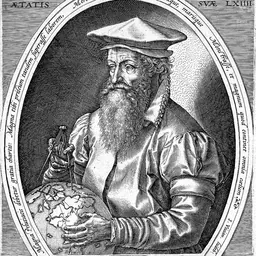
Lived 1506 – 1557 (aged 50–51). Johann Albrecht Widmannstetter was a German diplomat, theologian, humanist, orientalist, jurist and hebraist.
Johann Albrecht Widmannstetter, also called Widmannstadt, Johannes Albertus or Widmestadius, (1506 – 28 March 1557) was a German humanist, orientalist, philologist, and theologian.
Life Widmannstetter was born in Nellingen/Blaubeuren near Ulm. He studied law, theology and oriental languages in Tübingen. After 1527, he continued his studies in Italy, in Turin, Naples and Rome, focusing on the languages of Syriac and Arabic. In 1533, Widmannstetter became secretary to Pope Clement VII. In the same year, he delivered a series of lectures in Rome, outlining Nicolaus Copernicus' theory to the pope and the cardinals, with which both were impressed.
Pope Clement VII died in 1534, and was succeeded by Pope Paul III; Widmannstetter continued as his secretary.
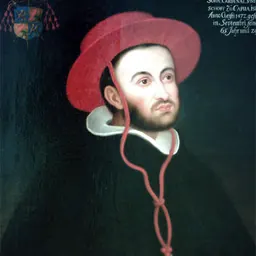
After 1535, Widmannstetter was secretary of Cardinal Nikolaus von Schönberg. Impressed by Widmannstetter's lessons on Copernicus' ideas, the Cardinal wrote a letter to Copernicus in 1536, urging him to publish (which he would do only in 1543, shortly before his death).
The rest of Widmanstetter's career was focussed on orientalism, to which he contributed a great deal, collecting hundreds of manuscripts in Hebrew, Arabic and Syriac. Widmannstetter is considered to be a founder of European orientalism. He died in Regensburg, and his personal library was acquired by Albert V, Duke of Bavaria.
Selected work 1541/42: Sacrarum ceremoniarum sive rituum ecclesiasticorum sanctae romanae ecclesiae libri tres 1543: Notae contra Mohammedis dogmata 1552: Von den geistlichen und weltlichen Wappen eines Ritters (Dillingen) 1555: Liber sacrosancti Evangelii de Jesu Christo Domino et Deo nostro (Vienna) 1555: Syriacae linguae ... prima elementa (Vienna); also published in Antwerp in 1572
Literature Max Müller (1907): Johann Albrecht von Widmanstetter 1506-1557. Sein Leben und Wirken. Bamberg. Hans Striedl (1952): "Die Bücherei des Orientalisten Johann Albrecht Widmanstetter." In: Hans Joachim Kissling (ed.): Serta Monacensia. Leiden, pp. 200–244. Hans Striedl (1953): Der Humanist Johann Albrecht Widmanstetter als klassischer Philologe. In: Festgabe der Bayerischen Staatsbibliothek für Emil Gratzl. Wiesbaden. Pages 96–120.
Don’t just read it —
keep it.
Full-length biographies made to live with: read them, listen on the way to work, watch them tonight.
- E-book
- Audio
- Video
Instant download · yours to keep · every purchase keeps this site free
Important facts
People in Johann Albrecht Widmannstetter's life
Named in this biography and alive at the same time

Related people
Same field, nearest in time




Contemporaries
People whose lives overlapped Johann Albrecht Widmannstetter's



Frequently asked questions
Who was Johann Albrecht Widmannstetter?
German scholar
When was Johann Albrecht Widmannstetter born?
Johann Albrecht Widmannstetter was born in 1506 in Nellingen.
When did Johann Albrecht Widmannstetter die?
Johann Albrecht Widmannstetter died in 1557 in Regensburg.
What was Johann Albrecht Widmannstetter's occupation?
Johann Albrecht Widmannstetter was a diplomat, theologian, humanist, orientalist, jurist and hebraist.
What nationality was Johann Albrecht Widmannstetter?
Johann Albrecht Widmannstetter was German.
Sources & further reading
· Wikipedia: Johann Albrecht Widmannstetter
· DBpedia: Johann Albrecht Widmannstetter
Cite this page
APA: Biography.guide. (2026). Johann Albrecht Widmannstetter. https://biography.guide/johann-albrecht-widmannstetter/
MLA: "Johann Albrecht Widmannstetter." Biography.guide, https://biography.guide/johann-albrecht-widmannstetter/.
Chicago: "Johann Albrecht Widmannstetter." Biography.guide. https://biography.guide/johann-albrecht-widmannstetter/.
Data last updated: 2026-09-20 · Spot an error? Report a correction.
Page generated 2026-09-27 05:11 UTC