
About Joel Sayre
Lived 1900 – 1979 (aged 78). Joel Sayre was an American screenwriter and writer.
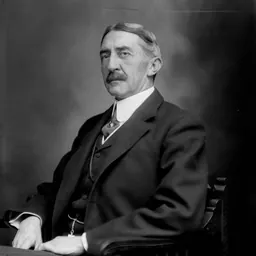
Joel Grover Sayre Jr. (December 13, 1900 – September 9, 1979) was an American reporter, screenwriter, and novelist. During Prohibition, he was a crime reporter for the New York Herald Tribune. He later served as a World War II correspondent for The New Yorker. In his time in Hollywood, he was best known as chief script writer for the successful 1939 film Gunga Din.
Early life and education Sayre was born in Marion, Indiana in 1900. He was the son of businessman Joel Grover Sayre and Nora Clemens Sayre, a photographer and interior decorator. He was raised in Columbus, Ohio and educated at the Columbus Academy. He later attended a private school in Cleveland.
At age 16 during World War I, Sayre attempted unsuccessfully to join the U.S. Army. However, with a falsified birth certificate, he managed to join the Canadian Army and was sent to Siberia with its Expeditionary Force. After the war, Sayre read literature at Exeter College, Oxford, graduating with a BA in English in August 1922. He became friends with author James Thurber in 1922, and they maintained a lifelong correspondence.
Career After a short stint as a sports columnist for The Boston Herald, Sayre settled in as a crime reporter for the New York World and New York Herald Tribune. He wrote about "Legs" Diamond and other notorious gangsters of the 1920s Prohibition era. The novel was quickly turned into a Hollywood film with Sayre receiving a story credit. In 1933 he published his second novel, Hizzoner the Mayor, a satirical look at corrupt "machine" politics. It was praised by The New York Times as "even more hilarious" than Rackety Rax.
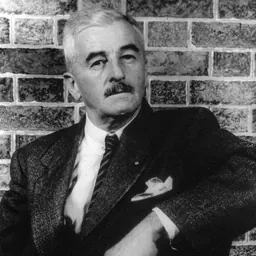
In the mid-1930s, Sayre was lured to Hollywood to work as a screenwriter. His credits included Annie Oakley (1935), The Road to Glory (1936) co-written with William Faulkner, and The Toast of New York (1937). His most popular screenplay was the comedy-adventure film Gunga Din (1939), co-written with Fred Guiol. Loosely based on Rudyard Kipling's 1890 poem, Gunga Din became one of the top box-office successes of 1939.
During World War II, The New Yorker hired Sayre as a foreign correspondent. He reported on the Persian Gulf Command, which supplied the Soviet Union with munitions via Iran. He also covered the Teheran Conference in late 1943. The article chronicled the attempts to prevent a suicide jumper, and it became the basis for the film Fourteen Hours (1951).
Personal life In 1930, Sayre married Gertrude Lynahan, a reporter he met when she was working for the New York World. She was subsequently a fashion editor for The New York Times. They remained married until her death in 1960. Their daughter was the film critic Nora Sayre.
Joel Sayre died of heart failure on September 9, 1979. He was 78.
Don’t just read it —
keep it.
Full-length biographies made to live with: read them, listen on the way to work, watch them tonight.
- E-book
- Audio
- Video
Instant download · yours to keep · every purchase keeps this site free
Important facts
People in Joel Sayre's life
Named in this biography and alive at the same time





Related people
Same field, nearest in time


Contemporaries
People whose lives overlapped Joel Sayre's


Frequently asked questions
Who was Joel Sayre?
American screenwriter
When was Joel Sayre born?
Joel Sayre was born on 13 December 1900 in Marion.
When did Joel Sayre die?
Joel Sayre died on 9 September 1979 in Taftsville.
What was Joel Sayre's occupation?
Joel Sayre was a screenwriter and writer.
What nationality was Joel Sayre?
Joel Sayre was American.
Sources & further reading
Cite this page
APA: Biography.guide. (2026). Joel Sayre. https://biography.guide/joel-sayre/
MLA: "Joel Sayre." Biography.guide, https://biography.guide/joel-sayre/.
Chicago: "Joel Sayre." Biography.guide. https://biography.guide/joel-sayre/.
Data last updated: 2026-09-22 · Spot an error? Report a correction.
Page generated 2026-09-27 05:32 UTC