
Joël Robert
Motocross racer
About Joël Robert
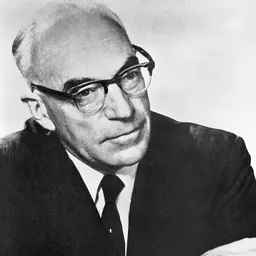
Lived 1943 – 2021 (aged 77). Joël Robert was a Belgian motocross rider.
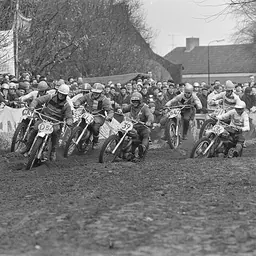
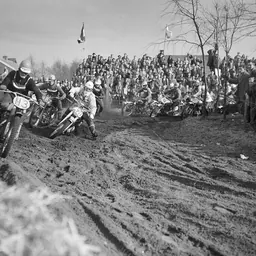
Joël Robert (26 November 1943 – 13 January 2021 ) was a Belgian professional motocross racer. He competed in the Motocross World Championships from 1962 to 1976 when the sport experienced a surge in popularity worldwide. A six-time world champion, Robert dominated the 250cc class for almost a decade when, he placed either first or second every year between 1964 and 1972 including, five consecutive world championships. In 1964, he was named the recipient of the Belgian National Sports Merit Award. He won a total of 50 Grand Prix races over his career, a record which stood for nearly 30 years.
Robert's success on the race track along with his impish personality made him one of the most publicized and popular motocross racers of the early 1970s. He was known as one of the most naturally talented motocross riders of his era however, he was also notorious for his cigarette smoking and lack of physical training despite his portly physique.
Robert played an integral role in the introduction of the sport of motocross in the United States and, served as inspiration to early American motocross racers.
Motorcycle racing career Robert was born in Châtelet, Belgium and began riding motorcycles at the age of 6 when his father, a former motocross and speedway racer, built him his first motorcycle, a 125cc Gillet. His boyhood idols were Belgian motocross stars René Baeten and Auguste Mingels. His parents provided him with financial support and accompanied him to many of the races close to Belgium. Other times he would travel with fellow racers or, sometimes by train with his dismantled motorcycle packed into his hand luggage. In 1963, he repeated as Belgian national champion riding the Greeves and, entered all the world championship Grand Prix rounds where, he ended the season ranked 25th in the world with a fifth place at the 250cc Swedish Grand Prix being his best result.
At the end of the 1963 season, Robert's future racing career was in doubt as, his father lacked the financial resources to purchase a new motorcycle for the following season. At the age of 20, he became the youngest motocross world champion at the time.
Robert's impressive performance earned him a place on the ČZ factory racing team for the 1965 season. He began the year with an impressive victory over the reigning 500cc World Champion Jeff Smith at the Motocross der Azern, a prestigious preseason invitational race that fielded the top international competitors.
After dominating the 1964 season Robert expected to sweep to victory once again in 1965 however, he experienced an atrocious start to the new season while Russian ČZ rider Victor Arbekov blossomed into a championship contender. After his motorcycle had mechanical failures in Spain, Italy and Belgium, Robert was disqualified from the Czechoslovak Grand Prix for refueling at mid-distance while in leading the race. He was the top individual points scorer at the 1965 Motocross des Nations event, winning both motos to help the Belgian team finish second to the British team.
Hallman rivalry The following three seasons were marked by the rivalry between Robert and his greatest rival, Hallman. Defending champion Arbekov began the 1966 season with a victory at the Spanish Grand Prix, however he was injured in a serious crash at the second round in France and did not return until the 14th round. Robert and Hallman traded wins back and forth in a season-long battle for the 1966 250cc Motocross World Championship that wasn't decided until the final race when Hallman finally prevailed over his rival.
Husqvarna doubled its racing budget for 1967, with riders Håkan Andersson, Olle Pettersson and Staffan Eneqvist joining Hallman on the Husqvarna factory racing team. Hallman and Robert were once again the main protagonists in the battle for the 1967 250cc motocross World Championship. The two rivals dominated the championship with five Grand Prix victories apiece. The exhibition races served as a means to introduce the sport of motocross to an American audience, and eventually led to the formation of the Inter-AM and Trans-AMA motocross series that helped to popularize the sport of motocross in the United States.
The two competitors continued their rivalry into the 1968 season. The ČZ factory switched Dave Bickers from the 500cc class to the 250cc class and hired 23-year-old Sylvain Geboers to support Robert, while Husqvarna retained Håkan Andersson in support of Hallman. After Robert won three consecutive Grand Prix races in France, Holland and West Germany to take the early points lead, Hallman then won three races in Russia, Yugoslavia and Sweden to tie Robert for the championship points lead as they went into the final round in Austria.
Hallman took the lead in the first heat race and had built a 23-second lead over Robert, when his motorcycle's rear tire was punctured allowing Robert to pass Hallman for the victory. He was the top individual points scorer at the 1968 Trophée des Nations event, winning both motos to help the Belgian team finish second to the Swedish team.
In 1969, Robert and his ČZ teammate Sylvain Geboers engaged in a season long battle for the 250cc World Championship that wasn't decided until the final race of the season. Robert won six Grand Prix races while Geboers won four as Robert claimed his third World Championship. Geboers actually scored more points overall than Robert but falls victim to FIM scoring rules which only recognizes the top seven of twelve results. The rules would be changed in 1977. Robert was also a member of the Belgian team that won the 1969 Motocross des Nations for 500cc motorcycles and the Trophée des Nations for 250cc motorcycles, marking the first Belgian victory in eighteen years at the event.
Move to Suzuki The Suzuki factory became the first Japanese manufacturer to compete in a Motocross World Championship event at the 1965 250cc Swedish Grand Prix, and with the help of Swedish rider, Olle Pettersson, they had developed their motocycle to the point where Pettersson finished the 1969 championship in third place behind Robert and Geboers. The Suzuki team then hired both Geboers and Robert for the 1970 season. He also helped the Belgian team repeat as winners of the 1970 Motocross des Nations and the Trophée des Nations. In the 1972 250cc world championship season, he won six of the first eight Grand Prix races to build an insurmountable lead en route to winning his fifth consecutive world championship. He also participated in the Belgian teams triumph at the 1972 Motocross des Nations and Trophée des Nations. He won six 250cc motocross world titles (1964, 1968–1972) and five 250cc Belgian national motocross championships (1963, 1964, 1966, 1972, 1973).
Robert developed diabetes which resulted in having his foot amputated in 2018. He also suffered from lung problems and had experienced a few strokes.
Don’t just read it —
keep it.
Full-length biographies made to live with: read them, listen on the way to work, watch them tonight.
- E-book
- Audio
- Video
Instant download · yours to keep · every purchase keeps this site free
Important facts
People in Joël Robert's life
Named in this biography and alive at the same time





Related people
Same field, nearest in time


Contemporaries
People whose lives overlapped Joël Robert's


Frequently asked questions
Who was Joël Robert?
Motocross racer (1943-2021)
When was Joël Robert born?
Joël Robert was born on 24 November 1943 in Grandrieu.
When did Joël Robert die?
Joël Robert died on 13 January 2021 in Gilly.
What was Joël Robert's occupation?
Joël Robert was a motocross rider.
What nationality was Joël Robert?
Joël Robert was Belgian.
Sources & further reading
Cite this page
APA: Biography.guide. (2026). Joël Robert. https://biography.guide/joel-robert/
MLA: "Joël Robert." Biography.guide, https://biography.guide/joel-robert/.
Chicago: "Joël Robert." Biography.guide. https://biography.guide/joel-robert/.
Data last updated: 2026-09-20 · Spot an error? Report a correction.
Page generated 2026-09-27 05:27 UTC